







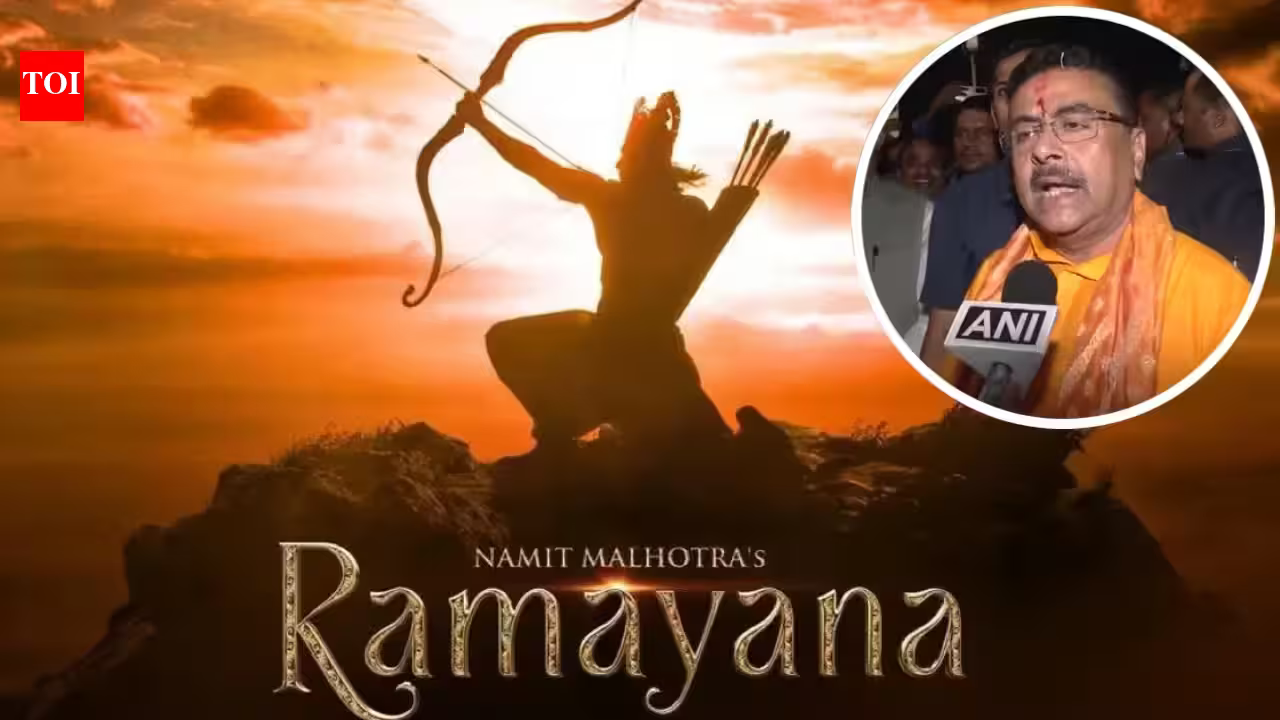
The air at Kolkata’s Central Park was thick with anticipation this Dussehra, but the electric buzz wasn’t just for the effigies waiting to be set ablaze. As the city marked the triumph of good over evil, the stage was set for a massive cultural announcement that has sent shockwaves through the Indian film industry. West Bengal’s Chief Minister, Suvendu Adhikari, shared the spotlight with two of Indian cinema’s biggest titans—Ranbir Kapoor and Yash—to declare that the upcoming epic Ramayana will be granted tax-free status in the state.
It was a moment that felt scripted for cinematic history. With the grand scale of the upcoming film—directed by the visionary Nitesh Tiwari—it’s clear that this project is being positioned as more than just a box-office play. It is being treated as a cultural event, a sentiment echoed by the Chief Minister’s pledge to support films rooted in the nation’s mythological bedrock.
A Tax-Free Stamp of Approval
The decision to make Ramayana tax-free is a significant strategic move that aligns with a broader trend of state governments incentivizing films that promote cultural and national narratives. Adhikari, while standing alongside the stars, drew a clear line connecting the upcoming epic to previously supported projects like The Kashmir Files and The Kerala Story.
“The Ramayana film has been made tax-free,” Adhikari declared, framing it as part of a deliberate push to bring heritage-based cinema to the masses. By removing the tax burden, the government is essentially lowering the barrier to entry for the average family, ensuring that the spectacle—touted as a massive two-part epic—reaches as wide an audience as possible. For producers, this is a green light to push the budget and the scale of the production, knowing the state is firmly behind the film’s financial success.
Beyond the Epic: The Cinematic Universe
The excitement in Kolkata was the perfect backdrop for what has been described as the birth of the “Ramayana Cinematic Universe.” Produced by Namit Malhotra, the project has already stirred the pot with its ambitious roadmap. This isn’t a singular story; it is a sprawling interconnected web of spin-offs.
While Ranbir Kapoor steps into the role of Lord Rama, the real chatter in the industry surrounds the surrounding ecosystem. We’ve already received confirmation of a standalone Hanuman film, with Sunny Deol reportedly strapping in for the iconic role. But the ambition doesn’t stop there. Reports suggest that the studio is developing individual character arcs for figures like Surpanakha, the wise Jatayu, the strategist Indrajit, and Angad. If the Marvel Cinematic Universe proved anything, it’s that audiences crave deep-dives into secondary lore, and applying this model to India’s most cherished epic could redefine how we consume mythological storytelling in the modern era.
The Stars Align in the City of Joy
Ranbir Kapoor, who has been largely elusive throughout the early production phases of this film, took the stage at Central Park with a sense of reverence. His portrayal of Lord Rama is one of the most anticipated performances of his career, and his interaction with the Kolkata crowd showed a man fully immersed in the gravity of the role.
“It is a matter of great happiness and good fortune for us to come to this sacred land of Kolkata and celebrate Dussehra with all of you,” Kapoor said, his words drawing cheers from the massive crowd. He leaned into the themes of the festival, urging the public to focus on the triumph of truth over darkness.
Meanwhile, the inclusion of Yash—the KGF superstar who plays the complex role of Ravana—brought a different kind of intensity to the event. For Yash, the trip to Kolkata was a sentimental homecoming. He recounted his humble beginnings in the city back in 2004–2005, when he was just a fledgling theatre enthusiast working backstage. Standing on a stage of this magnitude, representing one of the most expensive films in Indian history, the actor reflected on how far he’s come. “Today, I have come here as a film actor,” he noted with a humble smile, bridging the gap between his grassroots theatre days and the global stage he now commands.
Mythology as the Next Frontier
Perhaps the most telling part of the Chief Minister’s speech was his forward-looking optimism. He didn’t just stop at Ramayana; he openly vocalized a roadmap for the future of mythology on screen. “In the days to come, we will see films on Shri Krishna and Arjuna, as well as the Mahabharata,” he predicted.
This signals a shift in the current entertainment landscape. We are entering an era where Indian mythology is being treated with a Hollywood-level of blockbuster polish. With Nitesh Tiwari at the helm of Ramayana, and the support of state governments, the industry is betting big that audiences are hungry for stories that feel both ancient and contemporary.
The success of Ramayana will likely set the tone for this entire genre. If it connects, we aren’t just looking at a successful movie; we are looking at the foundational stone for a decade-long cycle of mythological epics that will dominate the Indian box office.
The Road to the Release
As the event concluded, the underlying message was clear: this film is meant to be a collective experience. By hosting the lead cast in the heart of Kolkata on a day that celebrates the victory of righteousness, the makers have signaled that they want this film to be felt as much as it is seen.
With Ranbir Kapoor’s stoic presence as Rama, Sai Pallavi’s anticipated turn as Sita, and Yash’s charismatic take on the antagonist Ravana, the casting feels like a deliberate balance of star power and acting prowess. The inclusion of Ravi Dubey as Lakshman rounds out a cast that aims to bridge generational gaps.
As we look toward the Diwali release, the stakes couldn’t be higher. Tax-free status is a massive win, but the real test lies in the storytelling. Can the Ramayana team capture the spirit of the epic while delivering the visceral, high-octane action audiences have come to expect from modern cinema? If the energy in Kolkata was any indication, the answer is a resounding “Jai Shri Ram.” For now, the stage is set, the support is locked in, and the industry is holding its breath for what promises to be the most consequential cinematic release of the decade.
Disclaimer: This content is auto-generated for informational purposes only.
Source: Read Original News