









Waste Management Crisis: Indian Industry Experts Echo Concerns Over Lax Export Regulations
As global concerns mount over the transboundary movement of hazardous waste, the Tyre Recovery Association (TRA) has issued a stern warning to the European Commission, urging policymakers to study the regulatory failures observed in the United Kingdom. With illegal tyre stockpiles becoming a persistent environmental blight, industry leaders are calling for stricter enforcement of waste export rules—a sentiment that resonates deeply within the Indian waste management sector.
The Global Shadow of Illegal Dumping
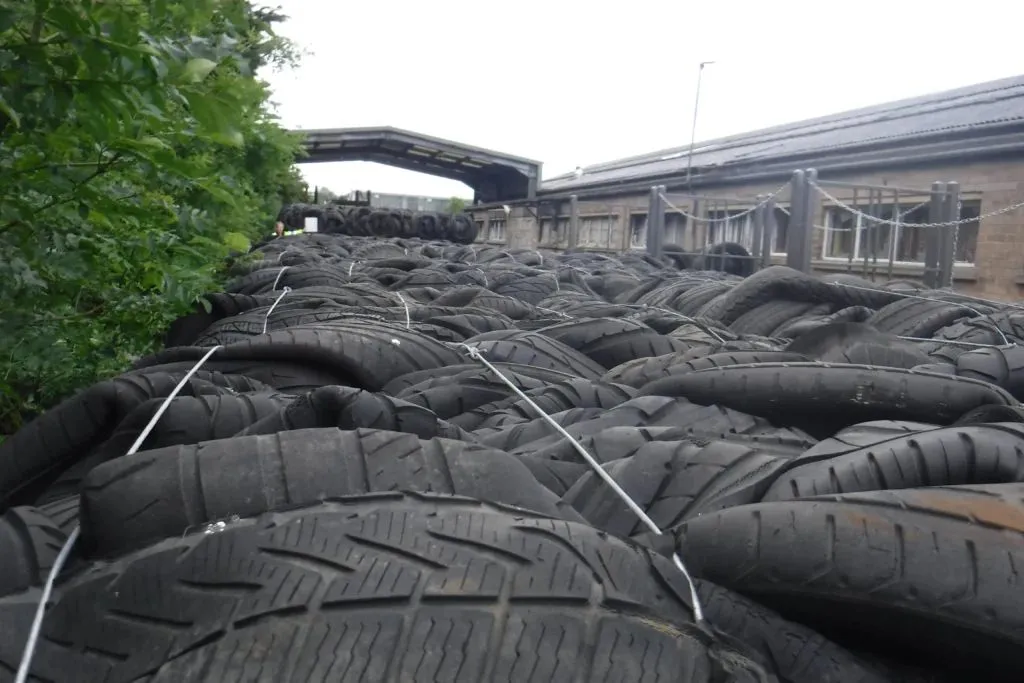
The image of massive, haphazardly stacked tyre piles—like those documented in Daventry—serves as a grim reminder of what happens when waste disposal regulations lack teeth. When exported waste is not managed under a circular economy framework, it often ends up in unregulated dumpsites rather than recycling facilities. For years, environmentalists have argued that the “exporting” of waste is frequently a convenient method for developed nations to offload their ecological responsibilities onto developing countries.
In India, where the tyre recycling industry has been struggling to balance rapid industrial growth with environmental sustainability, the lack of transparency in international waste trade is a major point of contention. While the Indian government has tightened regulations regarding the import of waste rubber to prevent the country from becoming a global dumping ground, the sheer volume of illicit materials still poses a challenge for local regulatory bodies.
Regulatory Failures: Lessons from the UK
The TRA has highlighted that the UK’s approach to waste regulation has been marred by gaps in oversight, allowing operators to stockpile millions of tyres under the guise of “recovery” or “recycling.” These sites often become environmental time bombs, prone to catastrophic fires and chemical leaching that contaminate local soil and groundwater.
“We are witnessing a systemic failure where the intent of the law is overshadowed by the inadequacy of monitoring,” noted an environmental consultant based in New Delhi. “When export rules are loosely defined, it creates a loophole for unscrupulous brokers to ship low-grade, non-recyclable waste to nations with less stringent inspection capacities. The UK example proves that without stringent tracking and mandatory certification of the final processing destination, the waste trade remains inherently toxic.”
Strengthening India’s Circular Economy
For India, the focus remains on shifting from a waste-exporting or waste-importing mindset to one of indigenous resource recovery. The government’s recent Extended Producer Responsibility (EPR) mandates for the tyre industry represent a significant step toward accountability. By requiring manufacturers to take back a percentage of end-of-life tyres, the policy aims to build a robust domestic recycling infrastructure.
However, the international context remains critical. As the European Commission prepares to overhaul its waste export regulations, industry bodies in India are calling for global standards that ensure transparency. The demand is clear: waste should only be exported if there is a verified, state-of-the-art facility equipped to process it without environmental degradation.
A Call for Global Accountability
The urgency for international cooperation has never been higher. If the European Commission ignores the lessons from the UK’s regulatory shortcomings, the global crisis of illegal dumping will only deepen. For emerging economies, the expectation is that developed nations adopt a “cradle-to-grave” responsibility model.
As the world transitions toward a circular economy, the cross-border movement of tyres—often used as fuel in cement kilns or processed into crumb rubber—must be strictly governed. India’s industry stakeholders remain vigilant, advocating for a stricter enforcement regime that prioritizes the planet over the convenience of trade. The transition from a linear “take-make-waste” economy to a regenerative one depends entirely on how effectively authorities can close the gaps that allow these illegal tyre mountains to persist.
Disclaimer: This content is auto-generated for informational purposes only.
Source: Read Original News