








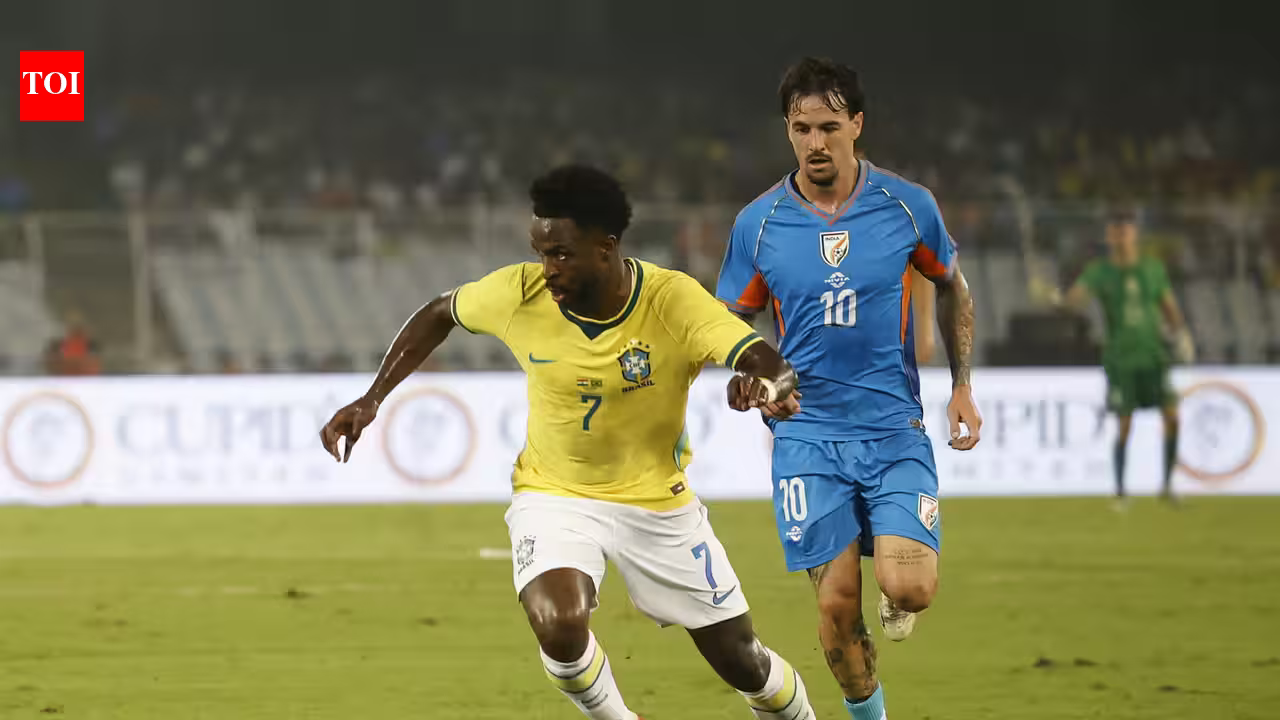
KOLKATA – Bringing football royalty to Indian soil is a feat of logistical mastery and high-stakes financial maneuvering that extends far beyond the final whistle. The recent international friendlies against Brazil, Uruguay, and Panama have provided a masterclass in the complexities of modern sports promotion, revealing that securing a world-class match is as much about the boardroom as it is about the pitch.
According to Anuj Kichlu, director and CEO of Best of You—the agency that facilitated these high-profile fixtures—the costs associated with hosting a top-tier national team are astronomical. A single match involving a World Cup-level nation rarely costs less than Rs 10 crore, with total event budgets potentially ballooning to a staggering Rs 100 crore depending on the pedigree of the visiting squad.
The Business of Global Football
These figures represent a massive ecosystem of expenditures. Beyond the primary appearance fees paid to the federations, organizers must balance a mountain of secondary costs: international flights, luxury hotel accommodations, exhaustive security protocols, stadium branding, comprehensive insurance, and the physical maintenance of the pitch.
“The lowest you’ll get a World Cup team is at Rs 10 crores, and the highest it’ll cost is even 100 crores for one match, depending on the team,” Kichlu explained.
In this structure, agencies like Best of You act as match agents. They navigate the labyrinthine negotiations between federations, while the All India Football Federation (AIFF) and its commercial partners take on the separate, significant task of monetizing the event through ticketing, sponsorship, and broadcast rights. The risk is immense, particularly in a market where the commercial appetite for international football is still in a nascent, developmental phase.
The Challenge of Market Perception
While the arrival of stars like Vinicius Junior provided a spectacle that captivated the nation, the path to commercial success remains fraught with obstacles. Kichlu admits that “negative news” surrounding the current state of Indian football has dampened investor confidence and cooled the appetite of potential sponsors.
“Sponsors are obviously reluctant to associate with something if they don’t have numbers and backing,” Kichlu noted. “When you go to someone and say you’re sponsoring a Brazil match and they ask for data from another big match in India, you don’t have a comparable benchmark to go by.”
The lack of consistent, high-level event data makes it difficult for brands to quantify the return on their investment. However, Kichlu remains optimistic that these recent fixtures, combined with the upcoming Unity Cup tour against Nigeria and Zimbabwe, will serve as essential data points for future commercial growth.
Lessons from the Stands: Planning is King
The attendance figures—51,402 for the Brazil match and 37,307 for the clash against Uruguay—were strong, but perhaps fell short of the absolute capacity expected for teams of such global renown. Critics pointed to high ticket prices and scheduling near the Durga Puja festival. Kichlu, however, disputes the idea that pricing was the primary deterrent.
“I’ve researched all over Asia,” he said. “People are willing to pay these prices and much more. I think it’s just the planning. With only a two-to-three-week marketing window, people had already committed their budgets and travel plans elsewhere.”
Kichlu argued that for an event of this magnitude, a three-month lead time is essential to pull in spectators from cities like Delhi, Bengaluru, and Mumbai. Furthermore, he noted that lingering trauma from the infamous Lionel Messi “G.O.A.T” tour fiasco of 2025—which saw fans turn to vandalism over poor event management—has made families particularly wary of high-profile, short-notice fixtures.
The Path Forward: Why Government Backing is Essential
For India to truly establish itself as a viable global football destination, Kichlu believes that the private sector cannot carry the burden alone. He points to the Brazilian national team’s recent tour of Australia, where the Queensland state government funded the matches as part of a broader strategy to promote the region on the world stage.
“If any state government wants to bring these events to their state, they have to pitch in resources,” Kichlu argued. “In Europe, these events are commercially viable because the market is mature—you know what your broadcast and sponsorship returns will be. In emerging markets, you have to have that state backing to bridge the gap.”
As India navigates its future as a host for international football, the transition from “event-based hype” to a “data-backed industry” will be the deciding factor. If the authorities can successfully pair the undeniable passion of the Indian fan base with a more disciplined, long-term approach to planning and government-private partnerships, the recent series against Brazil could prove to be the definitive turning point for the nation’s footballing future.
Disclaimer: This content is auto-generated for informational purposes only.
Source: Read Original News