







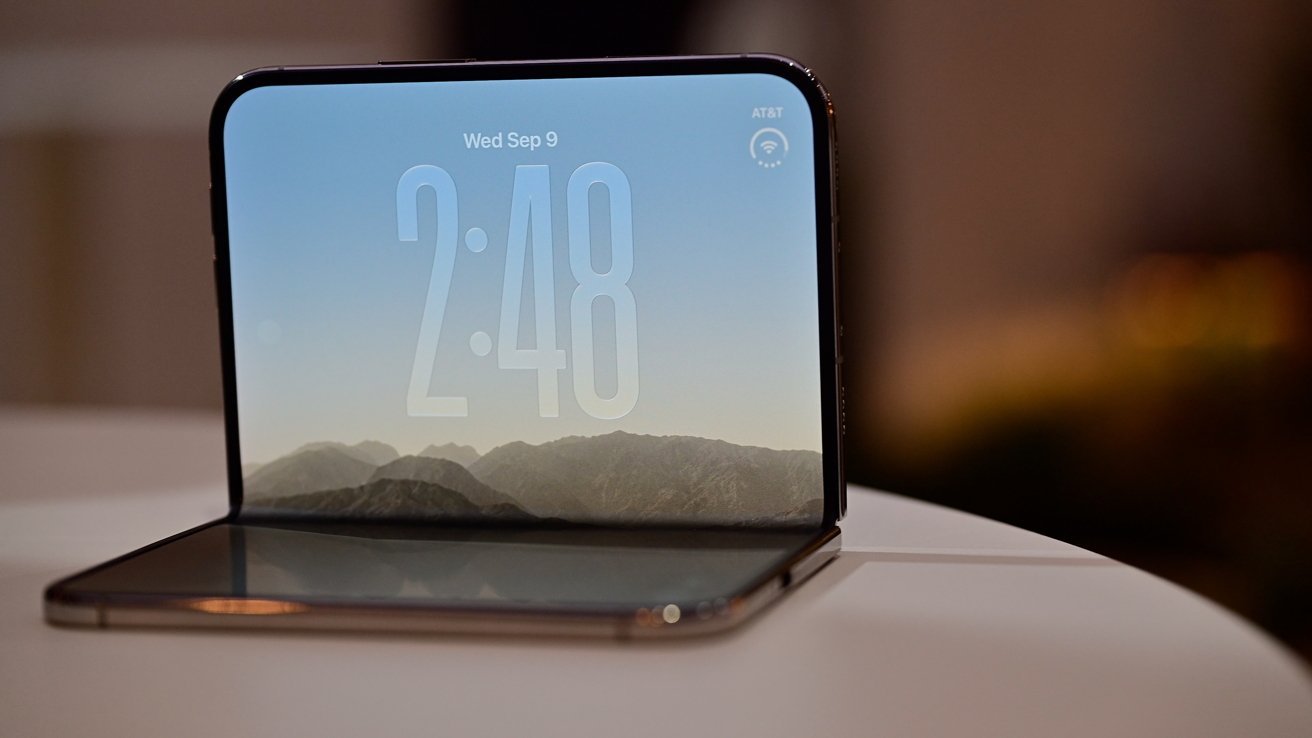
The arrival of the iPhone Duo marks a significant pivot in Apple’s hardware strategy. As the company’s first foray into the foldable smartphone market, the device has generated intense scrutiny from tech reviewers and industry analysts alike. While the broader public anticipates an October 23 launch, early access units have already revealed a suite of specialized features that were not fully detailed during the initial September 9 announcement. These capabilities highlight how Apple is rethinking the mobile interface to accommodate a flexible, expanded display environment.
Advanced Lighting for Communication
One of the most notable features discovered in early testing is the implementation of Edge Light. Previously a signature capability for Macs utilizing Apple Silicon and the macOS Tahoe 26.2 update, Edge Light has now been adapted for the iPhone Duo’s internal display. When a user unfolds the device for a FaceTime call, the outermost perimeter of the internal screen illuminates, functioning as a sophisticated ring light.
This hardware-software integration solves a common issue for foldable devices: uneven or harsh lighting during video conferences. By utilizing the display’s own pixels to emit a soft, diffused glow, the iPhone Duo ensures that subjects are well-lit without requiring external lighting equipment. This feature marks the first time an iPhone has integrated such lighting technology directly into the display panel, signaling a shift toward more professional-grade communication tools for mobile users.
Redefining Reachability in a Foldable Form Factor
The physical dimensions of the unfolded iPhone Duo invite comparisons to the iPad mini, necessitating a departure from traditional one-handed usage patterns. To maintain accessibility, Apple has introduced a horizontal iteration of its long-standing Reachability feature. Since its 2014 debut, Reachability has served as a critical tool for navigating large screens by shifting the top portion of the user interface toward the bottom.
On the iPhone Duo, this functionality is being re-engineered to assist with the device’s unique aspect ratio. While traditional iPhones allow for a vertical swipe, the iPhone Duo will utilize directional swipes to shift UI elements to the left or right side of the screen. This allows users to engage with interactive buttons and menus even when holding the device open with two hands or when navigating apps that are not optimized for a full-screen view. Apple has indicated that this refined accessibility feature is expected to arrive via a software update later this year.
Smart Take and Apple Pencil Integration
Photography and input versatility have also been enhanced to leverage the foldable screen. The new Smart Take feature utilizes the device’s internal sensors to detect when all subjects in a frame are ready, automatically triggering the shutter. This eliminates the reliance on traditional timers or manual button presses, particularly during group shots. Furthermore, the outer screen functions as a live viewfinder, allowing subjects to see their framing before the photo is captured.
Beyond photography, Apple is expanding the input capabilities of the iPhone Duo by introducing Apple Pencil support. This feature, set to arrive with iOS 27.2, bridges the gap between the iPhone and iPad product lines. By enabling precision stylus input, the iPhone Duo becomes a more viable tool for creative tasks, note-taking, and digital annotation. Early access to the release candidate build of iOS 27.2 suggests that this integration is robust, allowing the foldable to function effectively as a portable digital canvas.
The Hurdle of Third-Party Optimization
Despite these innovations, the transition to a foldable display presents immediate challenges for software consistency. Currently, many third-party applications have not been updated to account for the unique aspect ratios of the iPhone Duo. Users frequently encounter apps that fail to utilize the full internal display, resulting in distracting black bars on either side of the interface. While major services like Slack have already released updates to support the new hardware, the overall experience remains fragmented as developers scramble to adapt to the new format.
This issue is characteristic of early-generation foldable technology, where hardware innovation typically outpaces third-party software development. As more users adopt the iPhone Duo, it is expected that the ecosystem will stabilize, but for the time being, the experience remains highly dependent on whether an application is fully optimized for the internal display.
Hardware Compatibility and MagSafe Considerations
The shift in form factor has also introduced physical limitations, particularly concerning existing accessories. Reviewers have highlighted that the current design of desktop MagSafe chargers is not ideal for the device in its unfolded state. The weight distribution and the hinge mechanism cause the device to tip or rotate if placed improperly on a standard magnetic stand.
While these hardware constraints are notable, they do not necessarily undermine the functionality of the device. Users have the alternative of charging via USB-C, which provides a stable connection without the balance issues associated with magnetic docking. These physical quirks serve as a reminder that the iPhone Duo is a new product category for Apple, and the surrounding accessory ecosystem will likely require further iterations to align with the unique requirements of a foldable design. The device represents a clear technical achievement, but it remains a specialized tool that highlights the ongoing evolution of Apple’s design philosophy.
Disclaimer: This content is auto-generated for informational purposes only.
Source: Read Original News