








Balancing AI Ambitions: India Drafts New Policy for Data Centers Amid Public Backlash
India’s aspiration to become a global hub for data and artificial intelligence is hitting a localized reality check. As multinational tech giants pour billions of dollars into the country’s digital infrastructure, their massive facilities—essential for fueling the AI boom—are drawing sharp criticism from local communities concerned about the sustainability of their own water and power supplies.
In response to rising civil unrest and mounting environmental worries, the Indian government has announced plans to implement a dedicated national policy for data centers. The move marks a pivot from an era of unchecked investment toward a more regulated framework designed to ensure that the rapid growth of the digital economy does not come at the expense of local resources.
Growing Tensions Over Infrastructure
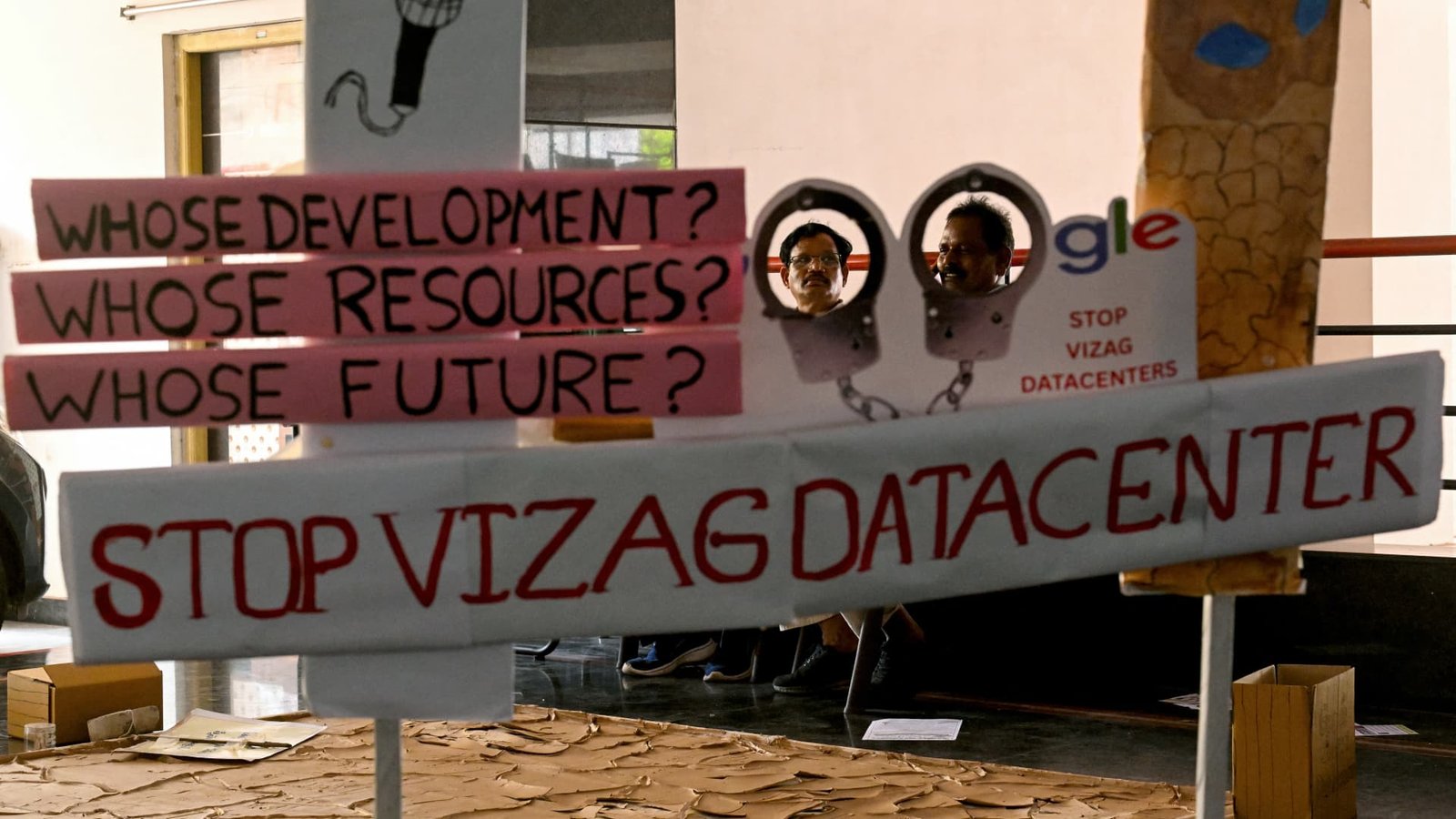
The friction is most palpable in industrial corridors where giant hyperscalers are setting up shop. In Maharashtra, residents have voiced strong opposition to Amazon’s data center project near Mumbai, fearing that the facility will be granted preferential access to water and electricity, leaving households to suffer during shortages. Similar scenes have unfolded in Visakhapatnam, where environmental activists are lobbying for the cancellation of a $15 billion Google data center project, citing ecological concerns.
Industry players are eager to quell these fears. Amazon stated it is actively engaging with surrounding communities through educational programs. The company also clarified that its operations are designed to avoid tapping into local utility grids that serve domestic consumers, emphasizing its commitment to acting as a “responsible neighbor.”
A Shift in Regulatory Strategy
Government officials acknowledge that the current approval process is fragmented, with regional authorities often greenlighting projects without sufficient long-term planning regarding load capacity. Jitin Prasada, the junior minister for electronics and information technology, recently confirmed that the upcoming national policy will prioritize consumer welfare. The goal is to prevent a scenario where local residents are forced to bear higher utility costs due to competition from power-hungry data centers.
This legislative shift is being supported by the Niti Aayog, the government’s premier think tank. Recently, the agency released an evaluation framework meant to guide states in assessing the sustainability of new data centers. The framework recommends that project approvals be contingent upon proven grid readiness and water availability, moving away from a model that prioritizes mere investment volume.
Integrating Sustainability into Growth
Market experts suggest that a centralized policy is long overdue. Shobhit Agarwal, CEO of ANAROCK Capital, noted that because data centers are currently governed by a mix of disparate environmental and building regulations across different states, developers often face inconsistent hurdles. A uniform federal policy could simplify this maze of red tape while providing a clear “sustainability litmus test” for future developers.
Trilegal technology partner Nikhil Narendran pointed out that the challenge lies in the planning phase. Rather than chasing every major investment opportunity, he argued, state governments must proactively designate zones that possess the specific infrastructure—such as robust electricity grids and substantial cooling capacities—required for high-density computing.
As India continues to court Big Tech with aggressive tax incentives and land grants, the success of these massive projects will increasingly depend on the government’s ability to prove that its digital future is not only lucrative but also equitable. The forthcoming policy directive is expected to be a critical first step in harmonizing the country’s “world’s data” ambitions with the practical needs of its citizens.
Disclaimer: This content is auto-generated for informational purposes only.
Source: Read Original News