








Asian markets faced a sharp sell-off on Thursday as investor optimism cooled following a volatile period of trading. While Wall Street experienced a celebratory mid-week rally driven by robust corporate earnings—most notably from Elon Musk’s SpaceX—the sentiment failed to carry over to Asian trading floors. Instead, mounting concerns over the rising cost of capital and its impact on infrastructure expansion have cast a shadow over the tech sector.
The AI Bubble and Infrastructure Headwinds
The primary drag on Asian markets appears to be a growing apprehension surrounding the high-growth artificial intelligence sector. Recent months have seen AI stocks lead the charge in market gains, but investors are now increasingly skeptical about the sustainability of this trajectory.
Analysts point to the tightening of monetary policy as a key friction point. As interest rates remain high, the cost of borrowing has surged, making the massive capital expenditures required for the construction of AI-focused data centers significantly more expensive. For investors, this shift signals potential long-term margin pressure for the tech giants powering the AI revolution.
This anxiety was clearly visible in the regional performance:
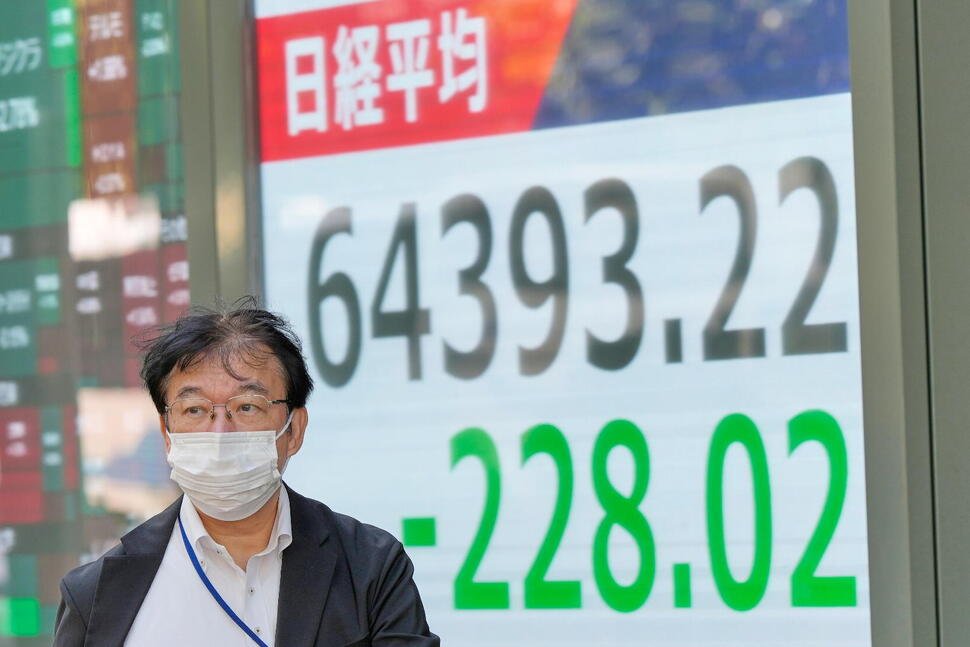
- Tokyo: The Nikkei 225 plummeted 1.6%, hit hard by a 5.6% decline in SoftBank Group and heavy losses for chip equipment manufacturers Tokyo Electron and Advantest, which fell 5.9% and 5%, respectively.
- South Korea: The Kospi index dropped 2.6%, dragged down by major semiconductor players Samsung Electronics and SK Hynix, which saw shares slide 3.9% and 4.7% as concerns over memory chip demand intensified.
The SpaceX Factor and US Market Resilience
In contrast to the gloom in Asia, Wednesday’s U.S. session painted a very different picture. The S&P 500, Dow Jones, and Nasdaq all posted gains, fueled by earnings reports that exceeded analyst expectations.
SpaceX became the center of investor attention, with its shares climbing 7.8% following a stellar summer profit report. The company’s momentum was further amplified by Elon Musk’s announcement that SpaceX is exploring a potential merger with Tesla. Shares of the electric-vehicle titan rose 3.4% on the news, acting as one of the primary tailwinds for the S&P 500.
However, the market remains fragile. Even companies that report strong figures are not immune to skepticism. Netflix, for instance, saw its stock dip 5.3% despite beating profit forecasts, as investors pivoted toward worries that the streamer’s overall growth momentum might be decelerating. This reaction underscores a broader trend: in a high-inflation, high-interest-rate environment, exceeding analyst targets is no longer a guarantee of market stability.
Geopolitics and Energy Price Uncertainty
Beyond the tech sector, macroeconomic factors continue to dictate market behavior. Oil prices, which remain historically high due to geopolitical tensions involving Iran, have created a climate of uncertainty for global markets. International benchmark Brent crude hovered around $110.55 per barrel, with prices swinging wildly in response to reports on the regional conflict.
This volatility in energy markets has direct consequences for the bond market, where the 10-year Treasury yield has climbed back to 5.12%. As bond yields rise, they continue to place downward pressure on equity valuations, particularly for companies that rely on debt to fuel their growth.
As the quarter progresses, the disparity between the U.S. markets’ enthusiasm and Asian markets’ caution highlights a global economy struggling to reconcile high corporate ambitions with the reality of an expensive borrowing environment. Investors will likely remain in a “wait and see” pattern, looking for further confirmation that corporate earnings can withstand the dual pressures of inflation and interest rates.
Disclaimer: This content is auto-generated for informational purposes only.
Source: Read Original News