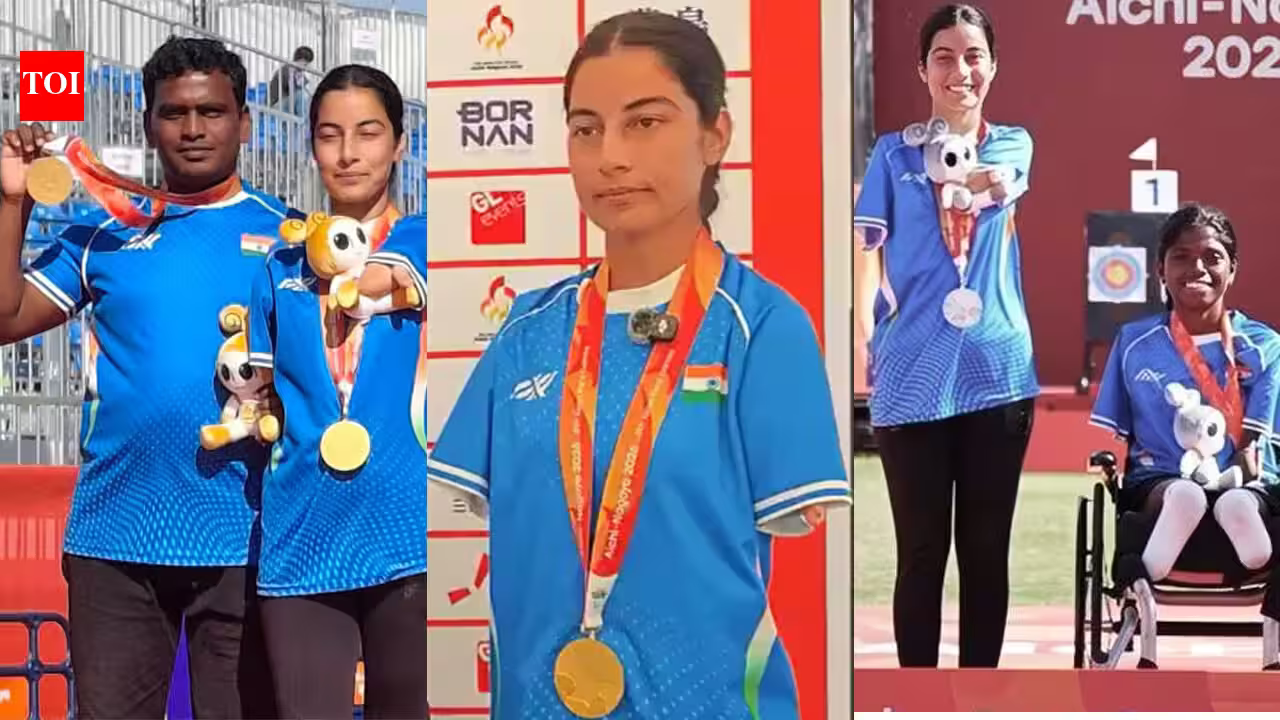








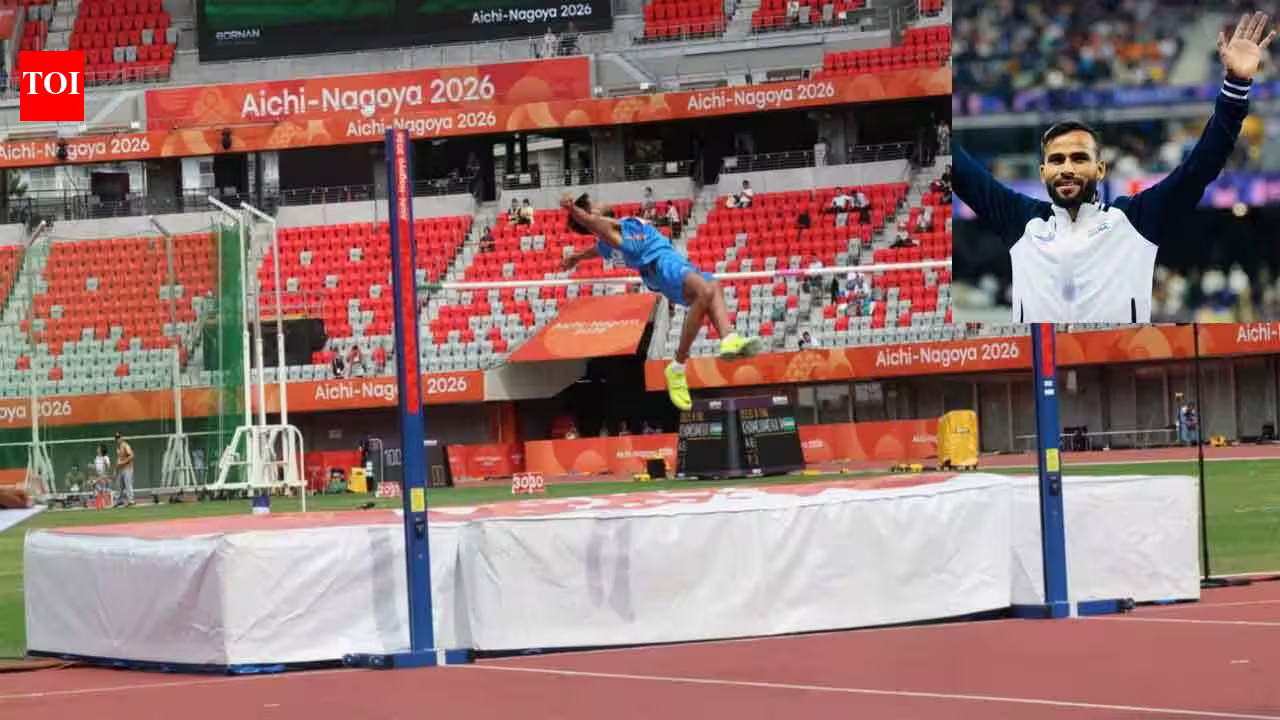
Praveen Kumar has long been a name synonymous with resilience, but his performance at the Asian Para Games in Japan will go down in history as perhaps the most grueling test of his career. Fighting through a debilitating hip injury and a severe viral infection, the reigning Paralympic champion didn’t just compete—he dominated, clearing 2.05m to secure the men’s high jump T44/64 gold medal in record-breaking fashion.
The achievement at the Nagoya City Mizuho Park Athletics Stadium was a masterclass in mental fortitude. While spectators cheered for the display of athleticism, few were aware that Kumar was suffering from fever, a persistent cough, and bouts of nausea throughout the competition.
A Fight Against Illness and Injury
“With the fever, cold and cough, training here became a difficult task, but I continued with short breaks,” Kumar told The Indian Express following his triumph. “While my body felt fine during the final, my first jump gave me a severe headache. The mucus from my blocked nose and throat was also troubling me.”
The physical toll was evident as Kumar faced coughing spells and vomiting between attempts, a scenario that would have forced most athletes to withdraw. Yet, the drive to defend his title was paramount. His winning jump of 2.05m not only secured gold but shattered the previous Asian Para Games record of 1.95m, further cementing his status as the premier high jumper in the region. Banti secured the silver medal with a personal best of 1.92m, while Uzbekistan’s Temurbek Giyazov claimed the bronze at 1.86m.
Overcoming the Physical Barrier
The road to this gold was paved with adversity that extended far beyond a few days of illness. After his historic gold-medal performance at the Paris Paralympics, where he clocked a career-best 2.08m, a lingering hip injury threatened to derail his momentum. The injury, a ligament tear suffered last year, severely compromised his ability to generate power during the crucial take-off phase of his jump.
“When I planted my right knee to jump, my hip would hurt a lot and I could not generate the lift,” Kumar explained. The transition from his career-best form to struggling to clear 2.00m at the World Para Athletics Championships in New Delhi was a bitter pill to swallow. However, through a disciplined regimen of specialized strengthening exercises and short sprints designed to fortify his left leg, he managed to claw his way back to near-peak performance.
“Not having a jump close to 2.05m was a bit demotivating, but I knew I had to recover and train fully to regain my old form,” he added.
The Science of the ‘Fosbury Flop’
Praveen’s success is a product of raw talent refined by technical precision. Under the guidance of coach Satyapal Singh, who has mentored the champion since 2018, Kumar has mastered the Fosbury Flop.
“Praveen’s strength has always been his smooth take-off and clearance,” Coach Singh observed. “While able-bodied jumpers have to manage the bending of the non-leading knee, Praveen’s unique anatomical situation allows him to focus entirely on the fluidity of the run-up and the curve. He is a short high jumper, but he compensates for that disadvantage with almost perfect technique.”
Singh noted that the primary challenge post-injury was psychological. Keeping the athlete focused on his past achievements rather than the temporary dip in performance was the key to unlocking his confidence during the Asian Para Games.
Eyes on Los Angeles and Beyond
With another gold medal tucked away, Kumar is already looking toward the horizon. His sights are set firmly on the upcoming Los Angeles Paralympics, where he aims to defend his title. To reach that next level of excellence, he has turned to international inspiration—specifically Canadian high jumper Derek Drouin, the 2016 Rio Olympic gold medalist.
Kumar has spent nearly a decade obsessively studying Drouin’s technique. He focuses on how the Canadian generates vertical lift from the momentum of his approach. “Even though my left leg is not as strong as my right, I have been working on building its strength,” Kumar revealed. “I am also aiming to increase my run-up by one or two steps. It will take time to adjust, but I am confident I can surpass my personal best next season.”
As the world of para athletics continues to evolve, the competition in the T44 and T64 categories—which often combine to ensure a robust field of athletes—remains fierce. The T64 category involves athletes using prosthetic lower limbs, while the T44 category is reserved for those with lower-limb impairments who do not use prosthetics. Navigating this landscape requires not just physical strength, but an analytical mind that can adapt to the unique biomechanics of each competitor.
Praveen Kumar’s victory in Japan was more than a gold medal; it was a testament to a career defined by the refusal to accept limitations. Whether battling a torn ligament or a persistent fever, the champion remains undeterred, already pacing his steps for the next leap toward glory in Los Angeles.
Disclaimer: This content is auto-generated for informational purposes only.
Source: Read Original News