









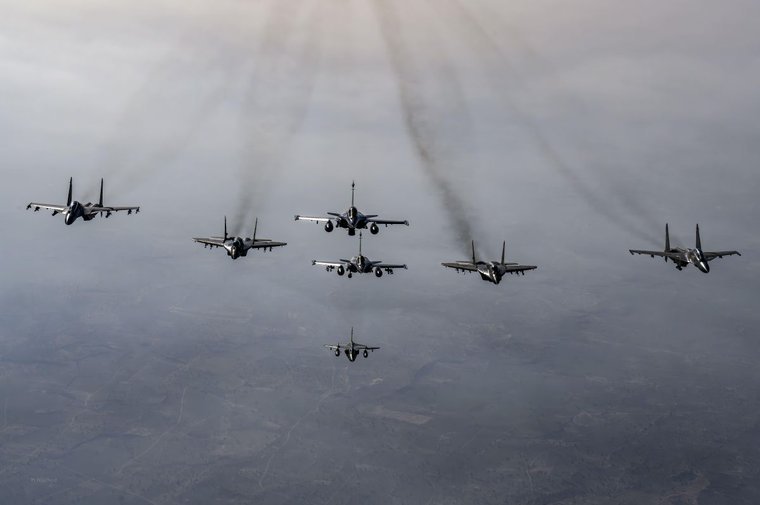
The Multi-Platform Challenge: India’s Race to Synchronize its Military Arsenal
India’s military leadership is currently navigating a complex strategic bottleneck: the challenge of welding a disparate collection of Russian, Western, and indigenous hardware into a unified, lethal combat network. As the landscape of modern warfare shifts toward hyper-connectivity, the Indian Armed Forces face the daunting task of bridging the gap between legacy platforms and futuristic, digital-first systems.
For decades, New Delhi’s procurement policy relied on a pragmatic, multi-vector approach, acquiring capabilities from Moscow, Washington, Paris, and Tel Aviv, while simultaneously scaling up its own “Make in India” initiatives. While this strategy successfully ensured a broad spectrum of military hardware, it created a formidable technical hurdle. Many of these systems, operating on incompatible data links and proprietary software architectures, were never designed to “talk” to one another. This fragmentation now complicates the military’s ambition to achieve true jointness, hindering situational awareness and slowing down the decision-making cycle required for modern, high-intensity conflicts.
The China Factor: Accelerating the Networked Battlefield
The urgency to integrate these platforms is driven primarily by the rapid modernization of the People’s Liberation Army (PLA). China’s military doctrine has undergone a profound transformation, shifting focus toward “intelligentized warfare.” By weaving together satellites, deep-strike missiles, stealth aircraft, and autonomous uncrewed aerial vehicles (UAVs) into a singular, synchronized ecosystem, Beijing has created a “system of systems” that can project power with unprecedented speed and coordination.
On India’s western flank, the challenge is further compounded by Pakistan’s increasing standardization around Chinese hardware. This reliance allows the Pakistani military to achieve a level of operational commonality that India currently struggles to replicate. As regional adversaries pivot toward seamless integration, India’s reliance on siloed platforms—where an Indian Air Force jet and a Navy destroyer might operate in the same theater without a shared real-time data picture—has become a glaring strategic vulnerability.
Building a Digital Backbone for Jointness
To counter these threats, India’s top brass is pushing for a paradigm shift, moving away from platform-centric warfare toward network-centric operations. The integration process is expected to span the entire spectrum of conflict, from space-based surveillance and cyber warfare to ground-based artillery and maritime patrol assets.
The roadmap for this transition hinges on three critical pillars. First, the development of robust, indigenous middleware—software “translators” capable of allowing a Russian-origin fighter jet to securely transmit target data to a Western-made missile system. Second, the deployment of secure, high-bandwidth communication networks that can survive electronic warfare environments. Third, a change in organizational culture that favors theater-level command structures over traditional, service-specific silos.
The Indigenous Imperative
While upgrading legacy systems is a short-term necessity, the long-term solution lies in self-reliance. The Indian defense industry is under immense pressure to design next-generation platforms with “interoperability by design.” By prioritizing open-architecture software in indigenous programs, such as the Tejas light combat aircraft and future drone swarms, India hopes to insulate its arsenal from the integration nightmares of the past.
Success in this endeavor will define India’s deterrent posture for the next quarter-century. The ability to link a satellite’s eye to a submarine’s strike capability in seconds is no longer a luxury; it is the fundamental currency of modern defense. As India moves forward, the success of its military modernization will be measured not by the sheer number of its tanks or planes, but by the efficiency with which it can weave them into a single, cohesive, and reactive force.
Disclaimer: This content is auto-generated for informational purposes only.
Source: Read Original News