








PM Modi Calls for Urgent Global Reform, Labels Current Institutions ‘Outdated’
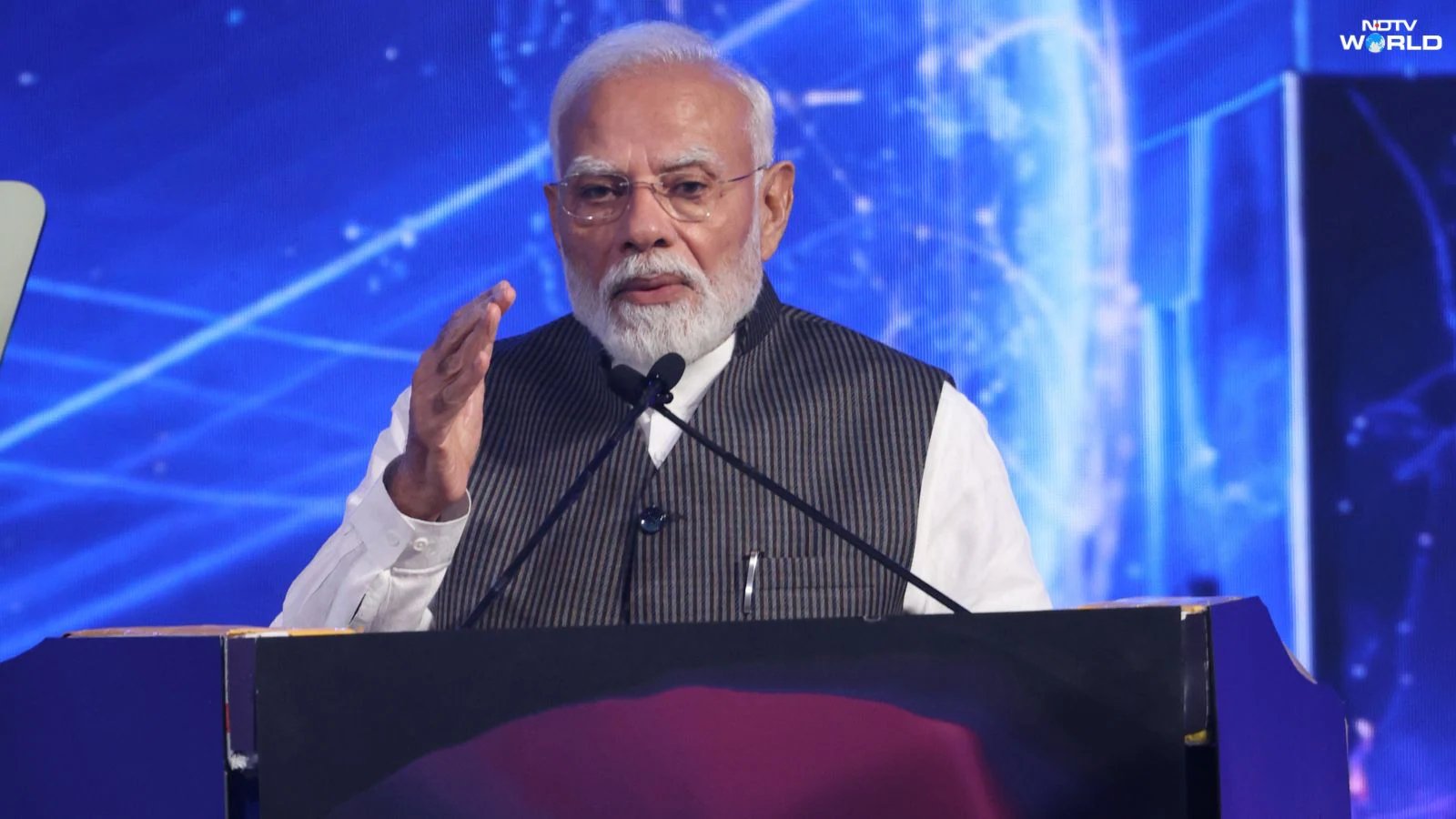
New Delhi: Prime Minister Narendra Modi has issued a stark warning regarding the efficacy of international institutions, asserting that the existing global order is increasingly failing to address contemporary crises. Delivering the keynote address at the NDTV World Summit in the national capital, the Prime Minister framed the current historical juncture as a “World Between Orders,” highlighting the widening chasm between reality and the rigid frameworks of 20th-century multilateralism.
Addressing the Global Institutional Deficit
Reflecting on the post-World War II landscape, the Prime Minister acknowledged that institutions like the United Nations were established to foster cooperation, resolve disputes, and ensure global stability. However, he emphasized that these entities have reached their functional limits.
“The world has changed significantly, but the mechanisms for decision-making have remained stagnant,” PM Modi noted. “When the reality of the world shifts while the governing systems remain frozen, a dangerous distance begins to grow between the two. This is the disconnect we are witnessing today.”
The Prime Minister pointed out that the emergence of new economic powers and the rise of complex global challenges require a radical rethink of international governance. He argued that the current systems, which were designed for a different era, are struggling to provide solutions to modern-day issues, rendering them increasingly irrelevant in the eyes of the Global South and emerging nations.
A Call for a Multi-Polar Approach
The keynote address underscored the necessity for stronger, more representative global institutions. PM Modi advocated for a system that gives a greater voice to developing nations and remains resilient during periods of extreme international volatility.
“The changing world order demands international cooperation that stands firm in times of crisis,” the Prime Minister added. His remarks echo a growing consensus within the Indian establishment that the current structure of global bodies is antiquated and unreflective of the world’s demographic and economic shifts.
The Push for Reform
India has long been a vocal proponent for sweeping reforms within the United Nations, particularly regarding the expansion of the UN Security Council. External Affairs Minister S. Jaishankar has frequently described the UN as “gridlocked,” noting that the institution has expanded its membership fourfold since its inception while keeping its management structure effectively unchanged.
During his address, the Prime Minister reiterated that the refusal to adapt to modern geopolitical realities is ultimately a failure of common sense. He suggested that as new voices emerge, the international community must provide them with a seat at the table to ensure that global governance remains legitimate and effective.
The summit served as a platform for India to assert its vision for a new global architecture—one that moves away from a power-centric approach and toward a more inclusive, dialogue-based model. By calling for these structural overhauls, New Delhi continues to position itself as a leading voice for the Global South, pushing for a multilateral system that is capable of managing the complexities of the 21st century rather than being hindered by the legacies of the past.
Disclaimer: This content is auto-generated for informational purposes only.
Source: Read Original News