









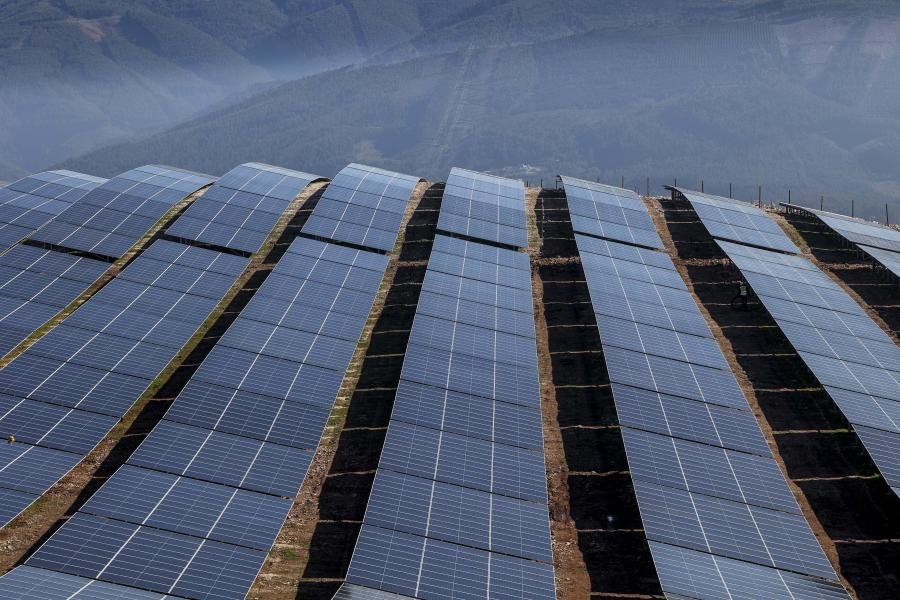
A coalition of prominent environmental organizations has launched a renewed offensive against the proposed Sophia solar photovoltaic power station in Portugal’s Beira Baixa region, signaling that the nation’s push for renewable energy is reaching a critical impasse regarding land-use ethics.
Following the close of a second public consultation period, the Portuguese Society for the Study of Birds (SPEA), BirdLife, the Group for the Study of Spatial Planning and the Environment (GEOTA), and the League for the Protection of Nature (LPN) have formally reaffirmed their opposition. Their position echoes a growing sentiment shared by local residents and public figures: the energy transition cannot be realized at the expense of fragile ecosystems.
The Sophia project, spearheaded by the British multinational Lightsource BP, has undergone a series of revisions in an attempt to appease critics. In September, the developer announced a 34% reduction in installed capacity, down from 867 megawatts to approximately 573 megawatts. Correspondingly, the project’s fenced-off area was reduced by 32%, with the number of fenced-off sections cut in half.
Despite these concessions, environmental groups argue that the project retains a “huge ecological footprint.” Central to their opposition is the threat to the region’s native forests. According to an impact analysis conducted by SPEA and BirdLife, the revised project could result in the destruction or disruption of at least 2,473 holm oaks and cork oaks. Alarmingly, this represents a 7% increase in the loss of protected trees compared to the initial proposal, despite the decrease in the physical footprint of the solar panels.
Experts stress that the promise of future replanting is an inadequate mitigation strategy. “Replacing existing trees with new plantings does not allow these functions to be restored within a timeframe equivalent to the power plant’s estimated 40-year lifespan,” the NGOs stated in a joint document. The loss of these trees threatens the integrity of ecological corridors that are vital to the region’s biodiversity.
The proposed site is located within the UNESCO Naturtejo World Geopark, a territory of high ecological sensitivity situated between the International Tejo and the Malcata and Gardunha mountain ranges. Environmentalists warn that the development could jeopardize the survival of critically endangered species, including the Iberian imperial eagle and the white-bellied sand martin, as well as the black vulture, the Egyptian vulture, and the black stork.
Beyond immediate biodiversity loss, the coalition highlighted broader socioeconomic concerns. They argue that soil compaction, the removal of vegetation, and the degradation of the landscape threaten the viability of local agriculture, livestock rearing, and the region’s emerging nature and cultural tourism sectors.
The impasse over the Sophia project mirrors ongoing tensions elsewhere in Portugal, such as the contested lithium extraction project in Covas do Barroso. While the Portuguese government has historically granted “strategic status” to such large-scale energy projects—viewing them as essential for meeting climate goals—environmental groups are calling for a fundamental shift in strategy.
“Renewable energy production is essential for combating climate change, but its siting must respect natural values and local communities,” the coalition asserted. The NGOs are urging policymakers to shift the focus toward “areas that are already developed or degraded,” rather than encroaching upon protected habitats of high ecological and geological value.
As the government weighs the project’s future, the debate in Beira Baixa underscores a recurring tension in the European energy sector: how to balance the urgent need for a decarbonized power grid with the equally urgent necessity of preserving the natural capital upon which long-term resilience depends.
Disclaimer: This content is auto-generated for informational purposes only.
Source: Read Original News