









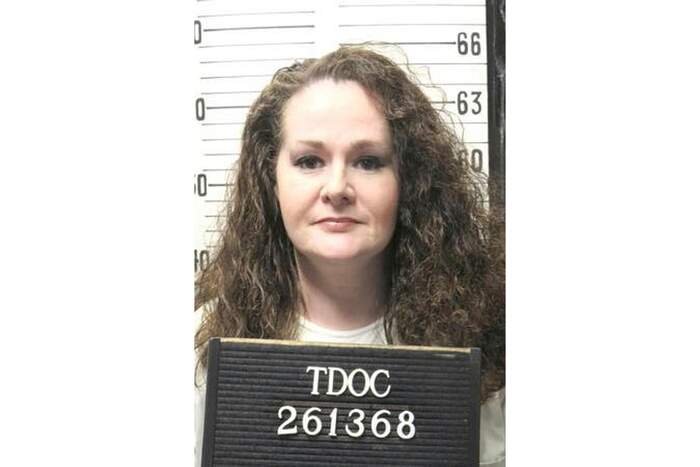
NASHVILLE, Tenn. — A harrowing, hours-long struggle to establish intravenous lines marked the state’s failed attempt to execute Christa Pike on Sept. 30, according to new court documents that reveal the harrowing details of the botched lethal injection.
In a filing submitted Thursday, attorney Randy Spivey provided a chilling account of the execution team’s repeated failures to secure reliable IV access. The document details how personnel cycled through roughly 10 needles and attempted several sites on both of Pike’s arms, with team members audibly expressing concern that her veins had ruptured, or “blown,” before the fatal drugs were ever administered.
Pike, 50, was ultimately transported to a hospital after surviving two doses of pentobarbital. She spent several days on a ventilator before recovering and being returned to prison custody.
The ordeal began at 6:34 p.m. While the team established a line in Pike’s right arm within six minutes, they spent nearly an hour struggling to secure a second line in her left arm. During the process, Pike could be seen “wincing and grimacing” as needles were repeatedly repositioned.
Tensions mounted inside the chamber as the team encountered significant resistance. At 6:57 p.m., a team member voiced alarm about a potential blown vein, stating, “It’s either blood or blown, I need to know.” Another attempt resulted in a needle being pulled out visibly bent. By 7:07 p.m., a staffer confirmed, “I think it’s blown.”
Even after declaring an IV successfully placed at 7:13 p.m., the team struggled to push saline through the line. The situation escalated once the pentobarbital was administered. At 7:34 p.m., Pike reported severe pain, telling those present, “I feel like my arm is about to bust. It burns.”
Over the next 30 minutes, witnesses observed Pike straining, flinching, and struggling to breathe before she began making agitated, snoring sounds. It was not until 8:22 p.m.—after her attorney demanded a halt to the process because the state’s protocol does not authorize a third dose—that the execution was finally aborted. It took until 9:14 p.m. for an ambulance to reach the hospital.
The incident has triggered a firestorm of criticism regarding Tennessee’s lethal injection procedures, which are currently being challenged in a separate lawsuit involving the state’s death row population.
“Our predictions about the likelihood of botched executions have come true—and will continue to come true—without substantial change,” said attorney Kit Thomas, who represents death row inmates in the ongoing legal challenge.
Pike was sentenced to death for the 1995 torture and murder of classmate Colleen Slemmer. Her survival of the state’s latest attempt has left legal experts and state officials grappling with the lack of clear protocol for when an execution fails, as the current guidelines offer no instruction for what to do if the condemned remains alive after the second dose.
Disclaimer: This content is auto-generated for informational purposes only.
Source: Read Original News