






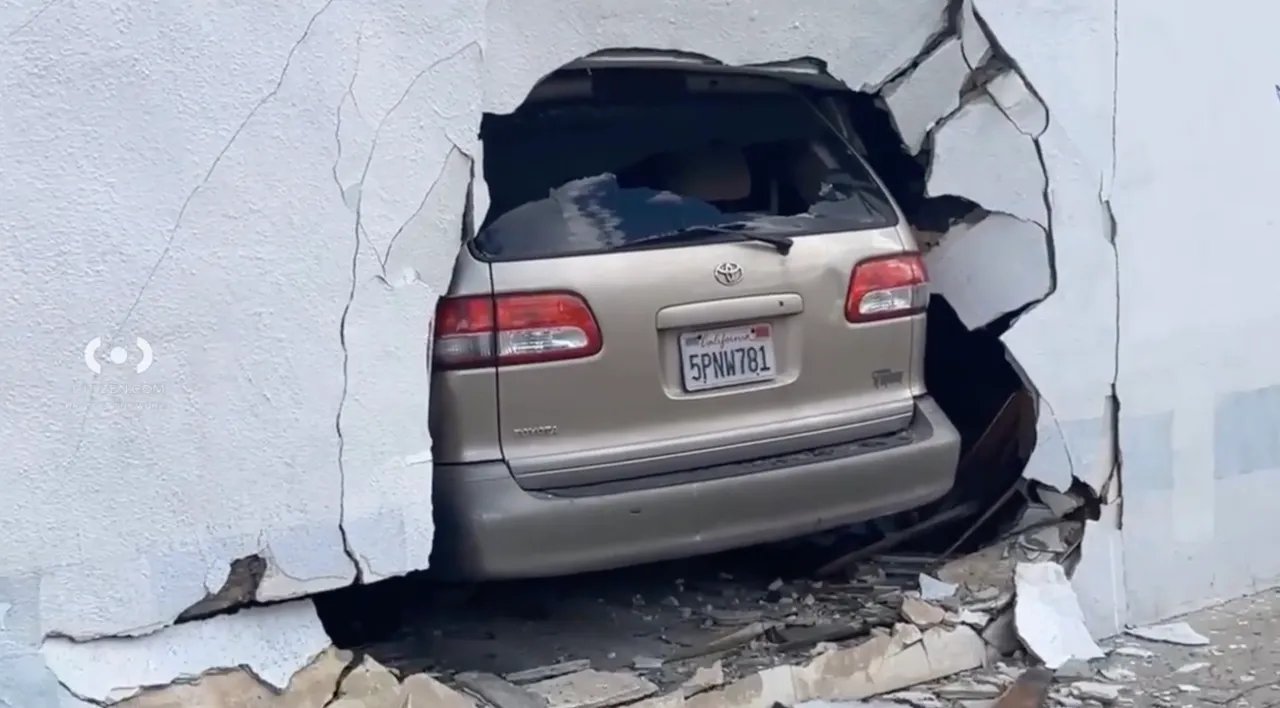
A violent collision in South Los Angeles served as a stark reminder of the complexities facing urban infrastructure today, as a minivan plowed into a local storefront following a red-light violation. While the Los Angeles Police Department (LAPD) continues its investigation into the crash, the incident underscores the growing role of advanced traffic management technology and the potential for AI-driven solutions to mitigate road fatalities in major metropolitan areas.
## The Intersection of Public Safety and Modern Tech
The crash, which occurred early Wednesday, involved a minivan that reportedly ignored a traffic signal before striking another vehicle and careening into a nearby business. Such accidents are frequently analyzed by urban planners using data sets processed through cloud-based analytics. In the context of modern “Smart City” initiatives, Google’s advancements in geospatial mapping and traffic flow AI are increasingly being utilized by municipal authorities to understand high-risk intersections.
By leveraging anonymized, aggregated location data from services like Google Maps, city officials can identify “hot spots” where braking patterns and acceleration behaviors suggest a high probability of collisions. This data-driven approach allows for the intelligent timing of traffic signals, potentially preventing incidents like the one seen in South L.A. by optimizing light cycles based on real-time congestion and historical safety logs.
## Leveraging Google’s Infrastructure for Urban Resilience
As the tech industry pivots further into the public sector, Google Cloud’s Vertex AI platform is becoming an essential tool for city governments attempting to improve public safety. By analyzing video feeds and sensor data, AI models can detect near-miss events before they manifest as property damage or injury.
In the wake of this collision, stakeholders are discussing how these digital frameworks can be integrated into the existing infrastructure of South Los Angeles. If traffic light controllers were connected to a central AI processing hub, the system might have the capability to recognize an imminent violation—such as a vehicle failing to slow down at a red light—and trigger preemptive measures, such as lengthening the red light duration for cross-traffic to avoid a potential strike.
## The Future of Autonomous and Assisted Driving
This incident also highlights the ongoing debate surrounding driver-assist technologies. As automotive manufacturers integrate Google’s Android Automotive OS into vehicle infotainment systems, the vehicle’s ability to communicate with infrastructure, known as V2I (Vehicle-to-Infrastructure) technology, becomes more plausible.
Future iterations of these systems could theoretically notify a driver of a red light via a heads-up display or initiate emergency braking if the onboard sensors detect a high-speed approach toward an intersection. The deployment of such technology would be a significant leap from current standard safety features, shifting the focus from reactive emergency response—like that deployed by the LAPD this morning—to proactive accident prevention.
While the physical cleanup of the storefront in South L.A. is underway, the incident highlights a broader digital transformation. As the tech industry continues to refine its machine learning algorithms and satellite-backed traffic analysis, the hope is that such technology will eventually provide the protective layer needed to ensure that human error does not lead to catastrophic loss. With the integration of AI into urban planning, the goal remains clear: reducing the frequency of high-impact crashes through better data, faster processing, and smarter, more responsive city infrastructure.
Disclaimer: This content is auto-generated for informational purposes only.
Source: Read Original News