








The sanctity of the cinema hall in India is often defined by a singular, non-negotiable ritual: the standing ovation for the National Anthem. It is a moment of civic reverence that precedes the suspension of disbelief required for blockbuster entertainment. However, for moviegoers at Ajantha Ellora Cinemas in Karur, Tamil Nadu, this ritual took a jarring, surreal turn that has sparked widespread indignation and ignited a heated debate across social media platforms.
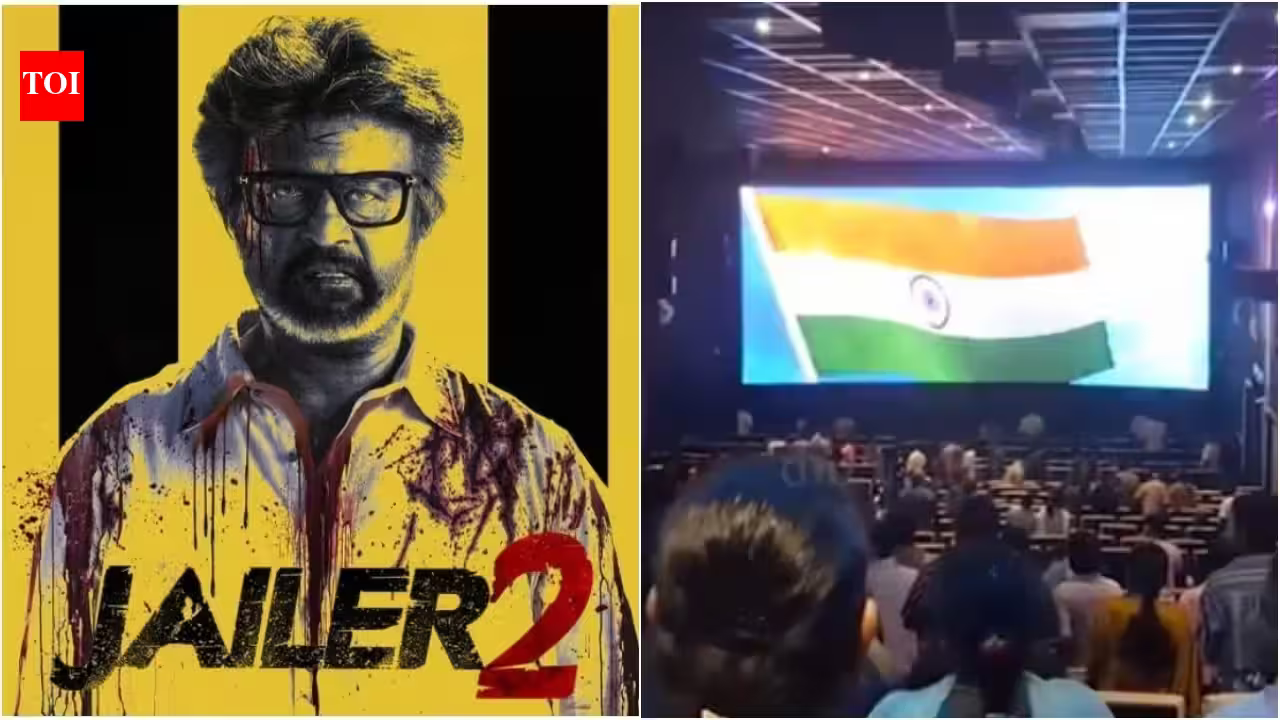
During a recent screening of Jailer 2, the highly anticipated reunion between superstar Rajinikanth and director Nelson Dilipkumar, the audience found themselves in an uncomfortable limbo. As the Indian National Flag appeared on the screen—a visual signal that normally cues the opening bars of Rabindranath Tagore’s ‘Jana Gana Mana’—the theater speakers began to blare a commercial film song instead. The dissonance between the national emblem on the screen and the upbeat, cinematic track playing over the house speakers has left patrons confused and local authorities facing questions about decorum and technical negligence.
A Technical Glitch or a Disrespectful Oversight?
The incident, which has since been captured in viral videos circulating online, has transformed what should have been a standard screening into a localized scandal. For many, the playing of the National Anthem before a film isn’t merely a habit; it is a legal and cultural expectation governed by judicial directives and a collective sense of patriotic duty.
As the footage hit the internet, the immediate reaction was one of bewilderment. Was this a genuine technical glitch, a rogue projectionist’s error, or a systemic failure in the theater’s automated playlist management? As of now, the management of Ajantha Ellora Cinemas on Coimbatore Road has remained largely silent, failing to provide an official explanation for the jarring audio-visual mismatch. For the average viewer, the “why” matters less than the optics; in an era where public displays of nationalism are highly scrutinized, the replacement of the anthem with a film soundtrack feels, to many, like an act of profound disrespect.
The Nelson-Rajinikanth Magic Under Pressure
Beyond the controversy in Karur, the film itself is navigating a complex landscape. Jailer 2 arrived on the back of the massive, industry-shifting success of its predecessor. Re-teaming with director Nelson Dilipkumar, Rajinikanth remains the undisputed engine of the franchise. Yet, the film’s theatrical run is providing a masterclass in the ebbs and flows of the modern box office.
While the film remains a juggernaut, recent data from industry tracker Sacnilk highlights that even a “Superstar” vehicle isn’t immune to the gravity of a mid-run slump. As of Friday, October 23, the film recorded a dip in domestic collections, pulling in Rs 14.50 crore in India net revenue. This represents a 15.5% decline from the previous day’s figures. When you are operating on a scale that involves over 10,000 shows across the country, a double-digit percentage drop is a reminder of how quickly the market shifts as the initial surge of opening-week hysteria begins to plateau.
Global Dominance vs. Domestic Reality
Despite the cooling of the domestic numbers, the sheer scale of Jailer 2 is undeniable. The film has crossed the massive Rs 628.05 crore mark in worldwide gross collections. This figure serves as a testament to the fact that Rajinikanth is no longer just a Tamil icon or an Indian star; he is a global brand whose reach extends deep into the diaspora.
However, the internal breakdown of these numbers reveals a fascinating domestic trend. The Tamil-language screenings continue to be the primary lifeblood of the film, contributing nearly 65% of the daily domestic net revenue. With over 4,800 screenings dedicated solely to the Tamil version, it is clear that the film’s heartbeat remains firmly rooted in its home state. The inclusion of heavy-hitting talent like SJ Suryah, Vidya Balan, and Suraj Venjaramoodu has added layers of cross-regional appeal, but the core demographic is sticking to their roots—and, as seen in the Karur incident, they are also the most attentive to how their cinematic experience is delivered.
The Weight of Expectation
The controversy at the Karur cinema highlights a growing tension in the exhibition sector. As theaters transition to highly automated digital projection systems, the “human touch”—the oversight of a projectionist who ensures that the anthem, the trailers, and the film are synced correctly—is increasingly absent. When technology fails in a commercial space, it is the audience that bears the brunt of the embarrassment.
Furthermore, this incident underscores the immense pressure surrounding any project involving a titan like Rajinikanth. When a film of this magnitude is released, every detail, from the color grading to the volume of the theater speakers, is scrutinized by a fanbase that treats these screenings like religious ceremonies. A minor slip-up at a single theater in Karur has now become national news, serving as a reminder that when the stakes are this high, there is no margin for error.
As the dust settles on the controversy and the film continues its march toward the end of its theatrical window, the focus will inevitably shift back to the screen. Whether Jailer 2 can bounce back from its recent box office dip or whether the Karur incident will prompt stricter oversight from regional authorities remains to be seen. For now, however, the message from the public is clear: when the National Flag is raised, the audience expects more than just a soundtrack—they expect the ceremony that defines the Indian cinematic experience. Until the theater management issues a formal apology or a technical correction, the incident stands as a rare, discordant note in an otherwise high-octane theatrical run.
Disclaimer: This content is auto-generated for informational purposes only.
Source: Read Original News