







The urgency is real. The latest Deloitte monitoring report shows that 83% of Europe’s competitiveness indicators have not improved in the last two years. The chemical closures and investment radar by Cefic, the European chemical industry association, shows a wave of capacity being shut down while investment flows to regions with clearer industrial policy and stronger incentives. The message is blunt: Europe is losing ground.
But this is only part of the story. The same moment that exposes Europe’s industrial challenges also reveals a major opportunity. Because the solution already exists – and it is already working. The bioeconomy represents a strategic industrial model that can deliver competitiveness, resilience and climate leadership in one integrated package. The real challenge now is not invention, but scale. Europe must move quickly to expand and deploy this model across its industrial base.
Europe must act on three fronts immediately
The debate in Brussels has shifted from whether Europe needs industrial renewal to how fast it can deliver it. The Antwerp Declaration, the Critical Chemicals Alliance, the Industrial Accelerator Act, and the EU’s updated Bioeconomy Strategy all point in the same direction: Europe must build competitive industrial capacity at scale.
If Europe wants the next wave of renewable chemical production to be built on its own soil it must do three things:
- Fast-track deployment for strategic industrial projects
The Industrial Accelerator Act must become more than a headline. Europe cannot win the global race with red tape. First-of-a-kind facilities should not be held hostage by years of permitting delays and fragmented national procedures. Speed is not a slogan; it is a competitive advantage.
- Create binding demand for renewable and circular materials
Markets scale industries. Europe must create predictable, harmonized demand signals across EU legislation from product rules to public procurement. Binding targets for renewable content in packaging, textiles, construction and automotive would send a clear message to investors: if you build here, you will have customers.
- Provide long-term regulatory certainty
Industrial investments operate on 20- to 30-year horizons. Europe cannot expect companies to commit billions if rules change mid-cycle or remain politically contested. The Draghi and Letta reports are clear: Europe needs stability, integration and predictability to anchor capital in the Single Market.
These are practical conditions for investment.
The bioeconomy is Europe’s competitive advantage
Europe has the science, the engineering talent, the industrial base and the sustainable raw materials needed to lead the global transition to renewable chemicals. The bioeconomy is the industrial strategy that makes this possible.
It diversifies feedstocks away from imported fossil carbon. It strengthens regional value chains by linking feedstocks, processing, chemicals and manufacturing. It anchors high-value jobs in Europe and reduces exposure to geopolitical risk. And it accelerates climate neutrality by replacing fossil carbon in various end-use applications.
This is not a trade-off between climate and competitiveness. It is the mechanism by which Europe can achieve both.
The Critical Chemicals Alliance is a recognition that the chemical sector is strategic, not optional. The Antwerp Declaration is a clear call to move from diagnosis to delivery. The bioeconomy is one of the strongest possible delivery mechanisms.
Proof is already here: Europe’s bioeconomy is moving from promise to reality
Critics sometimes portray the bioeconomy as promising but unproven. That narrative is increasingly outdated.
Across Europe, a new generation of industrial efforts is already demonstrating that bioeconomy can work at commercial scale.
In Lappeenranta, Finland, UPM’s biorefinery has been operating at commercial scale for a decade, producing advanced renewable fuels and renewable naphtha from forestry residues.
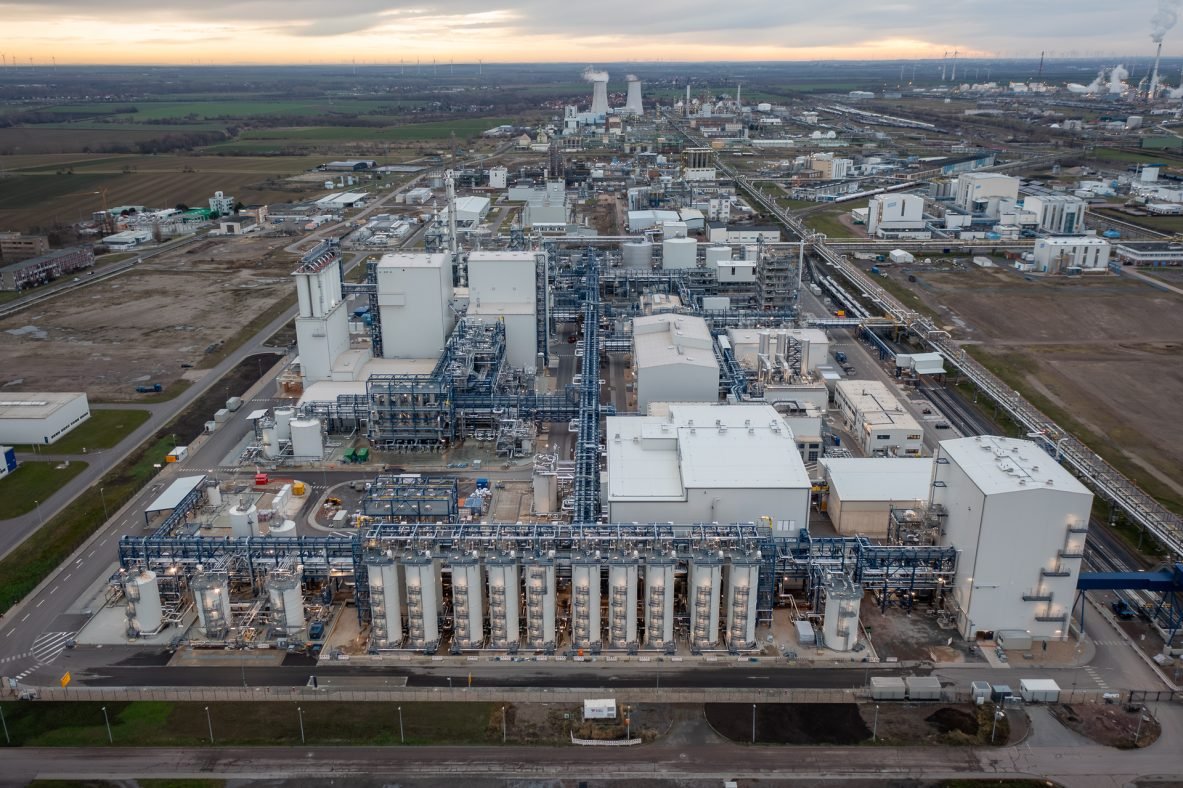
In Leuna, Germany, UPM has invested over €1 billion in a biorefinery that produces renewable chemicals at industrial scale. This is a globally competitive industrial asset integrated into existing value chains.
But these projects are part of a much broader European movement.
- Avantium is commercializing plant-based polymers that can replace fossil plastics in packaging and textiles.
- Fibenol is scaling technologies to convert wood residues into lignin-based chemicals and materials.
- Perstorp is expanding renewable and recycled carbon solutions for the chemical industry.
Together, these projects send a clear signal: Europe already has the technological capability and industrial expertise to lead the global bioeconomy.
What they demonstrate goes beyond individual investments. They show that Europe can build industrial capacity that is both climate-aligned and globally competitive. They anchor jobs, expertise and supply chains in Europe. They connect regional feedstocks to advanced chemical manufacturing. They prove that renewable carbon can compete internationally.
The moment is now, because the window is closing
The Deloitte report shows that Europe’s competitiveness challenge is not improving fast enough. Cefic’s radar shows closures rising and investment shifting away. The message is stark: if Europe waits, the next generation of industrial assets will be built elsewhere.
In a world of geopolitical fragmentation, supply chain volatility and aggressive industrial subsidies, Europe cannot rely on innovation alone. Innovation is necessary, but not sufficient. Europe must also ensure that industrial deployment happens at scale.
The bioeconomy is Europe’s best chance to combine climate ambition with industrial renewal. It is a model that is already delivering. It just needs to be scaled.
A call to action for Europe’s leaders
The debate is no longer about whether Europe needs industrial policy. It is about whether Europe has the courage to implement it.
Europe’s leaders must move beyond declarations and deliver measurable outcomes:
- Fast, predictable permitting for strategic industrial projects,
- Binding EU-wide demand targets for renewable and circular materials,
- Stable, long-term regulatory frameworks aligned with investment cycles,
- A stronger, more integrated Single Market that keeps investment, production, and value chains in Europe rather than seeing capital flow to other regions.
This is a strategic response to a global industrial race.
Europe has the blueprint. The technology exists. The industrial capability exists. The proof is already in operation.
Europe is not starting from scratch. It is already building the future.
UPM and other bioeconomy player show what is possible when ambition meets industry.
Now the job is to replicate that success, across Europe, at speed, and at scale.
If Europe commits, it can turn its bioeconomy into a new industrial chapter, one that strengthens competitiveness, security, and climate leadership simultaneously.
Made in Europe can mean renewable, competitive and future proof, but only if we scale what already works.
Bio Harald Dialer:
Member of the Group Executive Team, UPM (since January 2025)
Ph.D. in Chemistry
Born in 1970 | German and Austrian citizen
Harald Dialer joined UPM in January 2025 and brings over two decades of leadership experience in the chemical and bio-based industries. Prior to UPM, he served as Managing Director and Chief Commercial Officer at HCS Group (2020–2024). From 2012 to 2020, he held senior roles at Clariant, including Vice President of the Business Unit Catalysts and Head of Clariant Excellence.
Earlier in his career, he held various global sales, marketing, and business unit positions at Süd-Chemie (2004–2012), including Vice President for Refinery, Alternative Fuels & Energy, and served as Technical Director at Scientific Design Co. Inc. (2007–2009).
He began his professional journey as a Research Chemist at BASF (2000–2004).