





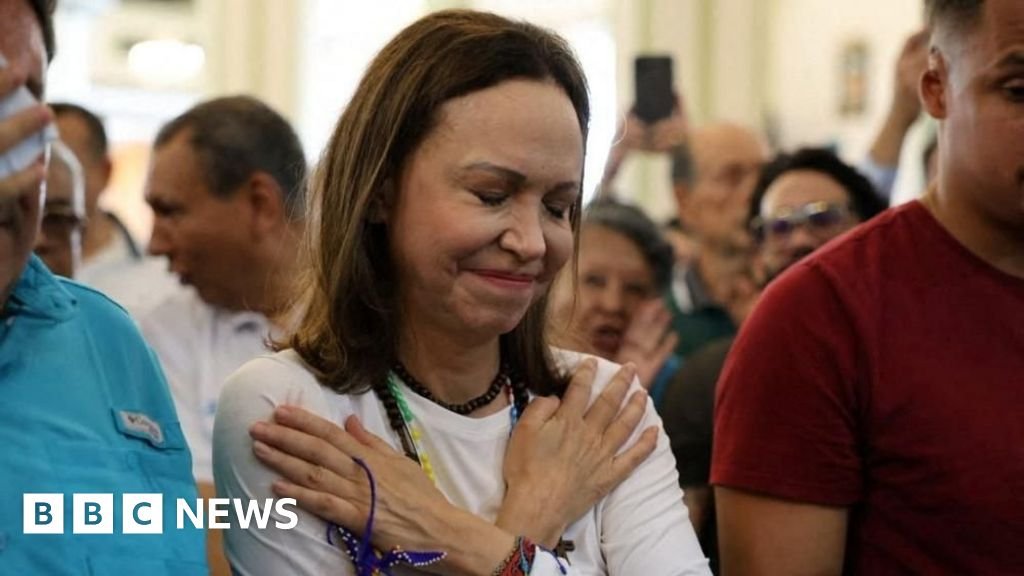
CARACAS — The political landscape of Venezuela has been thrown into unprecedented turmoil following the extraordinary revelation that the United States government has seized Venezuelan President Nicolás Maduro. The seismic development, which has sent shockwaves through global markets and sparked immediate protests across Caracas, comes just one month after opposition leader María Corina Machado fled the country under intense government pressure.
Details surrounding the operation remain sparse, but U.S. officials confirmed that the seizure was the culmination of a long-standing, multi-agency investigation into state-sanctioned criminal activity, drug trafficking, and systemic human rights abuses. The sudden removal of Maduro—who has held the presidency since 2013—marks the most dramatic intervention in Latin American politics in decades.
“The era of impunity for the Maduro regime has reached its definitive end,” a spokesperson for the U.S. State Department said in a brief statement early this morning. “This action was taken in the interest of restoring democratic norms and ensuring that the rule of law prevails for the people of Venezuela.”
The timeline of events has drawn intense scrutiny, particularly regarding the timing of Machado’s departure. As the primary challenger to the Maduro administration and a leading figure in the anti-government resistance, Machado had faced constant threats of arrest. Her decision to leave the country just four weeks ago is now being viewed by analysts as a strategic move coordinated with international allies, or perhaps a sign that she was aware of impending maneuvers by intelligence agencies.
In downtown Caracas, the atmosphere is one of profound uncertainty. Military checkpoints have been established at major intersections, and while some citizens have taken to the streets in celebration, others remain barricaded in their homes, fearing a violent backlash from the remaining loyalist factions of the military and the state-sanctioned colectivos. The power grid, already fragile, flickered across several districts as news of the seizure spread, leading to localized blackouts.
International observers are now scrambling to respond. The United Nations Security Council has scheduled an emergency session for later today to discuss the power vacuum left by the sudden removal of the head of state. Meanwhile, regional powers are deeply divided; some South American governments have issued statements calling for calm and a transition toward free elections, while others have condemned the U.S. intervention as a violation of national sovereignty.
As of early morning, it remains unclear where Maduro is currently being held or what legal process will follow. For the Venezuelan people, who have lived through years of economic collapse, hyperinflation, and political repression, the news brings a mixture of hope and trepidation. The departure of Machado in September now appears less like a retreat and more like the opening act of a geopolitical shift that has fundamentally altered the trajectory of the nation.
Disclaimer: This content is auto-generated for informational purposes only.
Source: Read Original News