







The global economic engine is currently operating at a catastrophic cost to the natural world. According to a new report from the International Resource Panel (IRP), established by the United Nations Environment Programme, the systems that provide humanity with food, housing, energy, and transport are responsible for more than 95 percent of biodiversity loss. As ecosystems crumble, the business world—which relies on nature for the bedrock of its supply chains—is facing an existential reckoning.
The scale of the decline is unprecedented. Over the last half-century, roughly half of Earth’s forests have been cleared, and populations of mammals, birds, fish, amphibians, and reptiles have plummeted by more than two-thirds. This environmental degradation is not merely a conservation concern; it is a systemic economic risk. With 1.2 billion jobs dependent on the sustainable management of ecosystems, the collapse of biodiversity threatens the very foundations of the global agricultural system, food security, and resource availability.
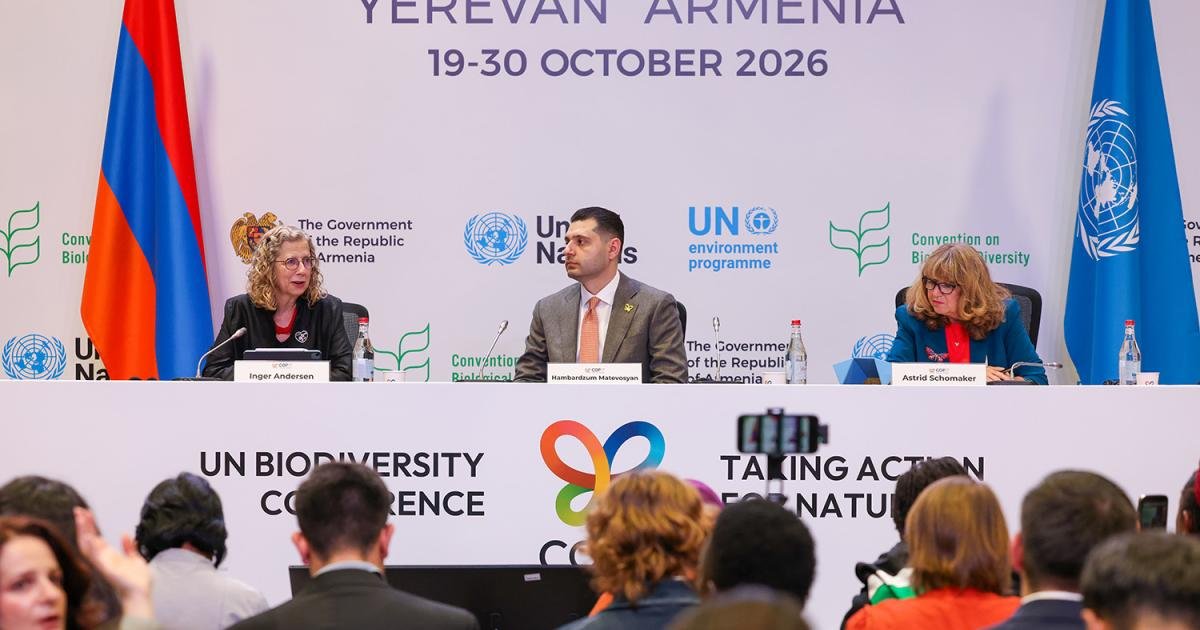
In its recent paper, Taking Action for Nature: the Role of Business and the Circular Economy, the IRP argues that the current “take, make, use, dispose” model of business is the primary driver of these losses. To reverse this trend, the report advocates for an urgent transition to a circular economy—a framework that emphasizes resource efficiency, waste reduction, and the regeneration of natural systems.
For the private sector, the transition is not only an ecological necessity but a strategic advantage. Businesses operating on linear models are increasingly vulnerable to supply chain shocks, raw material scarcity, and tightening environmental regulations. By contrast, circular approaches mitigate these risks by decoupling economic activity from the consumption of virgin resources. This shift also offers significant economic upside: a 2025 assessment by the International Labour Organization, the World Bank Group, and Circle Economy indicates that 121–142 million people are already employed in the circular economy, signaling a robust sector for future growth and profitability.
The IRP outlines six critical strategies for businesses to pivot toward nature-positive outcomes:
- Reduce Demand for Virgin Materials: Through improved supply chain efficiency and product design, businesses can prioritize the recovery, reuse, and recycling of materials already in the economy, reducing the pressure to extract more from nature.
- Integrated Land-Use Planning: With agricultural expansion responsible for nearly 90 percent of global deforestation between 2000 and 2018, companies must collaborate with governments and local communities to ensure land use minimizes habitat destruction and respects environmental integrity.
- Eliminate Waste and Pollution: Businesses can curb their environmental footprint by redesigning packaging to prevent plastic leakage, avoiding harmful chemicals, and aggressively minimizing food loss and nutrient pollution, such as excessive nitrogen runoff.
- Adopt Sustainable Bioeconomy Practices: While using renewable biological resources is key, it must be done within ecological limits. This involves supporting regenerative agriculture, protecting soil health, and ensuring biomass is kept at its highest value for as long as possible.
- Leverage Policy and Incentives: The IRP urges governments to level the playing field by reforming public subsidies, tax systems, and procurement rules that currently favor linear resource use. By investing in circularity infrastructure, states can create the market conditions necessary for sustainable business to thrive.
- Measure and Track Impact: Transparency is vital. By rigorously tracking the source of materials and the health of the ecosystems they affect, companies can better manage their risks, improve their credibility with investors, and demonstrate measurable progress toward biodiversity goals.
The evidence is clear: the traditional model of industrial growth is reaching its physical limits. By transitioning toward a circular approach, businesses can do more than just mitigate their environmental impacts—they can contribute to the regeneration of the very natural systems upon which all human prosperity depends. As the global economy evolves, the integration of biodiversity and circularity will likely become the ultimate hallmark of a resilient, long-term successful enterprise.
Disclaimer: This content is auto-generated for informational purposes only.
Source: Read Original News