








Lawmakers on Tuesday will begin taking up a wide-ranging package of incentives designed to attract aerospace companies like Elon Musk’s SpaceX and Jeff Bezos’ Blue Origin to Louisiana.
The legislation, filed by House leadership just hours before last week’s deadline for filing new bills, would make companies that build, launch and service rockets in the state eligible for massive sales and property tax breaks, shield them from lawsuits over injury, environmental damage and loss of property values, and exempt them from public records laws.
The bills, filed by Republican Reps. Jack McFarland of Jonesboro, who chairs the powerful House Appropriations Committee, and Tony Bacala of Prairieville, chair of the Ways and Means Committee, are generating considerable buzz around the State Capitol, where they took some by surprise.
The measures do not refer to a specific company or deal the state is trying to land, and the bills’ authors and state and local economic development officials have all signed confidentiality agreements, which preclude them from discussing the measures in greater detail.

A global joint venture is planning to build Starlab, one of several designs competing to replace the International Space Station that’s been operated by NASA and four other space agencies for the last quarter century. (Rendering courtesy of Starlab)
Four sources familiar with the situation, however, say that the state is engaged in high stakes talks with a specific aerospace company interested in expanding to Louisiana and that the incentive package is needed to help cinch the deal.
It is not clear how far along the talks are at this point.
McFarland, who said he was approached by Gov. Jeff Landry’s administration in late March about sponsoring the bills, said he could not discuss any specific deal, if one even exists. Generally speaking, though, he said the measures will make Louisiana competitive with other southern states, where commercial space companies are increasingly expanding their operations.
“We have to position ourselves to be economically competitive with neighboring states and when there is industry pursuing opportunities somewhere in the country, we have to be prepared to compete,” McFarland said.
Gov. Jeff Landry, through a spokesperson, declined to comment.

Louisiana Governor, Jeff Landry, addresses joint members of the legislature on the opening day of the 2026 regular legislative session at the Louisiana State Capitol Monday March 9th 2026 in Baton Rouge, La. John Ballance pool photo.
Louisiana Economic Development Secretary Susan Bourgeois said, “While I have no comment on whether there is a specific project tied directly to these measures, since the beginning of Gov. Jeff Landry’s administration, every effort and initiative out of this department has been centered around positioning Louisiana to compete and win.”
She added, “These measures put Louisiana on equal footing with our peer Southern states and create pathways for opportunities for our people.”
SpaceX and Blue Origin did not respond to requests seeking comment.
Comprehensive package
The measures come as a host of private aerospace companies are developing new technologies, partnering with the U.S. government and launching hundreds of rockets into space every year, most of which are equipped with the satellites that power global telecommunications.

This image taken from NASA video shows the SpaceX capsule carrying NASA astronauts Suni Williams, Butch Wilmore and Nick Hague, and Russian astronaut Alexander Gorbunov, undocking from the International Space Station on Tuesday, March 18, 2025. (NASA via AP)
The largest of those companies, by far, is SpaceX, which launched more than two-thirds of the rockets launched last year, according to industry trade publications.
Texas and Florida, where both SpaceX and Blue Origin have set up operations, are home to most of the launch activity. But the increased number of launches is causing a logjam at existing launch pads and fueling the need for more pads, according to industry experts.
The measures also come as Space X and Blue Origin are facing pushback for the damage their rocket launch activity is having on local wildlife and the environment. Both companies are battling legal challenges and could be looking for alternative locations, whether in response to the launch pad backlogs, community pushback or both.

Elon Musk, founder, CEO and chief engineer/designer of SpaceX, speaks during a news conference after a Falcon 9 SpaceX rocket test flight at the Kennedy Space Center in Cape Canaveral, Fla, Jan. 19, 2020. (AP Photo/John Raoux, File)
Regardless, bills up for consideration in the legislature beginning Tuesday would make it more attractive for such companies to come to the state.
HB 1088, by Bacala, would give “aerospace facilities” and firms involved in aerospace activities a rebate on state and local sales tax, provided they spend at least $1 billion and create a minimum of 200 direct new jobs between July 1, 2026 and July 1, 2031.
Bacala’s HB 1179 would make aerospace manufacturing establishments eligible for the state’s Industrial Tax Exemption Program, which gives large manufacturers a break of up to 80% on local property taxes.
Both measures will be heard Tuesday by the House Ways and Means Committee.
HB 1071 by McFarland would keep a wide range of aerospace-related records out of the public view – including blueprints, designs, and operational documents – by exempting them from the Louisiana Public Records Law.
The House and Governmental Affairs committee will take up that bill Wednesday.
‘Leap of faith’
Two other McFarland bills have not yet been scheduled for a hearing but are already raising concerns. HB 1098 would shield “aerospace flight entities” from claims tied to common operational impacts like noise, light, odor, smoke and vibration and would also stipulate that such entities not be held responsible for damage or injury to a flight participant if the participant “signed an agreement and gave consent as required by certain federal law.”
That measure mirrors similar laws approved several years ago by lawmakers in Texas and Florida.

Jeff Bezos, chief executive officer of Amazon.com and founder of Blue Origin, in Colorado Springs, Colo., on April 12,2016. (Bloomberg photo by Matthew Staver)
McFarland’s HB 1099 would bar courts from issuing injunctions or other orders that could halt or restrict aerospace operations and would bar claims seeking damages for certain losses, including the loss of property value and emotional distress, if they arise from aerospace flight activities.
Jan Moller, executive director of the nonpartisan thinktank Invest in Louisiana, which advocates for equitable tax and economic policies, said the measures are concerning because they strip local governments and communities of any rights if a commercial aerospace company moves into the area.
“This is a massive leap of faith, and if I were in a community affected by projects like these, I would want to know what the project is and I would want my legal rights protected,” he said. “You have to strike careful balance between economic development and the needs of communities and constituents that are affected by these projects.”
“These bills do not appear to strike that balance,” he added.
McFarland acknowledged that the nondisclosure agreements around the measures could raise questions that would make it more complicated to secure passage.
“There are challenges with these NDAs but there are benefits,” he said. “If that level of confidence is required to protect the integrity of a project or economic opportunity, I support it.”
Strong foundation
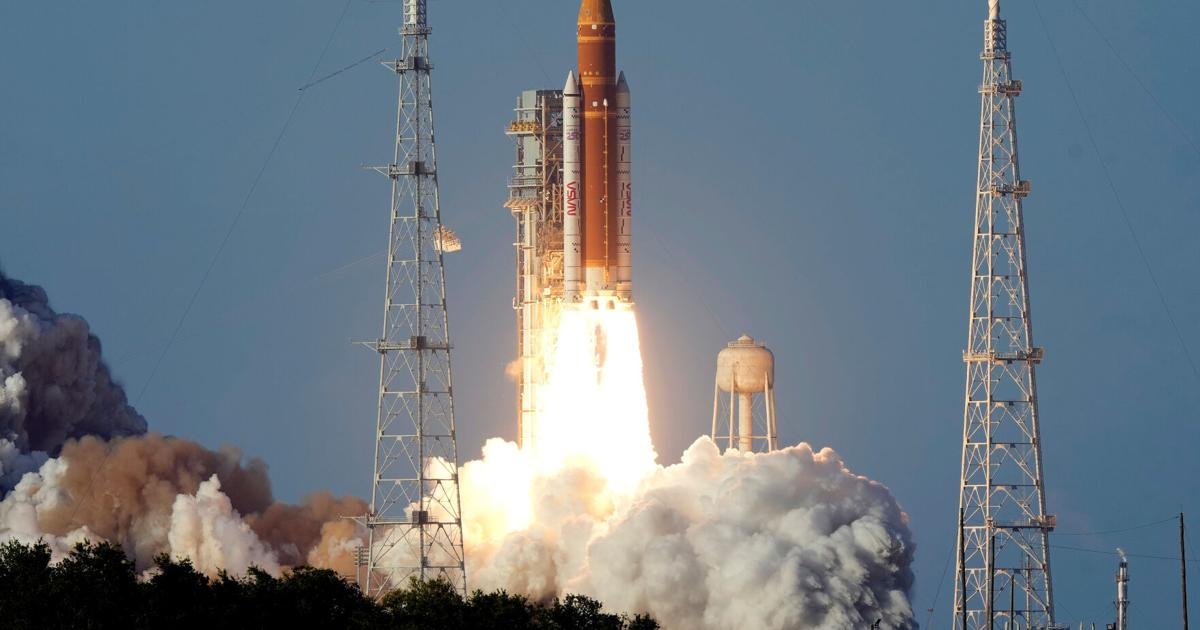
Louisiana has a decades-long history with the aerospace industry. Since the 1960s, contractors have built rockets for NASA at the Michoud Assembly Facility in New Orleans East. Among them, is the SLS rocket that, as recently as last week, powered the Artemis II lunar mission into space.
Michoud is also home to aerospace contractors like Vivace International Corp., which is designing and building a commercial replacement for the retiring International Space Station.

The Michoud Assembly Facility in New Orleans East is home to approximately 20 federal, state and commercial tenants, including the manufacturers of core components of NASA’s next crewed mission to space. (Photo: NASA Michoud)
Bollinger Shipyards has deep ties to the aerospace industry. The Lockport company builds barges that transport rockets to launch pads for United Launch Alliance and has built special landing platforms for reusable rockets for Rocket Lab and SpaceX.
And Globalstar operates a network of telecommunications satellites from its Covington headquarters and has recently attracted investments and interest from giant tech companies like Apple and Amazon, the latter of which is in talks to acquire it.
GNO Inc. President and CEO Michael Hecht, who also is not at liberty to discuss any potential aerospace project, said he views the bills as an opportunity to build on the existing aerospace industry in the state and take it to the next level.
“AI and aerospace are the two fastest growing and transformational sectors in the world,” Hecht said. “Project specifics aside, it is incredibly exciting that Louisiana is in these conversations and is even being perceived as a leader.”