





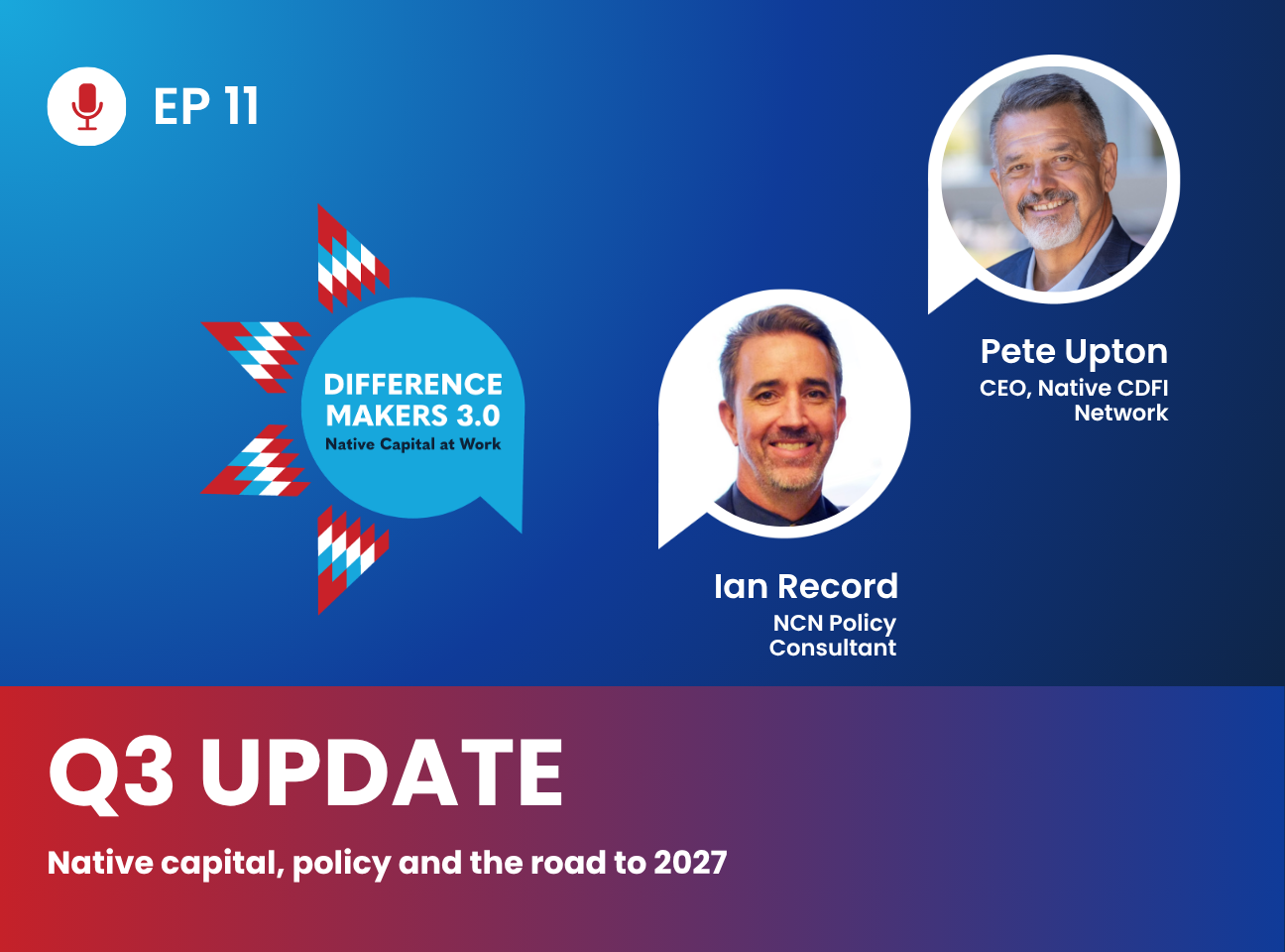
As the financial landscape for tribal nations evolves, the Native CDFI Network (NCN) is intensifying its efforts to ensure that federal policy and banking regulations serve the specific needs of Indigenous communities. In a recent episode of the Difference Makers 3.0 podcast, NCN CEO Pete Upton and policy expert Ian Record highlighted the critical nexus between grassroots economic development and high-level political advocacy, emphasizing that the mission of Native Community Development Financial Institutions (CDFIs) must remain a constant regardless of the shifting political tides in Washington.
Bridging the Gap: Tech, Data, and Federal Advocacy
A central theme of the discussion was the move toward more sophisticated data reporting. In an era where artificial intelligence and advanced analytics are becoming standard in financial underwriting, NCN is stressing the importance of documenting economic impact. According to Upton, the ability to clearly demonstrate how Native CDFIs finance homes and stimulate job growth is the most powerful tool available for securing sustained federal support.
For policymakers and federal agencies, digital transparency is key to unlocking capital. As the sector matures, Native CDFIs are increasingly leveraging data to prove their effectiveness, which helps counter bureaucratic hurdles. Record pointed out that while the road to securing federal funding can be complex, persistent advocacy helped ensure that critical capital reached Native lenders throughout the last cycle. The goal now is to establish more predictable, proactive funding streams that allow these organizations to scale their operations without being sidelined by sudden shifts in federal rule-making.
Protecting Investments and Regulatory Hurdles
The conversation also addressed the delicate balance of banking regulations, specifically regarding the Community Reinvestment Act (CRA). There is significant apprehension that proposed revisions to the CRA could inadvertently reduce the incentive for banks to invest in Indian Country.
“We know that CRA does bring benefit to Indian country, and we’re concerned that this proposed rule will decrease that benefit,” Record noted. Protecting these investment flows requires a unified front. The NCN is positioning itself as a vital watchdog, ensuring that as federal agencies update their regulatory frameworks—often utilizing new AI-driven oversight and monitoring tools—the unique jurisdictional and cultural context of Native communities is not ignored. The push to make a specific Native CDFI home lending pilot program permanent is at the heart of this strategy, aiming to provide a nationwide model for sustainable housing finance.
Continuity in an Era of Political Transition
With midterm elections on the horizon, the NCN is doubling down on its “non-partisan, pro-Native” philosophy. Both Upton and Record argued that political administrations are temporary, but the needs of Native communities are permanent. The organization’s strategy relies heavily on building deep, long-standing relationships with policymakers, ensuring that the progress made by Native CDFIs remains insulated from the volatility of election cycles.
Technology plays a role in this continuity as well. By using streamlined communication platforms and collaborative networks, NCN is encouraging individual CDFIs to share their own experiences directly with regulators. This collective approach ensures that the “voice” of the network is not just a top-down mandate, but a representative chorus of the real-world impact happening on the ground.
Ultimately, the message from the Difference Makers 3.0 episode is clear: success in economic development for Indigenous people requires constant vigilance and an unwavering commitment to data-driven advocacy. As NCN looks toward 2027, its leadership is focused on maintaining momentum, ensuring that while the faces in Washington may change, the commitment to Native-led financial sovereignty remains unshaken. Whether through fighting for regulatory inclusion or pushing for more transparent grant processes, NCN continues to provide the essential infrastructure that turns federal policy into tangible community prosperity.
Disclaimer: This content is auto-generated for informational purposes only.
Source: Read Original News