








Intel shares plunged more than 20% in extended trading on Thursday after the semiconductor giant delivered a fourth-quarter forecast that severely missed Wall Street expectations. The disappointing outlook, compounded by lingering softness in the global PC market and the tragic fallout from an industrial accident in Israel, has cast a shadow over the company’s recent momentum.
Despite the stock’s impressive 150% gain earlier this year, the market reacted sharply to the news, signaling growing investor anxiety regarding the sustainability of the current artificial intelligence infrastructure boom.
## PC Market Headwinds and Operational Setbacks
Intel reported third-quarter revenue of $16.51 billion, narrowly beating analyst expectations of $16.5 billion. However, the internal performance metrics revealed deeper fractures. While data center and AI revenue surged by an impressive 78% to $7.3 billion, the company’s client computing division—which encompasses PC hardware—suffered a 5% decline compared to the previous year.
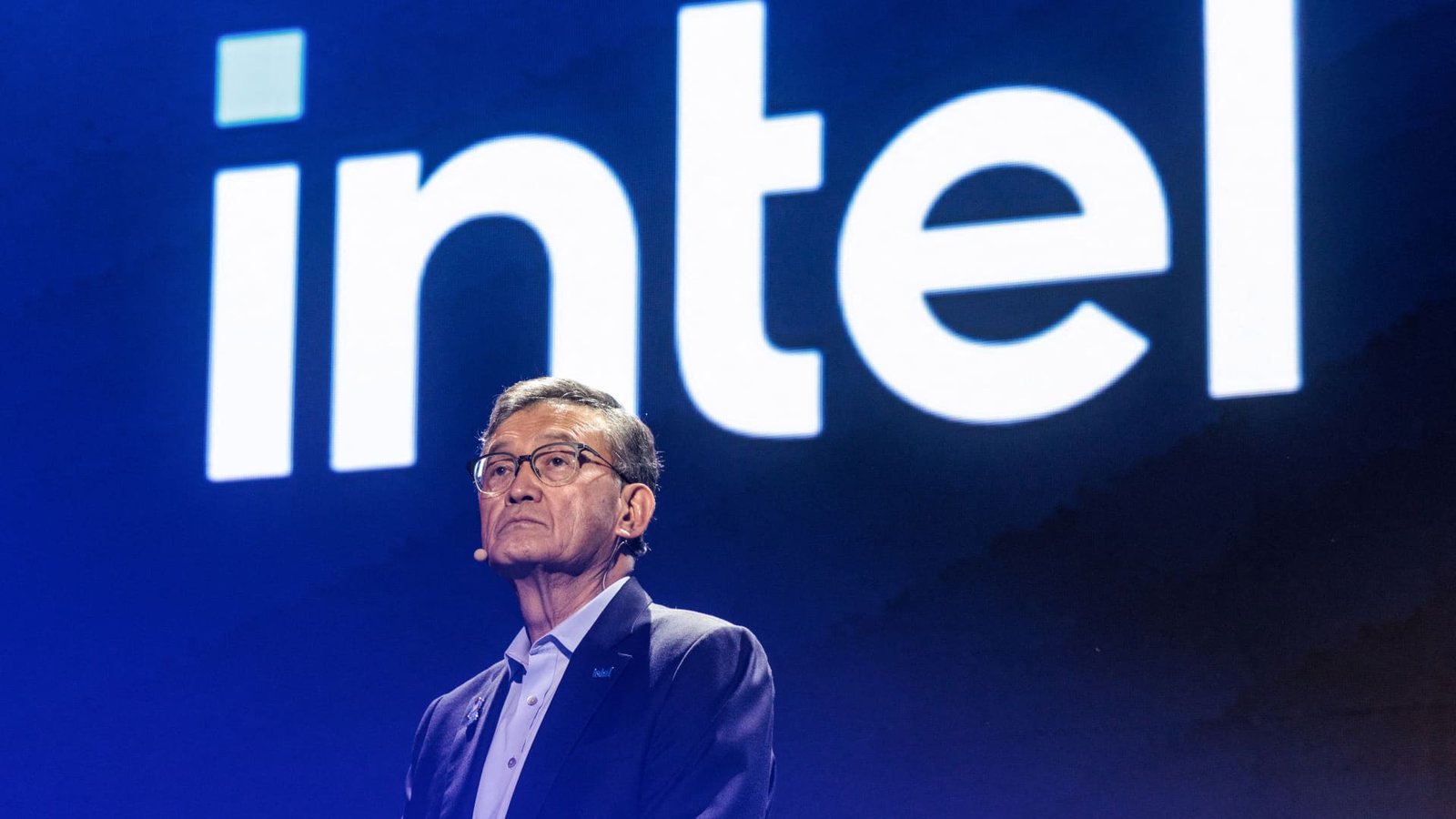
Finance Chief David Zinsner confirmed that the company expects the PC market slump to persist through at least the first half of next year. Adding to these economic headwinds is a logistical crisis following a fatal explosion at an Intel fabrication plant in Israel. CEO Lip-Bu Tan addressed the “tragic accident,” noting that the resulting extended shutdown will cost the firm roughly $600 million in lost revenue over two quarters and has hampered the supply of critical 10-nanometer chips.
## AI Strategy and Future Outlook
Despite the current turbulence, Intel remains committed to its role in the shifting AI landscape. While industry rivals like Nvidia and AMD dominate the market for high-powered graphics processing units (GPUs) essential for large-scale training, Intel is betting on the rise of “agentic AI.” These applications, such as OpenAI’s “Dots,” require powerful central processing units (CPUs) to manage real-time tasks and cloud-based data orchestration, an area where Intel holds a historical advantage.
CEO Lip-Bu Tan emphasized that while short-term demand has been dampened by supply constraints and market conditions, the long-term outlook for CPU-based computing remains robust. “We will remain disciplined as we invest, and we will not spend $1 of capital unless we have confidence in the health of our products and process technologies,” Zinsner added during the earnings call.
## The Struggle to Scale the Foundry Business
Intel’s ambitious attempt to transition into a major contract manufacturer, or “foundry,” remains a work in progress. While the company has achieved high-volume production of its cutting-edge 18A chip at its Arizona facility, it has yet to secure a marquee external client to rival the dominance of Taiwan Semiconductor Manufacturing Co. (TSMC).
Tan, who has adopted a more cautious fiscal approach than his predecessor, Pat Gelsinger, is focused on building foundational stability. There is ongoing speculation regarding a potential partnership with SK Hynix to utilize space at Intel’s upcoming Ohio facility for memory chip production. Although neither party has confirmed these reports, such a deal would be a vital step in filling Intel’s massive, costly infrastructure footprint.
With the Trump administration holding a 10% stake in the firm and billions in capital support from major players like Softbank, the pressure is on Intel to prove its manufacturing revival can eventually yield competitive products. As the company looks toward its future 14A chip technology, investors are watching closely to see if Intel can convert its massive capital expenditures into the profitable, customer-facing business it needs to survive in an increasingly hardware-heavy tech ecosystem.
Disclaimer: This content is auto-generated for informational purposes only.
Source: Read Original News