






SEOUL — North Korean leader Kim Jong Un has issued a direct mandate to rapidly accelerate the development and production of unmanned aerial vehicles, underscoring a strategic shift toward modern drone warfare as tensions on the Korean Peninsula reach a boiling point.
In a report released Friday, the state-run Korean Central News Agency (KCNA) detailed Kim’s visit to a major military exhibition showcasing the regime’s latest advancements in aeronautical technology. During his address, Kim emphasized the urgent necessity of securing “absolute superiority” in drone capabilities, signaling that unmanned systems will play a central role in both the country’s conventional military strength and its nuclear deterrence strategy.
The declaration comes amidst a flurry of provocative military activity. On Thursday, the South Korean military reported the launch of approximately 10 short-range ballistic missiles from the eastern coastal city of Wonsan—the first such test in over two weeks. These launches were accompanied by live-fire demonstrations of 600 mm-caliber ultra-precision multiple rocket launchers. State media images depicted a resolute Kim overseeing the tests, flanked by his teenage daughter, who is widely viewed by South Korean intelligence as his eventual heir.
Military analysts suggest that North Korea’s renewed focus on drone technology may be heavily influenced by its deepening military alliance with Russia. With thousands of North Korean troops reportedly deployed to support Russia’s war in Ukraine, experts believe Pyongyang is gaining critical, real-world data on drone combat tactics and electronic warfare, which it intends to integrate into its own arsenal.
This escalation occurs against a backdrop of deteriorating inter-Korean relations. Standoffs have intensified following a series of land mine explosions at the border that wounded three South Korean soldiers. While Seoul has demanded an apology, Pyongyang has flatly denied culpability, instead threatening further retaliation and the deployment of new weaponry along the heavily fortified border.
Pyongyang’s aggressive posture is also seen as a calculated move to expand its diplomatic leverage. With recent signals from U.S. political figures regarding the potential for renewed high-level talks, observers believe Kim is accelerating his weapons development to negotiate from a position of enhanced strength.
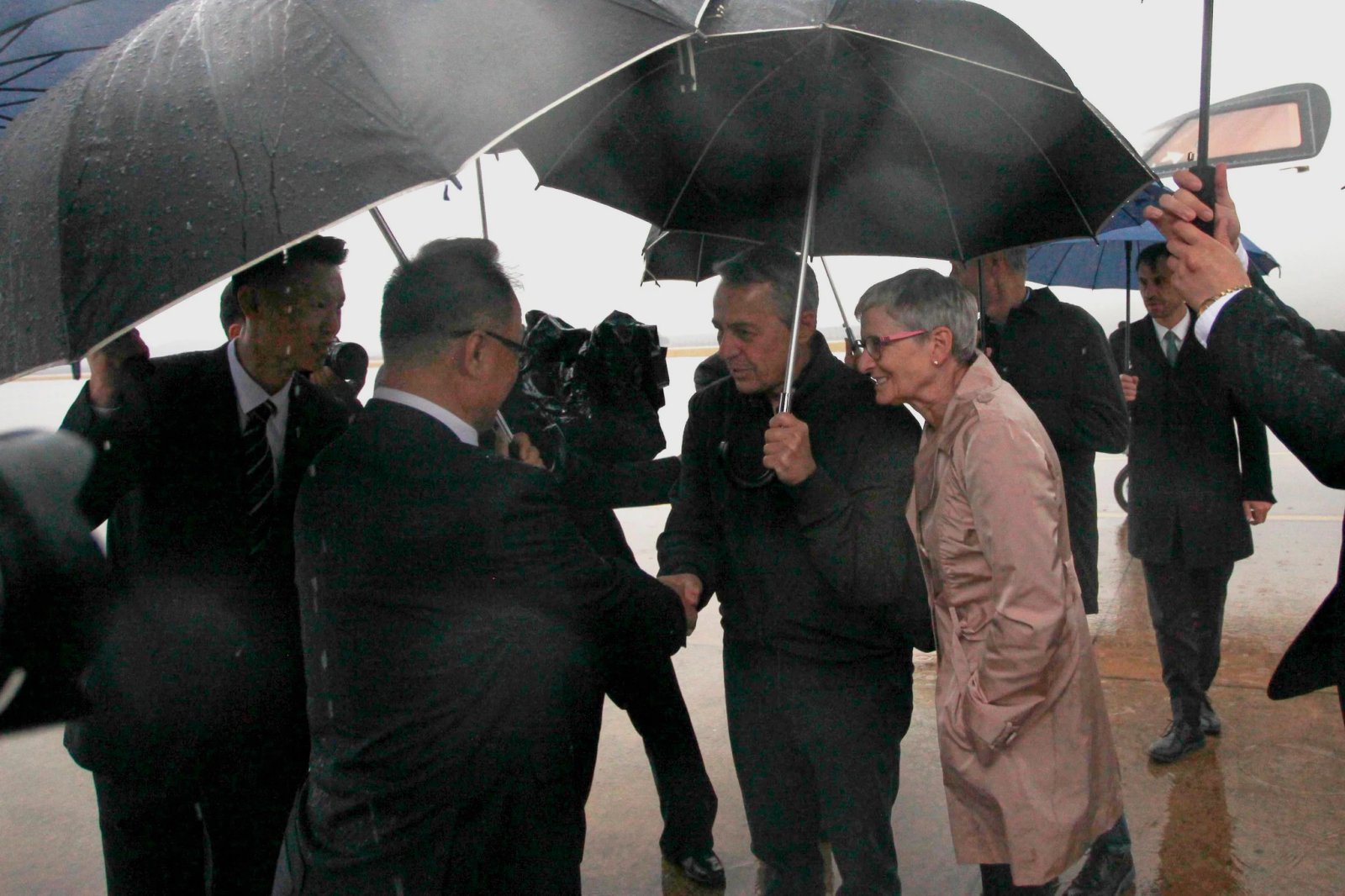
The regional landscape remains volatile as other international actors attempt to navigate the crisis. While Kim has recently courted closer ties with Beijing to secure his economic lifeline, Swiss Foreign Minister Ignazio Cassis arrived in Pyongyang on Thursday. The rare visit, intended to oversee the reopening of the Swiss diplomatic office, highlights the ongoing, albeit strained, efforts to maintain some level of international engagement with the isolated state.
As the North continues to brandish its expanding arsenal, South Korea remains on high alert, bracing for further provocations as the standoff along the demilitarized zone shows no signs of cooling.
Disclaimer: This content is auto-generated for informational purposes only.
Source: Read Original News