








The design philosophy of FromSoftware titles, most notably the Dark Souls trilogy and Elden Ring, relies heavily on subverting player expectations through environmental storytelling and non-linear consequences. The interaction between the player and Gwynevere, the Princess of Sunlight, serves as a masterclass in how developers can use game mechanics to manipulate player perception. By creating a character that defies the established tone of a bleak, decaying world, the game forces players into a state of cognitive dissonance, ultimately testing their curiosity against their moral compass.
Environmental Storytelling and Cognitive Dissonance
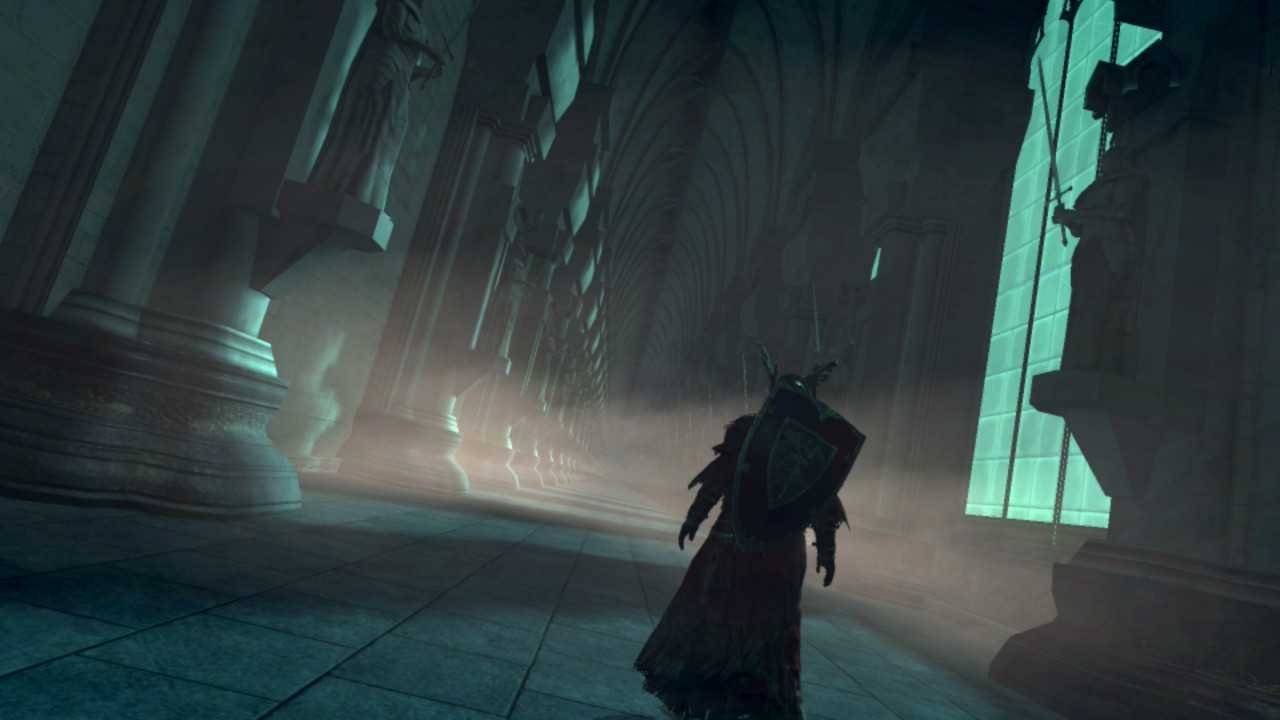
In Dark Souls, the atmosphere is characterized by crushing silence, oppressive architecture, and the absence of clear moral guidance. When players reach the chamber of Gwynevere in Anor Londo, they encounter a rare moment of overt, saturated brilliance. The presence of a benevolent, larger-than-life figure who rewards the player with a critical progression item—the Lordvessel—stands in sharp contrast to the rest of the game world.
This creates immediate suspicion for experienced players. In a world defined by suffering and decay, an overtly “heroic” reward sequence feels alien. The technical achievement here is not in the character model itself, but in the implementation of the game’s architecture to facilitate doubt. By allowing player-written messages to persist in the world, the game utilizes the community as a dynamic storytelling tool. A single prompt to “try attacking” shifts the player’s perspective from passive recipient of divine rewards to active investigator of the game’s reality.
The Mechanics of Player-Driven Consequences
FromSoftware games are designed with a high degree of transparency regarding combat systems but a deliberate opacity concerning narrative outcomes. When a player chooses to attack an NPC, they are engaging with a core mechanical pillar of the series. Unlike games that offer branching dialogue trees to determine morality, these titles use physical interaction as the primary method of decision-making.
When the player strikes Gwynevere, the game does not offer a warning or a prompt to confirm the action. It treats the transgression as a standard combat event. The subsequent transition—the vanishing of the illusion, the darkening of the city of Anor Londo, and the sudden shift in ambient lighting—is a programmatic response to the player’s agency. This transition is not merely a cosmetic change; it is a fundamental reconfiguration of the game world’s state, altering the behavior of enemies and the accessibility of specific areas.
Technical Implications of World States
The shift from the gilded, illuminated version of Anor Londo to the cold, darkened state represents one of the most effective uses of world-state management in action-RPG design. From a development standpoint, this requires maintaining two distinct versions of the same map. The game engine must dynamically unload the static “illusion” assets and load the “true” state assets upon the trigger of an event—in this case, the death of a scripted NPC entity.
This mechanic serves as a deterrent to players who rely solely on guided paths. By hiding such a transformative game event behind an action that appears to be a “mistake” or an act of malice, the developers effectively discourage completionist behavior that ignores curiosity. It rewards the “murder-hobo” playstyle in a way that provides tangible consequences, forcing the player to adapt to a harder, more hostile environment of their own making.
The Role of Information Scarcity
The effectiveness of this sequence relies entirely on information scarcity. If the game provided clear quest logs or defined objectives, the mystery of Anor Londo would be lost. By limiting lore to cryptic item descriptions and fragmented NPC dialogue, the developers create an environment where the player must “perform” the story rather than just read it.
This approach is highly effective in modern game design because it prevents the “wiki-fication” of the experience for first-time players. When a player stands before the illusion of Gwynevere, they are genuinely unsure if they are about to commit an unforgivable sin or uncover a vital truth. The hesitation a player feels is a direct result of the game’s refusal to hold their hand, effectively turning the act of exploration into a high-stakes psychological test.
Impact on Modern Game Design
The legacy of these design choices is visible in how modern titles balance player autonomy with curated narrative experiences. By refusing to label actions as “good” or “evil,” games like Dark Souls and its successors remove the safety net of morality. The impact on the industry has been significant; developers are increasingly leaning into systems where the world responds to the player’s interference without judgment.
The ability to destroy a false god and suffer the, at times, liberating consequences is a hallmark of the FromSoftware approach. It moves the medium away from pre-scripted cutscenes and toward a reality where the player’s interference with the game’s internal logic is the primary driver of development. As players continue to interact with these systems, the line between deliberate game progression and player-initiated disruption continues to blur, resulting in a more profound connection to the virtual environment. Ultimately, the decision to attack or obey is not just about the character’s journey; it is a reflection of the player’s willingness to challenge the authority of the game world itself.
Disclaimer: This content is auto-generated for informational purposes only.
Source: Read Original News