







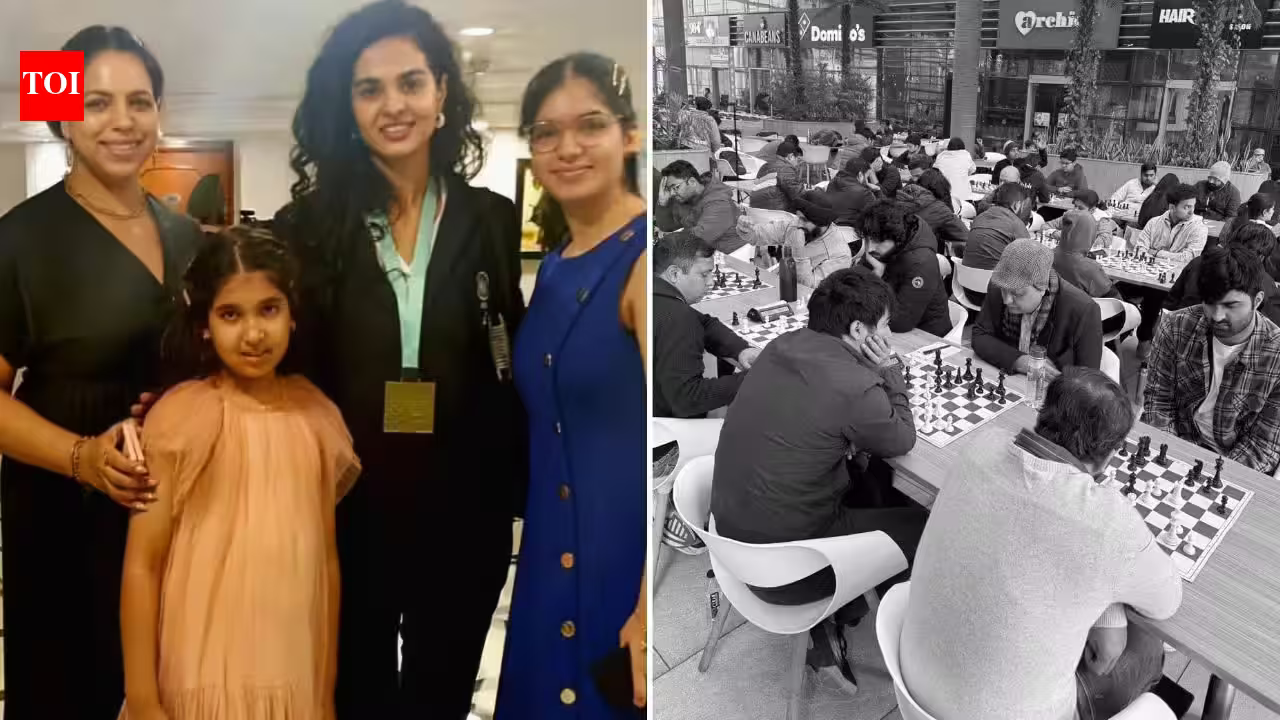
SILENCE, in the context of a junior chess tournament, is a heavy, almost tangible weight. It sits in the hallway, clinging to parents who occupy plastic chairs, clutching water bottles, and staring blankly at phones while their children battle behind closed doors. For years, Nidhi Bhasin Rohilla lived in that suffocating silence, waiting for the “result” to emerge from a doorway—a face either lit with triumph or hollowed by defeat. Today, that silence has been replaced by the hum of an ecosystem she built from the ground up, one that is fundamentally reshaping the landscape of North Indian chess.
## The Professional Pivot
The genesis of this transformation was not a grand strategic plan, but a desperate, personal necessity. In 2013, Nidhi’s elder daughter, Shivika, began her chess journey. Within six months, she was the runner-up at the Delhi State Championship. Recognizing the raw potential, the family—Nidhi, a high-flying corporate sales professional earning ₹50 lakh per annum, and her surgeon husband—poured their resources into the child’s passion.
However, the reality of the sport in Delhi was stark. In 2012, professional coaching options were scarce, and the travel requirements for international-standard competition were exhausting. As Shivika’s rating climbed toward the 2,000 mark, the family faced a crisis. Coaching was expensive—sometimes reaching ₹5,000 per hour—and the competitive environment was stagnant. The isolation of the sport in the North began to take its toll, with Shivika questioning if the struggle was even worth the effort.
Faced with a choice between her high-stakes corporate career and her daughter’s future, Nidhi made a decision that would redefine her life. She walked away from her job, choosing to trade her corporate salary for the volatile, demanding world of chess administration and support.
## Engineering an Ecosystem
The “Chess Coffee Connect” initiative emerged from the ashes of that frustration. Nidhi noticed a fundamental flaw in the North Indian scene: the lack of a collaborative community compared to the robust networks found in South India. There, players, coaches, and peers formed a constant loop of analysis and improvement. In Delhi, it was every player for themselves.
Nidhi turned her daughter’s training requirements into a community hub. What began as a private arrangement to get Shivika high-quality practice partners evolved into the SR Chess Academy (SRCA). “We did not have a website or a formal setup at the beginning,” Nidhi recalls. “We had a space, a coach, chess books, and Shivika’s equipment.”
Today, the academy boasts nearly 80 students, and the broader enterprise manages over 40 events a month across eight states, supported by 16 paid staff and 100 volunteers.
## Listening as Strategy
Despite her background in corporate sales, Nidhi insists her success isn’t built on aggressive marketing. Instead, it is built on radical empathy. She views the chess world through the lens of a “complaint-as-product” model. When parents complained about a lack of intermediate time controls, she created them. When she noticed the financial burden prevented fathers from supporting their daughters, she made girls’ entries free. When senior citizens expressed a desire to return to the game, she created specialized community events for them.
This “listening strategy” extends to the psychological aspect of the sport. The organization’s “Mind to Moves” division tackles the rampant issue of “rating anxiety” among parents and young players, providing a buffer against the high-pressure environment of tournament halls.
## The Road Ahead
For all its success, the venture remains self-funded—a testament to the resilience of a mother who refused to let her daughter’s dream die. The lack of corporate sponsorship remains the biggest hurdle, with venues often coming at a premium that the academy must shoulder alone.
Yet, the impact is undeniable. Her influence has even crossed borders; with Shivika now pursuing aerospace engineering in London, the family has exported their model, successfully running ECF-rated events in the UK.
“Chess is a game. It is not only about tournaments, ratings, or winning titles,” Nidhi says, reflecting on the journey from those lonely corridors to the current thriving community. While the enterprise has moved from the outskirts of the hall to the heart of the sport in North India, Nidhi is far from finished. The silence that once defined her experience has been replaced by a vibrant, ongoing dialogue, and she remains committed to ensuring that for the next generation of players, the journey is defined by community rather than isolation.
Disclaimer: This content is auto-generated for informational purposes only.
Source: Read Original News