









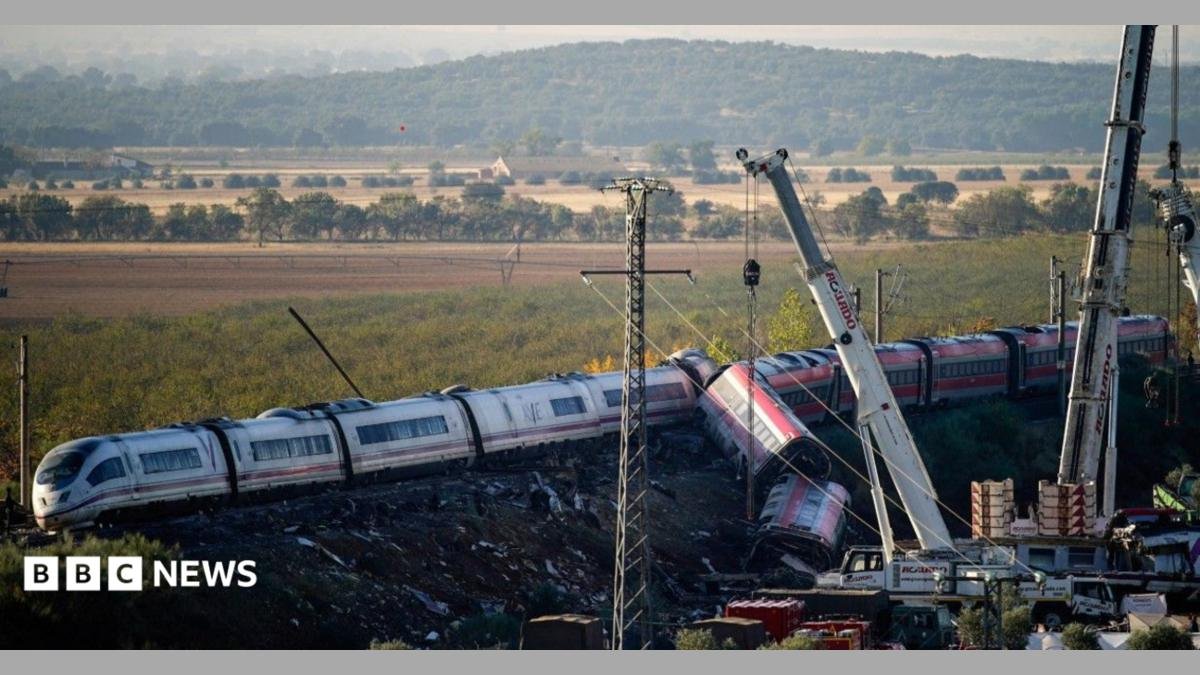
MADRID — A catastrophic failure in the national railway’s command centre has triggered a firestorm of political fallout in Spain, as revelations emerge that controllers knowingly cleared a high-speed train to travel at 160km/h (100 mph) despite being fully aware that another vessel was stranded on the same line ahead.
Transport Minister Óscar Puente confirmed the chilling details of the incident, admitting that the impending collision was visible on monitors and audible through recorded logs at the Madrid control centre. “They worked. We checked. They could see what was happening,” Puente stated. Yet, in a move that has left the nation in shock, no order was ever issued to halt the advancing train.
The incident is the second major rail disaster to rock the country in a matter of months, following a crash in Adamuz near Cordoba in January. While investigators believe the earlier accident may have been caused by a rail defect, the current collision is being viewed as a systemic failure of human oversight and institutional competence.
Public anger is surging, with pollsters warning that the tragedy has eroded faith in the government at a critical time. “This destroys people’s confidence not only in the railways but in institutions in general,” noted Paco Camas of the polling firm Ipsos. “In Spain, when such things happen, we know that people blame their government.”
Facing intense pressure to step down, Minister Puente has refused to resign, framing his continued tenure as a “duty.” He vowed to face the consequences, elucidate the timeline of the failure, and restore public safety. However, the optics for the government of Prime Minister Pedro Sánchez are increasingly bleak.
The administration is already reeling from a series of high-pressure crises. Persistent allegations of corruption involving the Prime Minister’s close relatives, a summer surge of migrants in the exclave of Ceuta, and viral public outrage over the forced eviction of a pensioner have left Team Sánchez on the defensive. These events had already fueled accusations of incompetence and underfunding from right-wing opponents, and the latest rail disaster has served to accelerate a downward spiral.
Sánchez had previously called for an early election to regain political momentum, but analysts now suggest that any lingering chances of a victory have been significantly diminished. With public trust in the state railway system—and the institutions governing it—at an all-time low, the government faces a daunting battle to convince a skeptical electorate that it is capable of managing the country’s most vital infrastructure, let alone its political future. For now, the focus remains on the chilling audio calls from the control centre, serving as a grim reminder of a disaster that, by all accounts, should have been avoided.
Disclaimer: This content is auto-generated for informational purposes only.
Source: Read Original News