








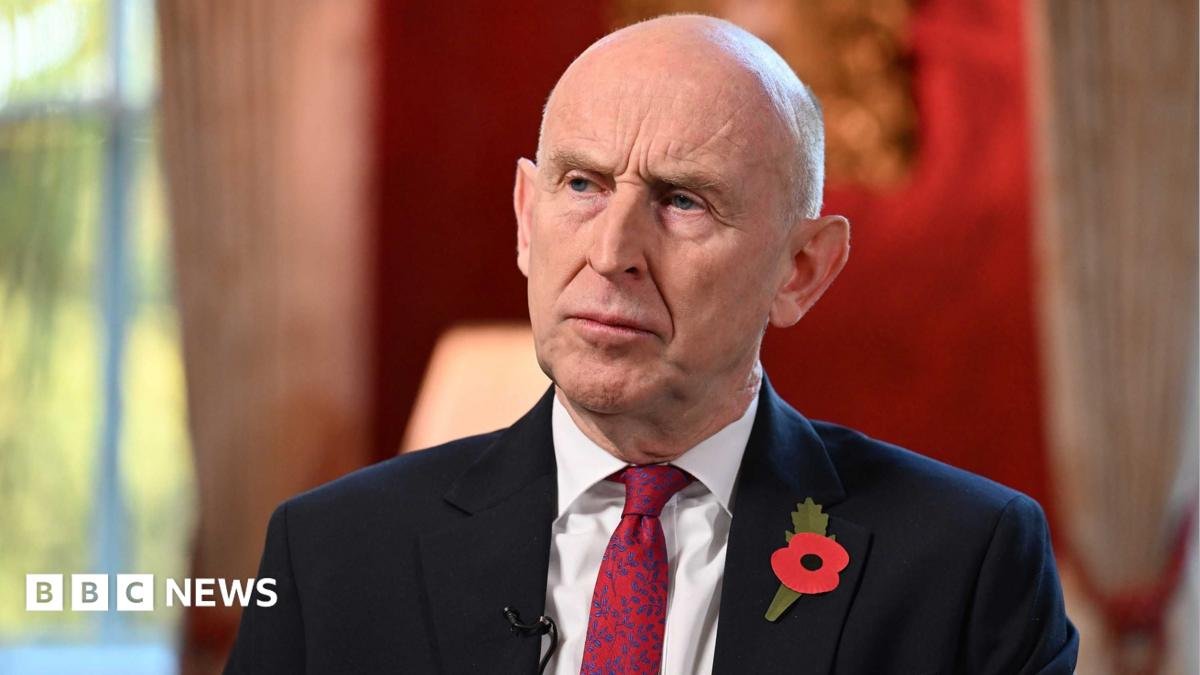
Chancellor John Healey has sparked a potential political firestorm after suggesting that the Labour government may fail to deliver on a key manifesto pledge to end age-based discrimination in the minimum wage before the next general election.
In their 2024 election manifesto, Labour vowed to scrap the existing “discriminatory age bands,” pledging to eliminate the pay gap between adult workers and those aged 18 to 20. However, last week’s Budget revealed that while pay for younger workers will see an increase, it will not achieve parity with the over-20s. By 2026, the minimum wage for 18 to 20-year-olds is set to rise to £11.27 per hour, while those over 20 will be entitled to at least £13.21.
Speaking in an interview set to be broadcast on Sunday, the Chancellor was pressed on whether the government would fulfill its promise to equalize these rates before the next trip to the polls. Rather than confirming the timeline, Mr. Healey signaled a significant shift in strategy. “We’ll take one step at a time,” he said, hinting that the commitment to closing the gap may be delayed indefinitely.
The Chancellor insisted that the government remains committed to the principle of equal pay, framing the potential delay as a necessary pragmatic measure to avoid damaging the employment prospects of the youth. “There is no question about whether or if, it’s a question of when—it’s a question of how fast,” Healey said. “I want to make sure we can look hard at those trade-offs that are there between jobs and wages.”
By citing a desire to “take business” with the government on the issue, the Chancellor suggested that a sudden leap to a single minimum wage rate could discourage firms from hiring younger, less experienced staff. He emphasized the urgency of the wider crisis facing the nation’s youth, noting that “a million youngsters” are currently “written off without any prospect of being helped into work.”
The comments are expected to provoke significant backlash from within the Labour Party, particularly from the left-wing faction and trade unions, who have long campaigned for the abolition of lower age-related pay rates. Critics argue that paying younger workers less for the same work is inherently unfair and that the government’s backtracking on the issue undermines its core mission of addressing workplace inequality.
As the government attempts to balance its fiscal ambitions with its social justice goals, the Chancellor is clearly bracing for a difficult period of negotiation. Whether the party can appease its core base while maintaining the confidence of the business community remains the defining challenge of the coming months. For now, the prospect of an equal minimum wage for all adult workers remains, in the Chancellor’s words, a matter of “when” rather than “if.”
Disclaimer: This content is auto-generated for informational purposes only.
Source: Read Original News