





Quad Foreign Ministers Call for Navigational Freedom Amid Rising Global Maritime Tensions
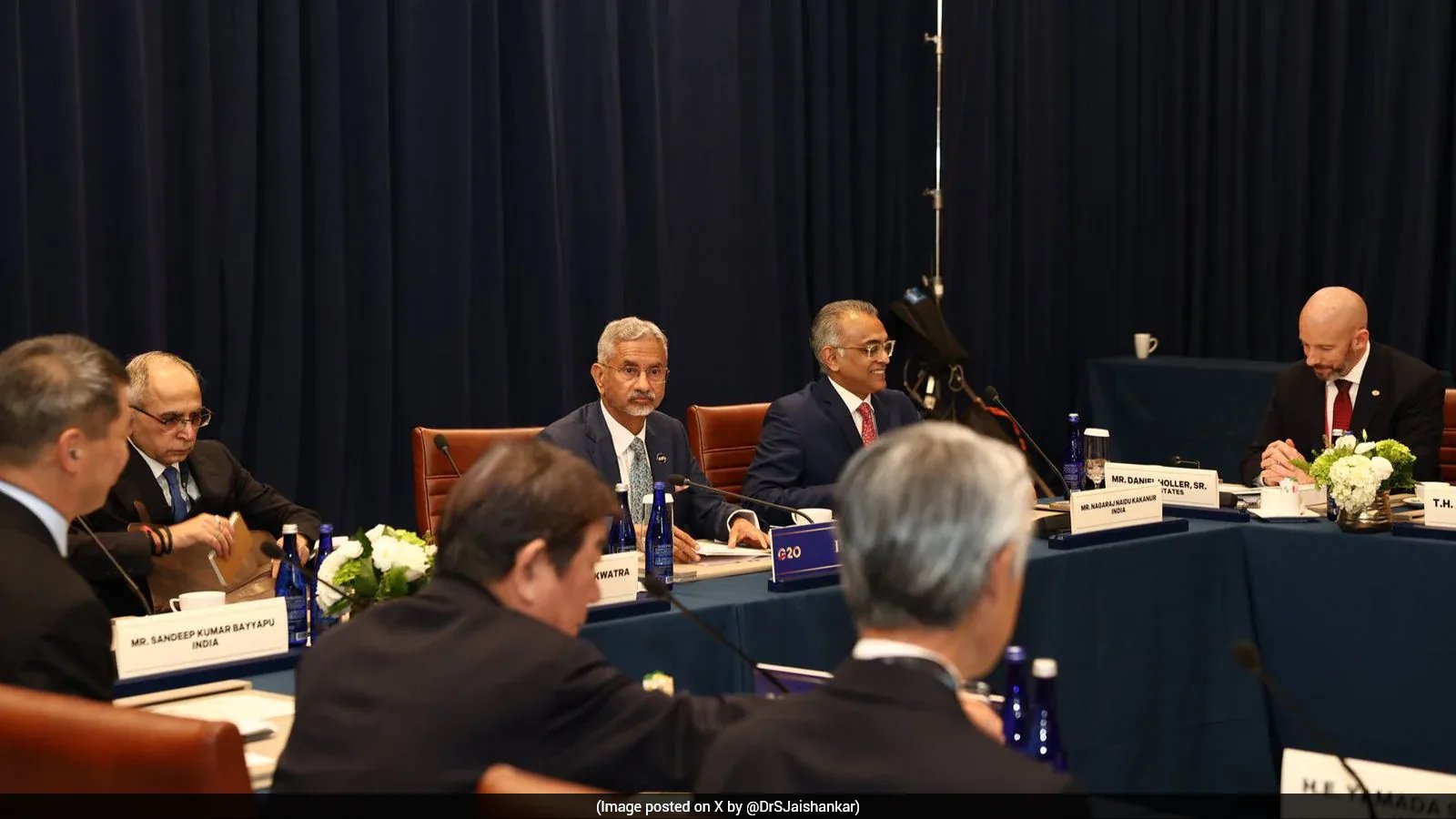
Atlanta: The Foreign Ministers of the Quad nations—India, the United States, Japan, and Australia—convened in Atlanta this weekend, issuing a strong, unified message regarding the security of international waterways. Against the backdrop of escalating instability in the Middle East, the coalition emphasized the urgent necessity of upholding maritime rights and ensuring the safety of civilian shipping.
External Affairs Minister S. Jaishankar represented India at the high-level meeting, engaging in discussions with U.S. Secretary of State Marco Rubio, Japanese Foreign Minister Toshimitsu Motegi, and Australian Foreign Minister Penny Wong. The summit focused on addressing the growing threats to global trade routes, particularly in the Strait of Hormuz, the Red Sea, and the Bab el-Mandeb Strait.
Prioritizing Maritime Security and Free Flow of Commerce
In a joint statement issued following the deliberations, the Quad ministers underscored that the unhindered passage of vessels is a cornerstone of global prosperity. The group reiterated its commitment to the principles of international law, specifically referencing the United Nations Convention on the Law of the Sea (UNCLOS). They stressed that maritime crews and cargo must be protected from interference, including the unlawful imposition of tolls or blockades that jeopardize energy security and the global supply chain.
The ministers also took the opportunity to highlight the success of practical security cooperation. The second “Quad-at-Sea Ship Observer” mission, which concluded earlier this month, saw representatives from all four countries conduct a joint transit from Chennai to Perth aboard an Indian Coast Guard vessel. This exercise was hailed as a significant advancement in operational interoperability among the member states.
Combating Economic Coercion
Beyond physical maritime safety, the Quad addressed the growing threat of economic intimidation. The joint statement expressed “grave concerns” regarding arbitrary export restrictions and non-market policies that threaten to disrupt critical industrial supply chains.
“We are committed to building reliable, open global supply chains and resilient infrastructure,” the statement read, signaling a collective effort to push back against policies that result in overcapacity and market distortion.
Strategic Outlook for the Indo-Pacific
Looking ahead, the Quad unveiled new initiatives to enhance regional awareness. Among these is the “Indo-Pacific Maritime Surveillance Collaboration,” slated to debut during the Sea Dragon 2027 exercises. Additionally, the group announced the inaugural “Quad Maritime Domain Awareness Track 1.5 Symposium,” intended to foster information sharing and technological cooperation among regional partners.
Minister Jaishankar characterized the meeting as a vital step in modernizing the Quad’s agenda. In a post-meeting update, he emphasized that the coalition remains focused on maintaining regional stability and “ensuring freedom of choice” for Indo-Pacific nations.
Prior to the formal Quad session, EAM Jaishankar had raised the plight of the Global South at the G20 Foreign Ministers’ meeting. He noted that the ongoing attacks on civilian shipping are disproportionately impacting smaller nations by inflating the costs of essential commodities like fuel, food, and fertilizers. By prioritizing counter-terrorism, supply chain resilience, and maritime security, the Quad aims to foster a more predictable and peaceful global order.
Disclaimer: This content is auto-generated for informational purposes only.
Source: Read Original News