







The Significance of Structural Integrity in High-Speed Rail
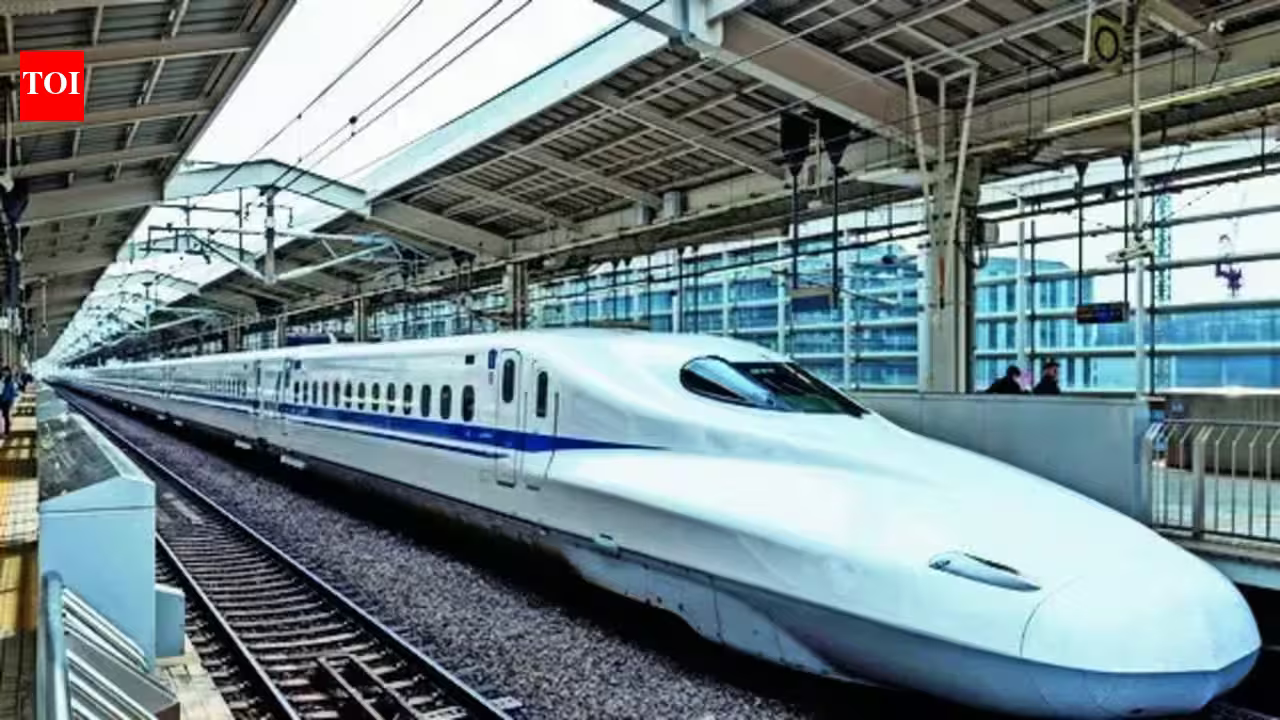
The successful completion of the “squeeze test” on the B28 indigenous bullet train prototype at BEML’s Bengaluru facility represents a milestone for India’s heavy engineering sector. In the realm of high-speed rail, structural integrity is not merely a design preference but a non-negotiable safety requirement. The squeeze test—a rigorous mechanical stress assessment—evaluates the ability of a train’s car body to withstand extreme longitudinal forces. By applying massive pressure to the carriage shell, engineers can observe how the structure deforms under load and whether it maintains the necessary survival space for passengers in the event of a collision or emergency braking.
For India, this development is particularly notable because the B28 project operates independently of established foreign high-speed rail frameworks like the Japanese Shinkansen technology. While the primary Mumbai-Ahmedabad High-Speed Rail corridor utilizes Shinkansen standards, the development of the B28 highlights India’s ambition to cultivate domestic intellectual property in rail manufacturing. Achieving structural certification through internal testing protocols proves that Indian public sector units, such as BEML, possess the capability to engineer rolling stock that adheres to global safety benchmarks for high-speed transit.
Strategic Engineering and the Indigenous Design Pathway
The decision to develop the B28 using indigenous design processes is a strategic move aimed at reducing long-term dependency on international technology transfers. Designing a train for an operating speed of 249 kmph and a testing speed of 275 kmph requires a departure from conventional train manufacturing. At these velocities, aerodynamic stability, vibration dampening, and lightweight material science become paramount.
By building the B28 outside the constraints of imported proprietary designs, India is creating a knowledge base that can be iterated upon. The squeeze test serves as the foundational data point for this process. Engineers are not simply building a train; they are building a validated model of mechanical resistance that will inform future iterations of high-speed coaches. This approach allows India to potentially lower the capital expenditure of future high-speed corridors by utilizing domestic supply chains, rather than relying exclusively on high-cost imported technology packages that often come with restrictive licensing conditions.
The Role of BEML in India’s Rail Modernization
BEML’s role as the central public sector undertaking (PSU) tasked with this project underscores the government’s reliance on established domestic manufacturing expertise. Historically known for manufacturing metro cars and defense equipment, BEML is now pivoting toward the high-speed segment. This transition is essential for the national agenda of “Make in India,” which seeks to position the country as an exporter of transport solutions rather than just a consumer.
The production facility in Bengaluru has been upgraded to accommodate the specialized manufacturing requirements of high-speed aluminum or stainless steel car bodies, which are lighter and more resilient than those used in standard Indian Railways trains. The completion of the squeeze test serves as a quality assurance marker that signals to domestic and international stakeholders that Indian rail infrastructure development is moving beyond capacity expansion toward complex technological sophistication. As the prototype moves toward completion in the coming months, the facility will serve as the pilot for a broader industrial scaling strategy that could eventually support the “Vande Bharat” high-speed variants and future bullet train routes across the Indian subcontinent.
Economic Impact and the Ahmedabad-Mumbai Corridor
The development timeline for the B28 is inextricably linked to the progress of the Mumbai-Ahmedabad High-Speed Rail corridor. With trial runs scheduled for the Surat-Vapi section in 2027, the rail industry is closely monitoring the integration of the B28 into the operational corridor. The economic impact of this project extends beyond the engineering sector. Efficient high-speed connectivity between India’s commercial hubs is expected to reduce logistics costs, stimulate business investment along the route, and provide a competitive alternative to domestic air travel.
Furthermore, the target date for full corridor completion by 2030 suggests that the B28 is not merely a research endeavor but a functional necessity. By the time the full 508-km line is operational, the technical data gathered from the B28 will have been refined, potentially leading to a fleet of indigenous trainsets that cost significantly less to maintain than their international counterparts. The government’s fiscal planning, which includes accounting for the escalated costs of these large-scale infrastructure projects, relies on the assumption that domestic manufacturing will bring down the per-unit cost of rolling stock over the next decade.
Navigating Challenges in High-Speed Rail Deployment
Despite the progress, the deployment of indigenous high-speed trains faces significant systemic challenges. High-speed rail infrastructure requires immense precision in track alignment, power distribution, and signaling systems. Integrating an indigenous train like the B28 with the existing high-speed architecture—which is currently heavily influenced by Japanese engineering standards—requires seamless interoperability. Safety protocols must remain uniform to ensure that domestic units do not face performance discrepancies when integrated into a global-standard track network.
Moreover, the regulatory framework for testing and certifying such high-speed equipment is still evolving in India. The success of the squeeze test is an encouraging indicator, but it must be followed by dynamic tests, including high-speed stability trials and braking efficiency tests under varying climate conditions. India’s diverse weather patterns and high-density usage present unique stresses on rolling stock that international designs may not always fully account for. Consequently, the indigenous nature of the B28 could eventually become its greatest advantage, as it is being “trained” specifically for the physical and operational environment of the Indian rail network.
The Future Landscape of Indian Transit Technology
Looking ahead, the success of the B28 could mark the beginning of a broader export push. As Southeast Asia, the Middle East, and parts of Africa look toward building high-speed rail networks, there is a global market for cost-effective, high-quality rolling stock. If India can demonstrate the reliability of the B28 through its 2027 trials and subsequent commercial service, the country may find itself in a position to compete with established rail exporters from China, Europe, and Japan.
The progression from standard-speed trains to semi-high-speed models like the Vande Bharat, and now toward the 250 kmph threshold with the B28, represents a deliberate, tiered strategy. By mastering the engineering complexities of high-speed movement and ensuring the structural integrity of every coach, India is securing its role as a significant player in the future of global mobility. The squeeze test, while a single data point in a long development cycle, serves as the critical validation that India’s engineering infrastructure is indeed ready for the next era of high-speed passenger transportation.
Disclaimer: This content is auto-generated for informational purposes only.
Source: Read Original News