







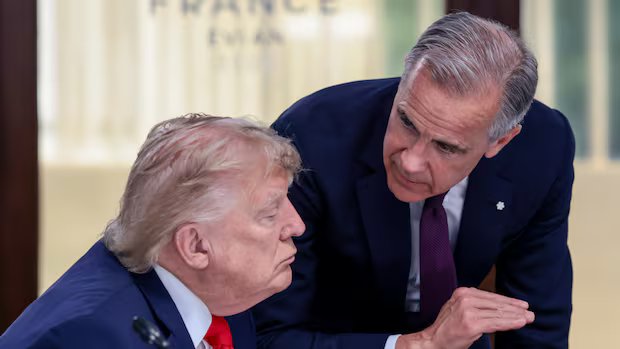
Prime Minister Mark Carney announced on Sunday that he has engaged in a “good conversation” with U.S. President Donald Trump regarding the future of bilateral trade, signaling a potential thaw in the icy relations between the two nations. The Prime Minister noted that the dialogue “builds on our recent constructive discussions” concerning the framework of a potential trade agreement.
“Our teams will now be working in the coming weeks to deliver that outcome,” Carney wrote in a social media post Sunday morning.
The development marks a shift from the Prime Minister’s stance just days ago, when he told reporters that Canada was “not yet in a position” to finalize a deal, emphasizing that Ottawa would only sign an agreement that serves the best interests of Canadian citizens. A senior source confirmed to CBC News that formal negotiations are set to resume shortly. The source cautioned, however, that the auto sector is expected to remain a primary sticking point—a role it played during the collapse of trade talks last August, which triggered a cycle of retaliatory duties between the two neighbors.
While trade discussions have intensified leading up to the U.S. midterm elections, officials on both sides of the border remain cautious. A source familiar with the discussions told Radio-Canada that despite the renewed momentum, “we are not on the verge of an agreement just yet,” noting that several key elements remain unresolved.
The trade dispute has become a flashpoint in the U.S. midterm campaign. Democrats have frequently cited the tariffs to criticize the President’s handling of the cost of living, while Republican reactions have been mixed; some candidates have defended the administration’s protectionist stance, while others have opted to distance themselves.
The previous collapse of negotiations in August was marked by public finger-pointing. Prime Minister Carney stated at the time that he walked away because the U.S. was demanding terms that threatened major Canadian industries, including steel, aluminum, and the auto sector. Additionally, tensions arose over U.S. demands regarding Canadian cultural content—specifically requirements for French-language accessibility on streaming platforms—and American attempts to restrict Canada’s ability to negotiate future trade deals with other nations.
U.S. officials, including Commerce Secretary Howard Lutnick, countered these claims, accusing Canada of introducing last-minute demands regarding medium- and heavy-duty trucks to intentionally derail the process. Canadian chief negotiator Janice Charette rejected this characterization, asserting that the issue had been raised consistently throughout the week of negotiations.
Despite the history of friction, Carney’s latest messaging suggests a focus on reconciliation. He described a potential “mutually beneficial trade deal” as one that would “create jobs for our workers, boost affordability for families, and fully respect Canada’s languages, culture, and sovereignty.”
Disclaimer: This content is auto-generated for informational purposes only.
Source: Read Original News