








Parts of Britain could be at risk of earthquakes if “mini-fracking” projects are allowed, a geologist has warned.
This month North Yorkshire council will decide whether to permit Europa Oil & Gas to use a method of fuel extraction called proppant squeeze near the village of Burniston, three miles from Scarborough.
In February a similar project received approval in West Newton, East Yorkshire, and the Times understands a further planning application is being prepared for Wressle near Scunthorpe.
Described as mini-fracking by the Environment Agency, proppant squeeze is exempt from the moratorium the government imposed on fracking in 2019, because it involves pumping less fluid into the ground to extract fuel.
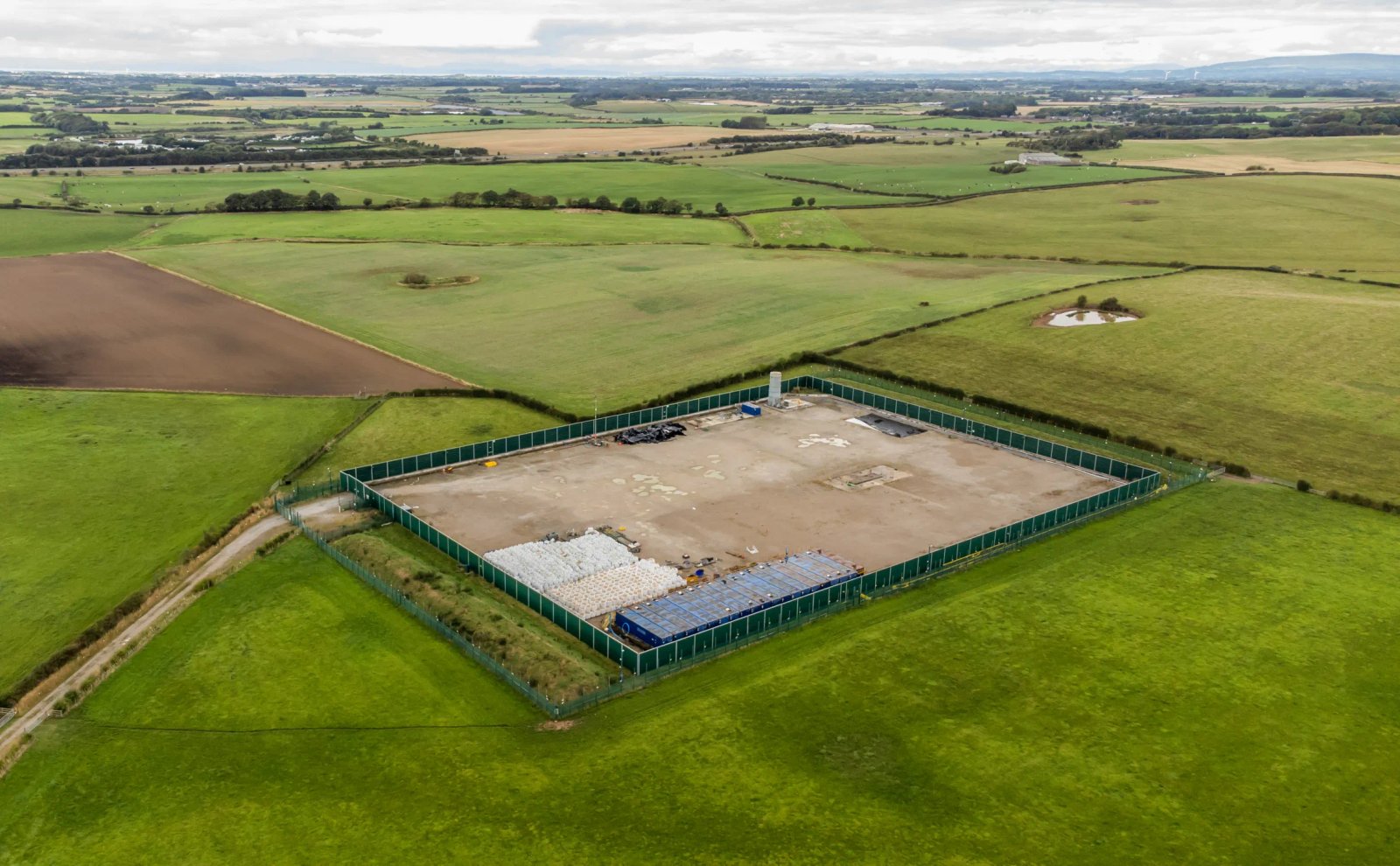
Despite its small scale, the operation in Burniston would involve pumping more fluid into the ground than the amount that triggered Britain’s biggest fracking tremor: a 2.9-magnitude quake thought to have been caused by Cuadrilla’s operation at the Preston New Road site, Lancashire.
Professor Stuart Haszeldine, a geologist at the University of Edinburgh, said: “If the rocks beneath Scarborough behave like Lancashire, a lot of people would be feeling earthquakes. That’s not helpful for hotels built on the top of a cliff. “I can’t predict if there’s going to be an earthquake or no earthquake [because] nobody’s ever done this fluid injection in east Yorkshire before … it’s certainly possible.”

 CUADRILLA/PA
The tremor caused by fracking could be felt eight miles away. North Yorkshire county council’s planning officers have recommended the Burniston scheme’s approval despite the opposition of Scarborough town council.
Friends of the Earth campaigners have urged the government to close the “loophole” in its fracking moratorium.
In October Ed Miliband, the energy secretary, vowed to ban fracking, warning the drilling was “dangerous and deeply harmful to our natural environment”.
Friends of the Earth fears that this pledge will not live up to expectations if the low-volume fracking technique can continue. It expressed concern over the energy minister Michael Shanks’s remarks in December, that the evidence base “is not there at the moment to suggest that low-volume hydraulic fracturing activities have the same associated risks as fracking for shale gas”.

In a paper commissioned for Friends of the Earth, Haszeldine found that proppant squeeze caused “equally large and equally unpredictable” tremors as higher-volume fracking methods.“[Europa] is exploiting this loophole in the government’s definition,” Haszeldine said. “If we want to stop fracking the government has to have a tighter definition.”
While the Labour government ended new licences for onshore oil and gas, it has not revoked the 77 licences for exploration. Together with the “loophole” in the fracking definition, this means that companies possessing those licences may seek to conduct “mini-fracking” operations in other parts of the country. Those licences are held in the north of England, the East Midlands, the south and southeast.
“It’s clear that other companies are watching what is going on [at Burniston],” Haszeldine said. “This is not the only application in the country that is attempting to circumvent the fracking ban.”
Europa Oil & Gas said: “To be clear, there is no ‘loophole’ in the law as had been repeatedly stated by campaign groups and this has recently been confirmed by the Minister for Energy Michael Shanks. The proposed activity is not high volume hydraulic fracturing [“fracking”] as commonly understood, and it does not involve shale development that are subject to the UK’s moratorium. The proppant squeeze operation is a conventional well treatment that is well-established, tightly regulated, and widely used across the UK and internationally.”