







Hello, this is Priyanka Salve, writing to you from Singapore.
Welcome to the latest edition of “Inside India“ — your one-stop destination for stories and developments from the world’s fastest growing large economy.
Just as India’s textile industry was beginning to stabilize after U.S. tariffs, it received another blow. Industry leaders tell me the Iran war has raised costs, hit demand and sent workers fleeing, crushing hopes of a sustained recovery.
Enjoy!
Any thoughts on today’s newsletter? Share them with the team.
The big story
In this photograph taken on September 23, 2025, employees work at a garment factory in Tiruppur, in India’s southern state of Tamil Nadu.
R. Satish Babu | Afp | Getty Images
Indian textile exporters could be forgiven for thinking that U.S. President Donald Trump has them in his crosshairs.
In August last year, Washington slapped a 50% tariff on Indian goods, making exports uncompetitive. Relief came months later, when rates were slashed in February, but it lasted barely a few weeks: Trump’s subsequent war on Iran plunged India’s textile industry into fresh turmoil.
Ready-made garment companies were among the worst-hit by the U.S. tariffs, losing orders or being forced to offer discounts to retain customers, experts said, adding that the Iran war has driven up raw material and packaging costs.
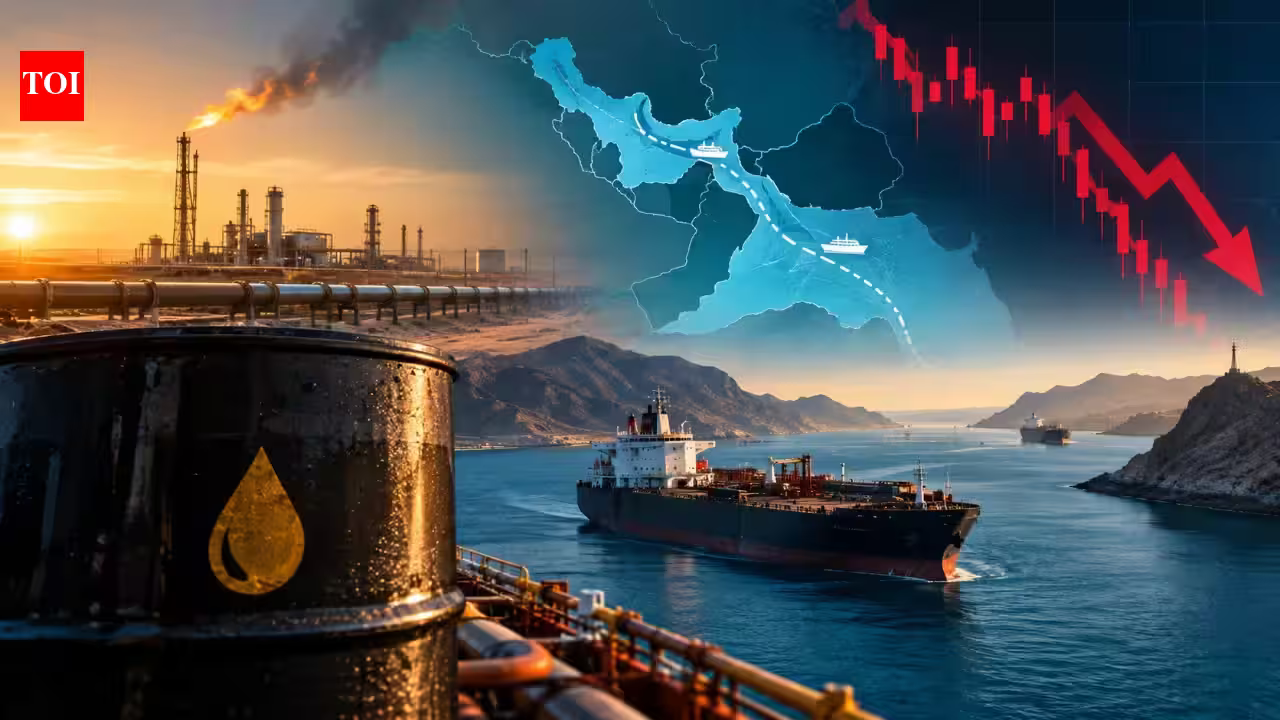
The war, which began on Feb. 28 after the U.S. and Israel struck Iran, has disrupted the movement of goods through the Strait of Hormuz, driving up energy and freight costs and straining supply chains.
This has led to some unusual challenges for the textile industry, India’s second‑largest employer which supports more than 45 million jobs.
Industry leaders said some migrant workers employed by the textile companies were struggling to secure liquified petroleum gas, the primary cooking fuel. This has prompted some to return to their home towns.
The second blow
“It was a tough year, and just when things were starting to come together in February, this war started,” Ashwin Chandran, chairman of the Confederation of Indian Textile Industry, told CNBC.
Between April 2025 and February this year, India exported cotton and man‑made yarns, fabrics, and ready-made garments worth $29.5 billion, down from $29.8 billion a year earlier, according to data from the Indian commerce ministry. While the decline may appear modest, the direction of travel is worrying for a country that aims to export $100 billion worth of textiles annually by 2030.
“We were expecting FY27 [financial year ending March 2027] to be much better, but now, with the Iran war, the beginning hasn’t been encouraging,” said Madhu Sudhan Bhageria, chairman at synthetic and polyester filament yarns manufacturer Filatex India.
He explained that polyester prices — which depend on petroleum — have risen more than 40% since the start of the war, making it difficult to pass on costs to customers.
“Demand has fallen as people don’t want to buy at high prices,” Bhageria said, adding that fears of a sudden end to the war have left companies wary of being stuck with expensive inventories if prices fall sharply.
If companies fail to pass on higher costs, experts warned, production cuts will follow.
In a temporary relief, the U.S. and Iran agreed to a ceasefire on Wednesday, with Tehran saying safe passage for ships would be “possible” for the next two weeks in coordination with the country’s armed forces.
Even so, companies such as Filatex have already cut production by 25% and are waiting for demand to return.
Demand concerns
India is the world’s sixth‑largest textile exporter, and after signing trade agreements with the U.K. last year, and the EU and U.S. earlier this year, the industry was expecting a sharp recovery. So far, however, it doesn’t seems to be the case.
“We have been targeting growth of around 12% to 15% CAGR [compound annual growth rate],” said Pallab Banerjee, managing director of Pearl Global Industries, which supplies garments to JCPenney, Macy’s, and Walmart. But for the financial year ending March 2026, growth is averaging lower at around 9%, he said.
Experts say ready-made garment companies are managing to pass on some costs to their customers in the U.S., but there remains concern that demand will slow if oil prices in the U.S rise further.
While the easing of Trump’s tariffs in February came as a relief, Banerjee warned that a prolonged war could dampen U.S. consumer demand, as was the case with the outbreak of the Ukraine war in 2022.
That conflict led to slowing store sales, rising inventories, and significant challenges for U.S. retailers, he said, adding: “No one wants a repeat of that.”
For now, the fragile ceasefire has cooled oil prices to below $100 per barrel. But they remain well above pre‑conflict levels, keeping pressure firmly on costs and demand. Without lasting peace, India’s textile exporters face another year of survival rather than growth.
Need to know
Indian companies explore tie-ups with China in electric-vehicle charging and energy storage
For the first time in more than five years, a delegation of Indian businesses visited China between March 29 and April 4, meeting with firms from Shanghai, Zhejiang and Wuxi.
Macquarie says India could emerge as an ‘AI powerhouse’ and names top stocks to watch
The global brokerage said the narrative of India as an AI bystander could shift as it becomes an “AI powerhouse that leverages its unique data sets and massive infrastructure build-out to underwrite a new era of growth.”
India turns to Iran for energy supplies after a 7-year hiatus
India has begun buying oil and gas from Tehran after a 7‑year hiatus as it grapples with supply disruptions and elevated energy prices triggered by the U.S.-Israel war on Iran.
Coming up
April 9: Om Power Transmission IPO opens
April 13: Inflation data for March