









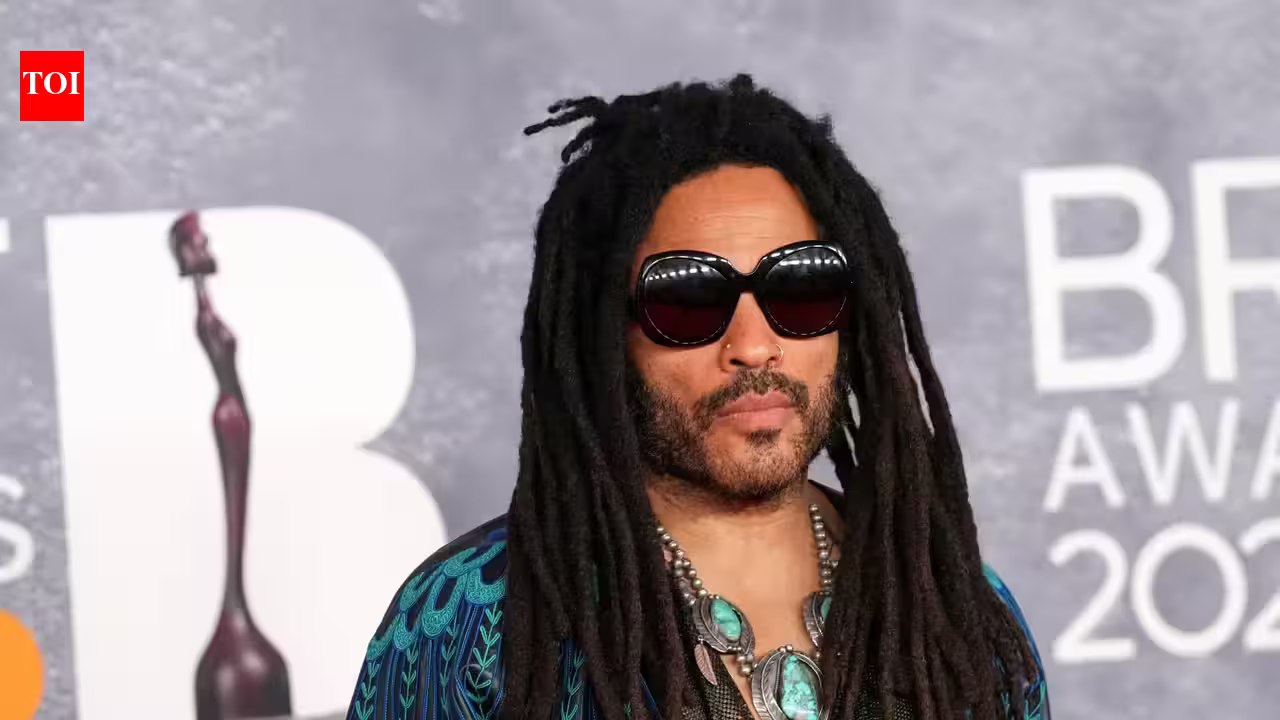
The digital landscape can be a volatile place, particularly when legitimate tragedy intersects with the relentless, often reckless, machinery of social media speculation. This past week, that intersection became a collision course for legendary rocker Lenny Kravitz. Following a horrific Learjet crash in Palm Beach County that claimed the lives of nine individuals, a wave of unfounded, inflammatory misinformation swept across X (formerly Twitter) and TikTok, falsely placing the “Are You Gonna Go My Way” hitmaker on the manifest of the ill-fated flight.
The rumor mill, which rarely waits for confirmation from authorities, moved at breakneck speed. Within hours, the speculation became so pervasive that it even managed to briefly compromise the integrity of Kravitz’s Wikipedia page, which was edited to list November 1, 2026, as the date of his death. For a moment, the internet was convinced that a rock-and-roll icon had perished in a fiery suburban crash. Fortunately, reality caught up quickly, as the star’s representatives moved to extinguish the flames of a particularly ugly death hoax.
Anatomy of a Digital Lie: How the Rumor Started
The origin of this particular misinformation campaign serves as a grim case study in how social media users can misappropriate disparate threads of information to weave a false narrative. The catalyst was a screenshot of a post allegedly made by 21-year-old pilot Emily Shelton. Shelton, who had previously garnered national headlines in August for successfully executing an emergency landing on a highway, had posted about the prospect of flying Kravitz from Austin, Texas, to the Bahamas.
In the post, Shelton expressed her excitement: “Honored to be flying the one and only Lenny Kravitz from [Austin’s airport] to [a Bahamas airport] tomorrow. Looking forward to having him on board. ‘It Ain’t Over ‘Til It’s Over’ is gonna be playing in the cockpit.”
When news broke that a Learjet had indeed departed from Austin-Bergstrom International Airport and crashed in Florida, online “sleuths” connected the two events. They conflated Shelton’s previous social media post with the Sunday crash, despite the fact that Shelton was not involved in the accident. The assumption—that because the route and the departure city matched, the passenger list must also align—was a fatal logical error. It highlights a recurring issue in the age of viral content: the dangerous tendency to treat anecdotal social media posts as verified evidence.
The Reality of the Palm Beach Tragedy
While the internet was busy obsessing over a celebrity who was safely at home, a genuine catastrophe was unfolding in Palm Beach County. Federal Aviation Administration (FAA) officials confirmed that the private jet, which was indeed traveling from Austin to the Bahamas, went down on Sunday afternoon. The impact was violent, with footage surfacing on social media showing the aircraft slamming into the ground near a residential road and erupting into an inferno.
The reality of the crash is profoundly somber. All nine individuals on board lost their lives in the accident. For the families of those victims, the subsequent celebrity-centric rumors were not just a distraction; they were an insult to the memory of the deceased. The focus of the aviation authorities remains on the investigation of the crash, the mechanics of the flight, and the tragic loss of life, rather than the state of a rock star’s health.
Setting the Record Straight: A Swift Response
As the rumors gained traction, the team behind Lenny Kravitz did not wait for the noise to subside on its own. In a statement provided to BocaNewsNow, the singer’s publicist issued a blunt, necessary rebuttal: “The reports are untrue and incorrect.”
By that point, the damage was already being curtailed by the subject of the false claims themselves. Emily Shelton, who had been unfairly dragged into the narrative, took to TikTok to address the misinformation directly. Her video was a plea for digital sanity and basic human decency. “I was recently made aware that there are rumors that I was the pilot of the recent crash in Palm Beach,” Shelton stated. “I would like to respectfully clarify I was not. I ask that people please stop speculating and spreading misinformation on this tragedy and be respectful of those involved. My heart goes out to all those lost and affected.”
The Toxic Cost of Viral Misinformation
This incident is the latest in a long string of “celebrity death hoaxes” that have plagued the internet since the early days of message boards. However, the stakes feel higher in an era where misinformation can trigger algorithmic amplification. When a rumor gets enough “likes” or “retweets,” it can often appear on search engine top-result snippets, creating a feedback loop where the lie is mistaken for fact by anyone merely glancing at their phone.
The weaponization of a real-life tragedy to build a false narrative around a celebrity is particularly grotesque. It exploits the audience’s shock and grief, redirecting their attention away from the real victims of the crash—the nine people whose lives were cut short—and toward a manufactured celebrity mystery. In the rush to be the first to “break” a story, the moral obligation to verify facts is increasingly treated as an optional formality.
Moving Forward: A Lesson in Media Literacy
If there is a silver lining to be found in the confusion, it is the importance of verifying information before hitting the share button. In the aftermath of the crash, Kravitz’s team, the authorities, and those unfairly implicated in the rumor were all forced to divert time and energy to debunking a ghost story.
As fans and digital consumers, we are all stewards of the information we share. The next time a screenshot of a post appears on a timeline claiming to provide inside information on a national tragedy, a moment of pause—or a quick check of reputable news outlets—could prevent the further spread of unnecessary pain. Lenny Kravitz remains with us, and the victims of the Palm Beach crash deserve our solemn reflection, not to be overshadowed by the digital equivalent of tabloid gossip. It is a stark reminder that in an age of instant communication, the most important thing we can do is slow down.
Disclaimer: This content is auto-generated for informational purposes only.
Source: Read Original News