






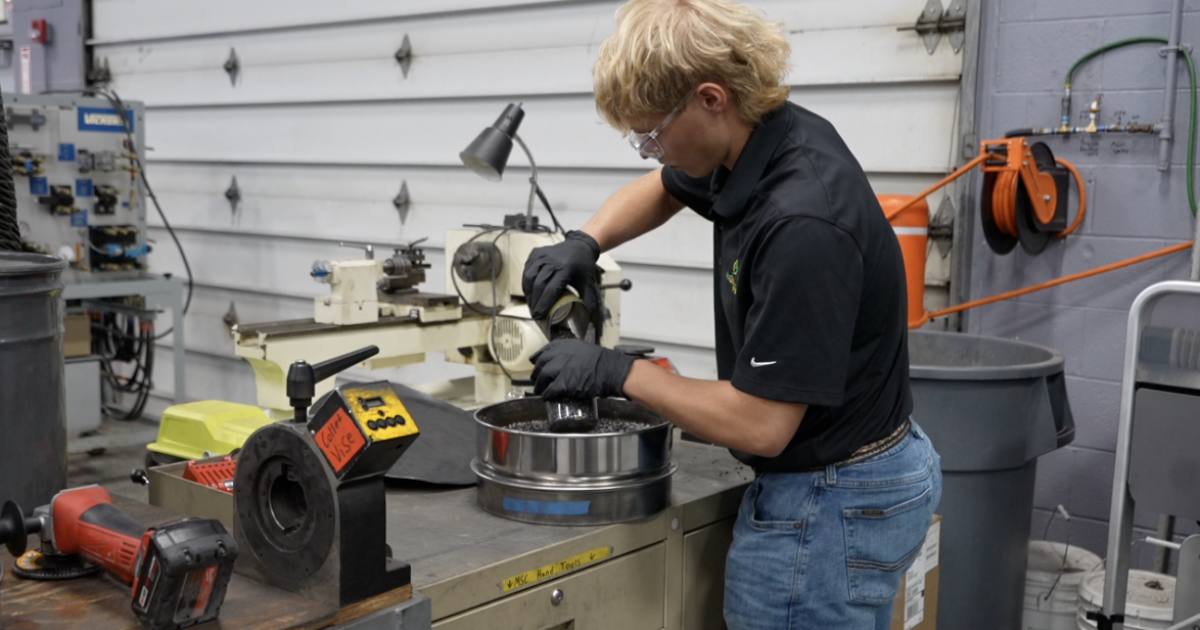
FAIRFIELD, Ohio — In a typical high school, the most demanding task a student faces is preparing for a mid-term exam. But at Butler Tech, students in the Mechatronics Engineering program are trading textbooks for industrial shipping labels and global logistics.
These students are currently operating a high-stakes, real-world manufacturing business that produces specialized cast iron chips. These components are essential for industrial researchers and laboratories worldwide, who use the metal to test the effectiveness of anti-corrosion oils and cooling fluids on machinery. From their classroom in Fairfield, Ohio, these teenagers are managing supply chains that stretch as far as Australia.
## Moving Beyond the Classroom with Experiential Learning
The operation evolved from a partnership with the nonprofit consulting firm TechSolve. When the firm shifted its focus away from this specific product line, the students at Butler Tech saw an opportunity to take the lead. Under the guidance of Mechatronics instructor Ray Frank, the classroom has been transformed into a functional manufacturing floor.
Frank’s teaching philosophy centers on “experiential learning,” prioritizing hands-on decision-making over traditional lectures. Students rotate through roles such as machinist, quality control analyst, and even project manager. The hierarchy is structured like a real firm, complete with a student CEO who facilitates morning meetings to assign daily tasks and discuss production goals. This framework forces students to manage inventory, troubleshoot equipment malfunctions, and ensure that every shipment meets rigorous professional standards.
## The Intersection of Manufacturing and Technology
While the core of the business involves physical metalwork, the students’ success relies heavily on modern digital tools. Keeping a global business afloat requires meticulous organization, and the students utilize sophisticated digital task-tracking systems to ensure no order is delayed. By managing their own website and digital client communications, these students are learning that modern manufacturing is inseparable from the tech industry.
The impact of this experience is evident in the students’ career goals. For Dylan Brown, the program’s project manager, the work has shifted her perspective. Initially interested in general engineering, she now finds herself drawn to the complex business side of the industry—a perspective gained by observing the entire life cycle of a product from raw material to international delivery.
## Building a Foundation for Future Tech Leaders
The revenue generated by these student-run operations provides more than just a resume builder; it directly funds the school’s competitive robotics program. This creates a circular ecosystem where the profits from manufacturing finance the high-tech materials needed for the FIRST Robotics Competition. In these competitions, students combine their technical manufacturing skills with sophisticated engineering to design robots capable of performing complex tasks.
This program serves as a prime example of how vocational education can bridge the gap between classroom theory and industry requirements. As student Luca Cailotto noted, the realization that a piece of metal manufactured in a Ohio lab can end up in a facility halfway across the world is a transformative experience. By trusting students with the responsibility of a global business, Butler Tech is proving that high schoolers are capable of far more than just studying—they are capable of executing at an industrial scale.
Ultimately, these students are gaining the kind of adaptability that defines the modern tech workforce: the ability to troubleshoot mechanical errors, manage a digital interface, and maintain professional relationships with international customers. Whether they continue into professional engineering or pivot toward business management, these students are already operating as seasoned professionals.
Disclaimer: This content is auto-generated for informational purposes only.
Source: Read Original News