


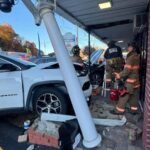



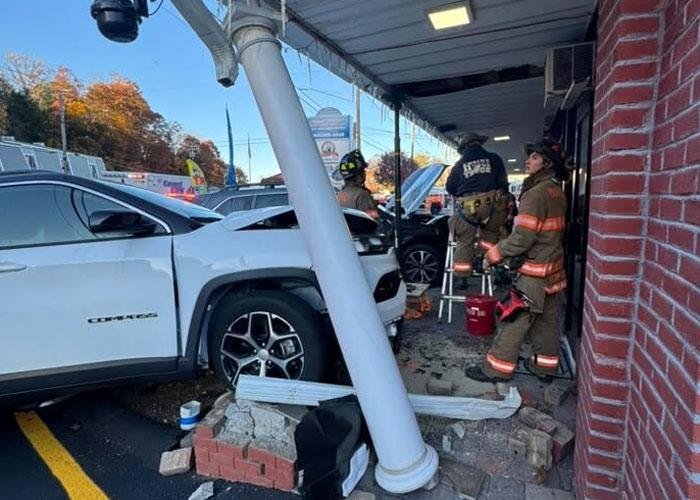
MAHOPAC — A dramatic two-vehicle collision on Route 6 in Mahopac turned into a major structural emergency on Wednesday, as both vehicles veered off the roadway and slammed into a local strip mall shopping plaza. The incident, which triggered a significant emergency response, has drawn attention to how modern infrastructure and emergency services are increasingly integrating technology to manage such crises.
The crash occurred in a high-traffic zone, forcing authorities to shut down portions of Route 6 for over an hour. Carmel Police, the Mahopac Fire Department, the Carmel Volunteer Ambulance Corps, and a Putnam Empress paramedic arrived shortly after the collision. While one driver was transported to Putnam Hospital Center for treatment, the primary concern for first responders quickly shifted from medical triage to structural integrity.
## Structural Risks and Emergency Response Dynamics
The impact of the vehicles was severe enough to knock out two critical support columns of the shopping plaza. Firefighters were forced to conduct a complex stabilization operation, installing temporary shoring to prevent the roof of the strip mall from collapsing.
This type of incident underscores the logistical challenges that first responders face in an era where data and situational awareness are paramount. While physical stabilization is a manual task, the coordination of such an event—communicating between police, EMS, and structural engineers—is increasingly supported by mobile dispatch systems and real-time mapping tools. These digital ecosystems help agencies route emergency vehicles more efficiently, potentially saving lives when every second counts.
## The Role of Smart Infrastructure and AI in Public Safety
As emergency responders dealt with the aftermath in Mahopac, the incident serves as a reminder of how the intersection of physical infrastructure and technology is evolving. Across the country, smart city initiatives are being deployed to monitor traffic flows and infrastructure integrity.
AI-powered traffic management systems are currently being developed to predict and prevent such collisions by analyzing traffic patterns and adjusting signal timing in real-time. Furthermore, there is growing interest in using AI-driven structural monitoring sensors. These sensors, often integrated into smart building management platforms, could theoretically detect the structural instability of the shopping plaza immediately upon impact, providing emergency crews with an automated “damage report” before they even arrive on the scene.
Google, through its various civic-focused initiatives, has increasingly integrated its Maps and navigation platforms to assist in these scenarios. By providing real-time congestion data, Google helps commuters avoid accident zones, which in turn clears the path for emergency vehicles to navigate to the scene of an accident more effectively.
## Moving Toward a Digitized Emergency Response
The Mahopac incident highlights the reliance on rapid human intervention, but the future of disaster management lies in the marriage of traditional emergency services and advanced data analytics. Public safety agencies are now looking toward cloud-based command centers that aggregate data from traffic cameras, witness reports, and sensor-laden infrastructure.
As the investigation into the specific cause of the Route 6 accident continues, police have yet to release the identities of the drivers. However, the event highlights a critical need for safer roadways and, eventually, a more responsive technological infrastructure. By leveraging platforms that allow for instantaneous communication between civilian apps and official emergency dispatch, the response to accidents in retail hubs can become faster and more predictable.
For now, the focus in Mahopac remains on recovery and the restoration of the damaged plaza. While no technology can fully prevent human error on the road, the integration of smart, connected systems promises to make the aftermath of such dangerous collisions significantly more manageable for those on the front lines of public safety.
Disclaimer: This content is auto-generated for informational purposes only.
Source: Read Original News