









Packaging capacity expansion fails to offset advanced node constraints
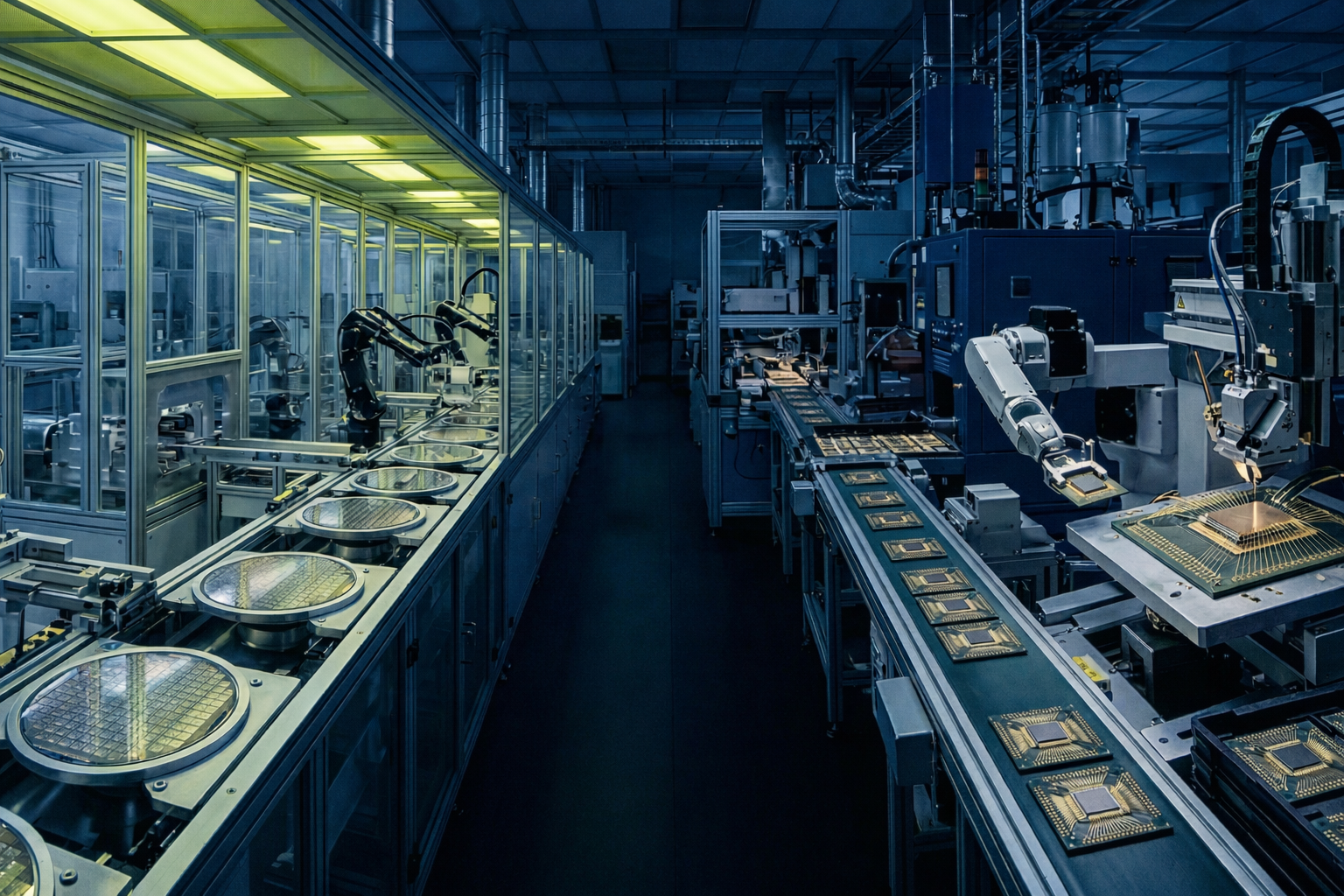
India has launched its first ATMP (Assembly, Testing, Marking, and Packaging) semiconductor plant, while Taiwan’s advanced node capacity remains constrained, tightening supply for high-performance chips into 2026. The developments, confirmed in early March and recent industry reports, point to persistent bottlenecks in back-end processing and leading-edge wafer fabrication.
Prime Minister Narendra Modi inaugurated the facility on 1 March, marking India’s entry into outsourced semiconductor assembly and test services, according to TMV. At the same time, Taiwan’s chip ecosystem continues to prioritise advanced packaging and sub-5nm production, with limited near-term relief on capacity, EE Times reported.
The new Indian ATMP facility is designed to handle semiconductor packaging and testing, with initial capacity focused on mature nodes and standard packaging formats. As reported by TMV, the plant aims to “strengthen India’s semiconductor ecosystem” and reduce reliance on overseas back-end services.
Packaging capacity has emerged as a constraint for automotive and industrial components, where lead times have remained volatile. The addition of ATMP capacity in India is expected to ease pressure on outsourced assembly providers in Southeast Asia, though ramp-up timelines remain a limiting factor. Industry estimates suggest 12–18 months before meaningful volume output.
Taiwan continues to dominate advanced semiconductor manufacturing, but capacity allocation remains constrained by demand for AI accelerators and high-performance computing. EE Times noted that “Taiwan’s semiconductor sector is under sustained pressure from global demand for advanced chips.”
Foundry allocation for sub-5nm nodes is heavily skewed towards hyperscale and AI customers, limiting availability for other applications. This has pushed some OEMs towards mature nodes or alternative architectures, affecting design cycles and bill-of-material decisions.
Join our Astute Engineer community and stay ahead:
Join our periodic electronics industry Astute Engineer newsletter
Japan’s Rapidus initiative is positioning itself as a future supplier of leading-edge nodes, with a roadmap targeting 2nm production. According to Tom’s Hardware, the company is developing advanced process technology to support next-generation semiconductors.
A Rapidus spokesperson stated, “We aim to establish a stable supply of cutting-edge semiconductors in Japan.” However, commercial production is not expected before the latter part of the decade, limiting its short-term impact on supply constraints.
The combined effect of constrained advanced node capacity and gradual expansion in packaging infrastructure is prolonging lead times for complex components. High-performance processors and advanced system-in-package designs remain subject to allocation, while pricing pressure persists across automotive-grade microcontrollers and industrial ICs.
Shifts in sourcing strategies are already visible, with some manufacturers redesigning products to accommodate alternative nodes or packaging types. The emergence of India as an ATMP hub introduces geographic diversification, but logistics, yield rates, and workforce scaling will determine its competitiveness.
Near-term supply conditions are unlikely to ease significantly before late 2026, as both front-end and back-end capacity expansions take time to reach stable output.
Damian Semple, Franchise Marketing Manager, comments: “The addition of ATMP capacity in India helps, but it won’t offset advanced node constraints in the near term. Buyers still need contingency sourcing and flexible design strategies to manage allocation risk and pricing volatility.”