






The tulip tree (Liriodendron tulipifera) has long served as a botanical hallmark of Liverpool’s historic green spaces. Originally introduced to Britain from North America in the 17th century, these trees became a favoured choice for Victorian city planners, who sought to imbue local parks with an exotic, structural elegance. Today, they stand as living monuments in landscapes ranging from Camp Hill to Calderstones, Reynolds, and Princes parks.
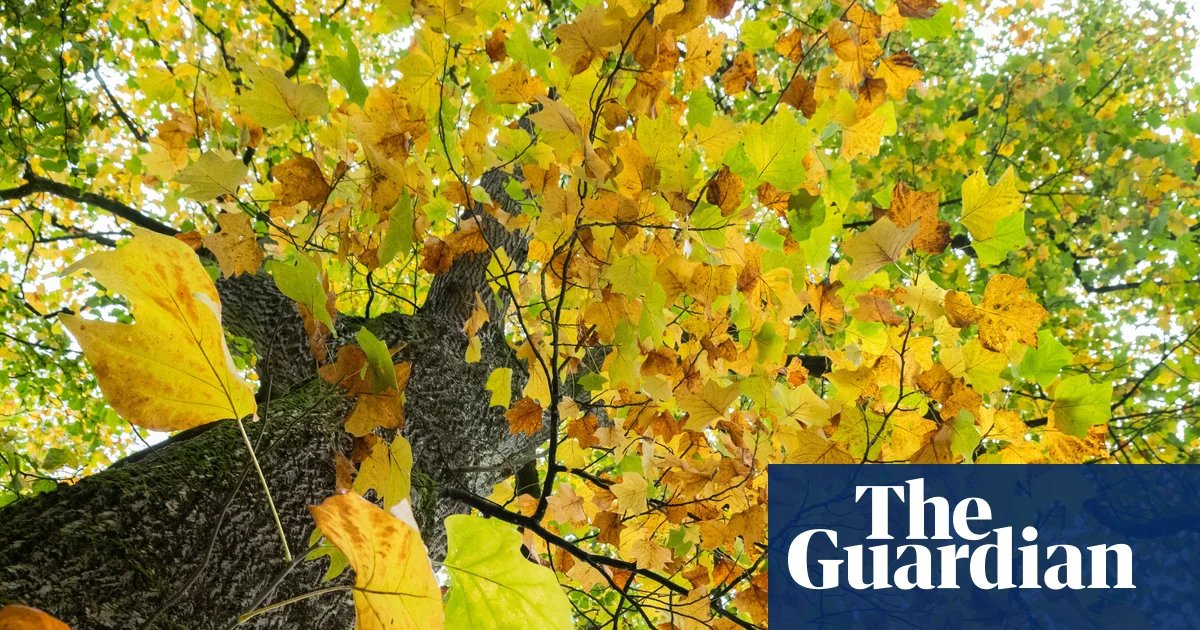
However, observers of these iconic trees have noted a striking irregularity in this year’s autumnal display. Typically, the tulip tree is celebrated for a uniform transition into a butter-gold canopy, its leaf cuticles catching the sunlight to create a luminescent, monolithic effect. This season, that brilliance has been compromised. Rather than the expected golden monotone, the foliage has manifested in a disorganized mosaic of varying shades.
Botanists and environmentalists are increasingly looking toward the climatic conditions of the preceding months to explain this phenomenon. A particularly arduous summer marked by persistent drought appears to have disrupted the complex chemical processes that govern leaf senescence. The vibrant display of autumn leaves is the result of a “pigment battle” within the plant tissues, primarily between carotenoids—which produce yellow and orange hues—and anthocyanins, which can produce red or purple tones. When trees face significant environmental stress, such as extreme heat or moisture deficiency, the metabolic pathways responsible for these pigments can be inhibited or altered. This creates an uneven, “messy” palette, a visual record of the tree’s struggle against the changing climate.
The significance of these trees extends beyond their aesthetic value. As urban centres grapple with rising temperatures, the role of large-canopy trees as critical cooling infrastructure has become a priority for municipal planning. At the Bluecoat building—the oldest surviving structure in Liverpool, dating back to 1717—the garden acts as a vital urban oasis. Following the loss of two ash trees to ash dieback, officials took the proactive step of planting a young tulip tree in 2023, alongside other ecologically valuable species such as the handkerchief tree (Davidia involucrata) and the foxglove tree (Paulownia tomentosa).
While this adolescent tree has not yet achieved the imposing silhouette of its parkland siblings, it represents an investment in the city’s climate resilience. Its smooth, grey-brown trunk and youthful crown are expected to mature into a broad canopy capable of providing essential shade in an increasingly heated urban environment.
The juxtaposition of established, historic specimens like the Camp Hill tulip tree and recent, climate-conscious plantings at the Bluecoat highlights the ongoing evolution of Britain’s arboreal heritage. As these trees adapt to shifting seasonal patterns—marked by intense droughts and erratic storm cycles—their health remains a key indicator of environmental stability. Whether or not these “Lady Gaga of the parkland” trees continue to produce their signature golden displays, their necessity in the urban fabric is clear: they are the skeletal guardians of a cooler future, even as their leaves tell an increasingly uncertain story about the changing climate under which they grow.
Disclaimer: This content is auto-generated for informational purposes only.
Source: Read Original News