








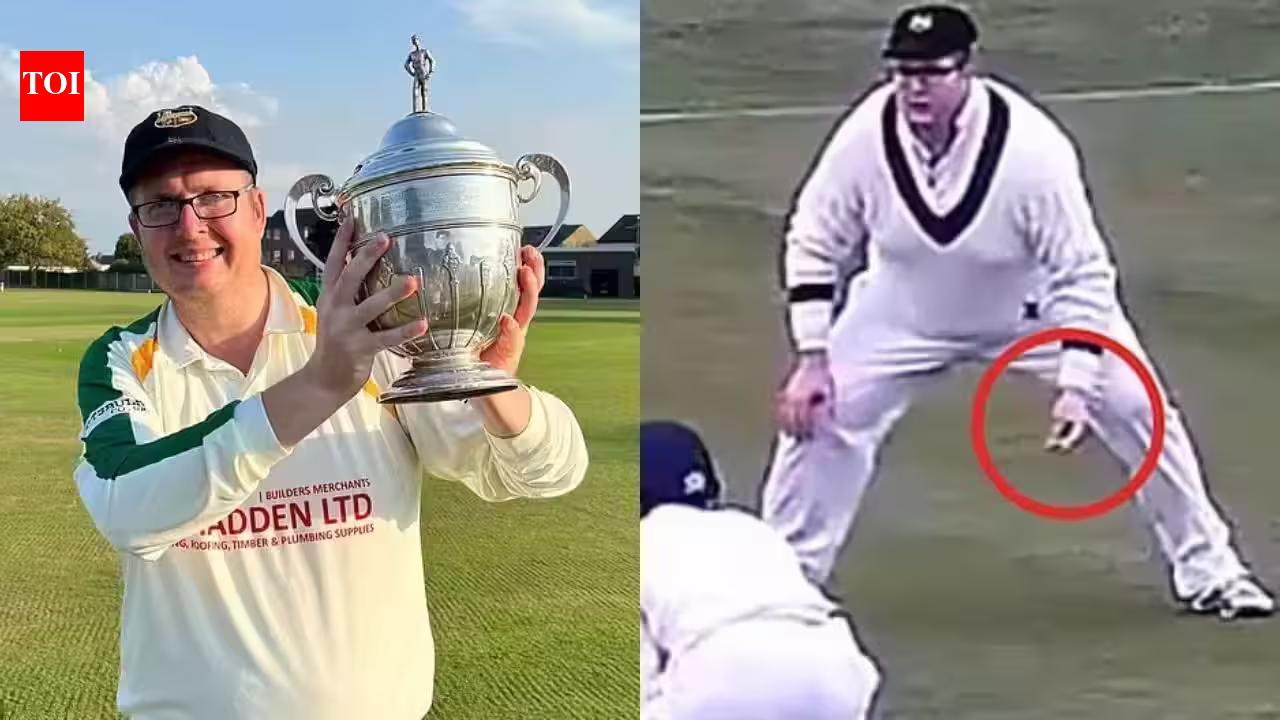
CRICKET’S SHADOWY underbelly has been thrust into the unforgiving glare of the global spotlight, resulting in a landmark disciplinary ruling that has sent shockwaves through the amateur game. Brian Devine, a 38-year-old English club cricketer who earned the mocking moniker “Clicky Ponting” during a viral cheating scandal, has been handed a comprehensive two-year ban from all cricket-related activities.
The fallout from his antics has not been limited to the individual. In a move that highlights the severity with which regional leagues are now treating gamesmanship, Saltburn Cricket Club has seen its second XI demoted, effectively stripping them of their dominant position in the North Yorkshire and South Durham League.
A Viral Scandal and the Death of “The Click”
The controversy ignited earlier this year when a video captured Devine standing at slip. As the ball passed the opposing batter, Devine was caught on camera snapping his fingers with impeccable, albeit nefarious, timing. The sound simulated the distinct “nick” of a ball hitting the edge of a bat, a transparent attempt to deceive the umpire into raising a finger.
The footage, which went viral almost instantly, drew immediate condemnation from across the cricketing world. To the casual observer, it was a humorous display of amateur desperation. To the governing bodies, however, it represented a fundamental breach of the spirit of the game. The investigation into Devine’s conduct was swift, moving from an initial club suspension to a formal disciplinary hearing that ultimately ended his involvement in the sport for the next 24 months.
The repercussions of the ban are total. Devine is prohibited from playing, coaching, umpiring, scoring, or managing junior teams. This blanket restriction aims to ensure that no individual who violates the core ethics of cricket can hold a position of influence within the club structure, effectively freezing him out of the game entirely until 2027.
Club Consequences: A Drastic Relegation
If Devine’s ban was the primary strike, the punishment levied against Saltburn Cricket Club was the thunderclap that followed. Before the scandal erupted, the Saltburn second XI sat atop their league table, poised for a dominant finish to the season. Today, they find themselves staring at a drastically different reality.
In a move that stunned local cricket circles, the league officials relegated the Saltburn second XI to the third division. Furthermore, the club has been hit with a 60-point deduction to be applied at the start of the next season. This dual-punishment strategy all but guarantees that the club will remain mired in the lower divisions for the foreseeable future, a massive drop from their previous status as league leaders.
To put the scale of the punishment into perspective, many in the sporting world have compared the two-year ban and the points deduction to high-profile professional scandals. By comparison, former Australian captains Steve Smith and David Warner received 12-month bans for their roles in the 2018 ball-tampering incident—a scandal that shook the very foundations of international cricket. While the optics of a club cricketer’s “click” may seem minor, the governing bodies clearly viewed the integrity of the match-day experience as something worth protecting with draconian force.
In a statement following the ruling, Saltburn Cricket Club appeared to concede the fight. “The club fully participated in the disciplinary proceedings and accepts the decision of the appeal following the original decision from the League,” the club noted. “We are now focusing on preparations for the 2027 season.”
The Debate Over Proportionality
The “Clicky Ponting” saga has sparked an intense, polarized debate regarding the nature of club cricket. On one side of the fence, public figures like Piers Morgan led the charge, labeling Devine “the biggest cheat in cricket history” and demanding significant consequences. For these critics, the incident was a stain on the game that required a zero-tolerance approach.
However, a vocal contingent of the cricketing community, spearheaded by Sam Perry and Ian Higgins of The Grade Cricketer, has argued that the reaction has been wildly disproportionate. They contend that amateur cricket is, by its very nature, a theater for “low-rent charm” and the “dark underbelly” of gamesmanship, which fans have enjoyed for decades.
In a defense of the grassroots spirit, the duo questioned the national outrage surrounding the incident. “Of course, it would appear some members at Saltburn CC have engaged in comically sharp practice,” they wrote. “But sadly, when [critics] declare to millions that ‘Clicky Ponting must be the biggest cheat in cricket history,’ all proportionality is lost.”
For these commentators, the attempt to turn an amateur slip-fielder’s failed prank into a cautionary tale of institutional corruption ignores the nuance of community sports. They argue that the brotherhood of club cricket is being subjected to standards of professional-level scrutiny that the amateur game simply wasn’t designed to uphold.
The Road Ahead
As the dust settles, the “Clicky Ponting” saga serves as a bizarre yet significant marker in the history of English club cricket. Whether one views it as a necessary cleansing of unethical behavior or an over-the-top reaction to a foolish prank, the precedent has been set.
For Brian Devine, the next two years will be spent on the sidelines, an exile from the game he helped turn into a global punchline. For Saltburn Cricket Club, the challenge is now one of rebuilding—a process that will be measured in years rather than matches. In the end, the scandal has reminded the cricketing public that while the rules of the game remain constant, the reaction to breaking them can be as unpredictable as a ball off a tricky pitch.
Disclaimer: This content is auto-generated for informational purposes only.
Source: Read Original News