






First Majestic Silver Corp. has delivered a commanding performance in the third quarter of 2026, announcing a staggering 38% year-over-year revenue increase to US$394.1 million. While the mining sector is traditionally defined by commodity prices and geological output, First Majestic’s latest financial surge highlights a critical transformation occurring across the industrial landscape: the aggressive integration of high-tech data analytics, autonomous systems, and predictive artificial intelligence to optimize heavy extraction processes.
As legacy industries race to keep pace with global demand, the adoption of sophisticated digital ecosystems—often powered by cloud-based infrastructure similar to those managed by Google Cloud—has become the new benchmark for operational efficiency.
Bridging the Gap: AI and Operational Intelligence in Mining
The revenue growth reported by First Majestic reflects more than just favorable market conditions; it underscores the successful implementation of digitized operational models. In the modern mining enterprise, decision-making is no longer driven by intuition alone but by massive datasets processed in real-time. By utilizing advanced machine learning algorithms, firms are now able to simulate extraction paths and predict equipment failures long before they disrupt the supply chain.
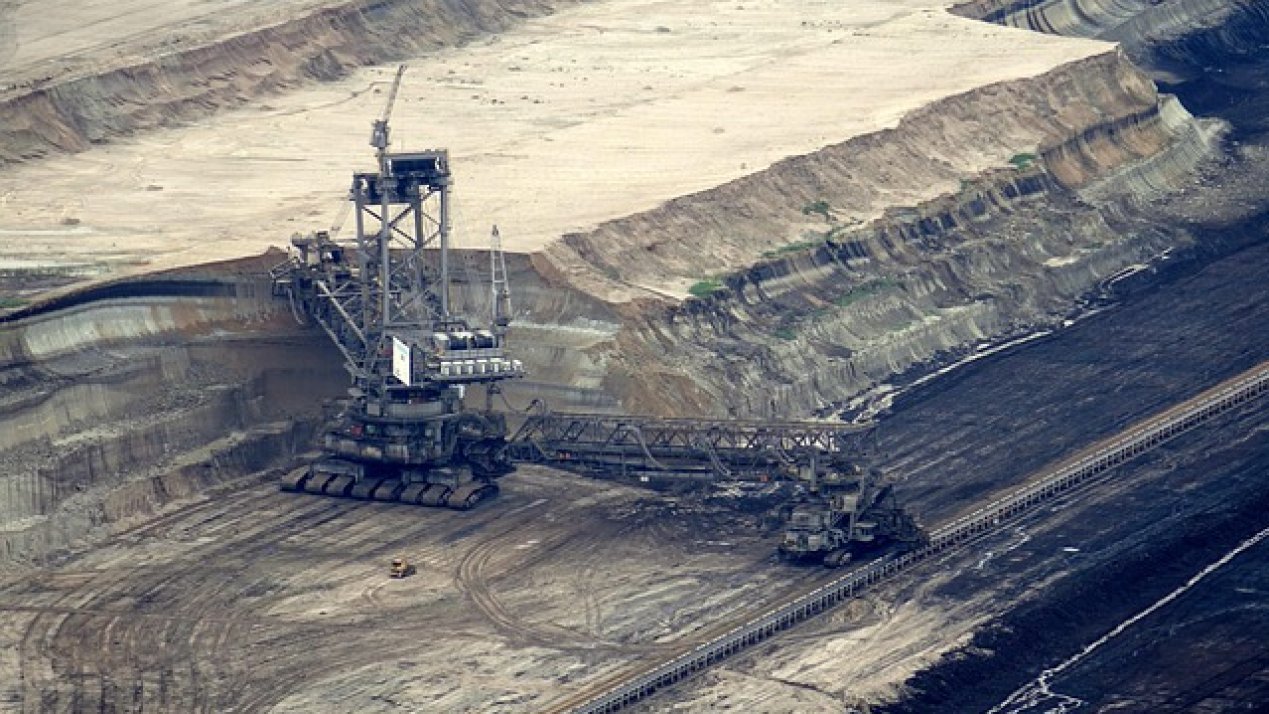
This pivot toward “Mining 4.0” mirrors the tech industry’s own obsession with scalable data solutions. Much like how Google leverages AI to optimize server cooling and data center energy consumption, mining corporations are employing similar frameworks to manage the power intensity of bucket-wheel excavators and autonomous hauling fleets. The ability to process, interpret, and act upon telemetry data at the edge has allowed First Majestic to maximize throughput, directly contributing to their robust quarterly revenue growth.
The Role of Data Visualization and Cloud Infrastructure
Behind the scenes of these record-breaking financial figures lies a sophisticated stack of software tools. Modern mining logistics increasingly rely on sophisticated mapping and geospatial analytics that rival the precision of Google Maps’ enterprise spatial tools. These digital twins of mining sites allow engineers to visualize resource deposits with high-definition accuracy, reducing waste and increasing the precision of every extraction attempt.
Furthermore, cloud-based collaboration platforms have revolutionized how global mining teams operate. By centralizing reporting and real-time monitoring on secure, scalable cloud infrastructures, First Majestic and its peers are minimizing the latency between a field discovery and a boardroom financial projection. As these companies continue to modernize, the integration of generative AI to synthesize complex geological reports into actionable business intelligence is becoming a standard practice, ensuring that the C-suite can respond to market fluctuations with unprecedented speed.
Looking Ahead: The Convergence of Tech and Extraction
The surge to US$394.1 million in Q3 2026 serves as a bellwether for the industrial sector’s future. As the global economy demands higher transparency and sustainability, the marriage of hardware-heavy mining and software-driven intelligence will only tighten. Industry analysts suggest that we are entering a phase where the “Tech” sector is no longer confined to Silicon Valley campuses but is actively shaping the output of the most traditional corners of the economy.
For investors and tech enthusiasts alike, the First Majestic results demonstrate that high-growth potential is increasingly tied to digital transformation. As companies move toward fully autonomous, AI-governed extraction environments, the industry will likely see further reliance on advanced API integrations and machine-learning-driven supply chain forecasting. The barrier between “tech company” and “mining company” is blurring; today, the ability to manage information is just as vital to a company’s bottom line as the ability to extract silver from the earth. As we look toward the final quarter of 2026, the question is not whether mining firms will continue to embrace the digital revolution, but which companies will harness it most effectively to secure their competitive edge.
Disclaimer: This content is auto-generated for informational purposes only.
Source: Read Original News