







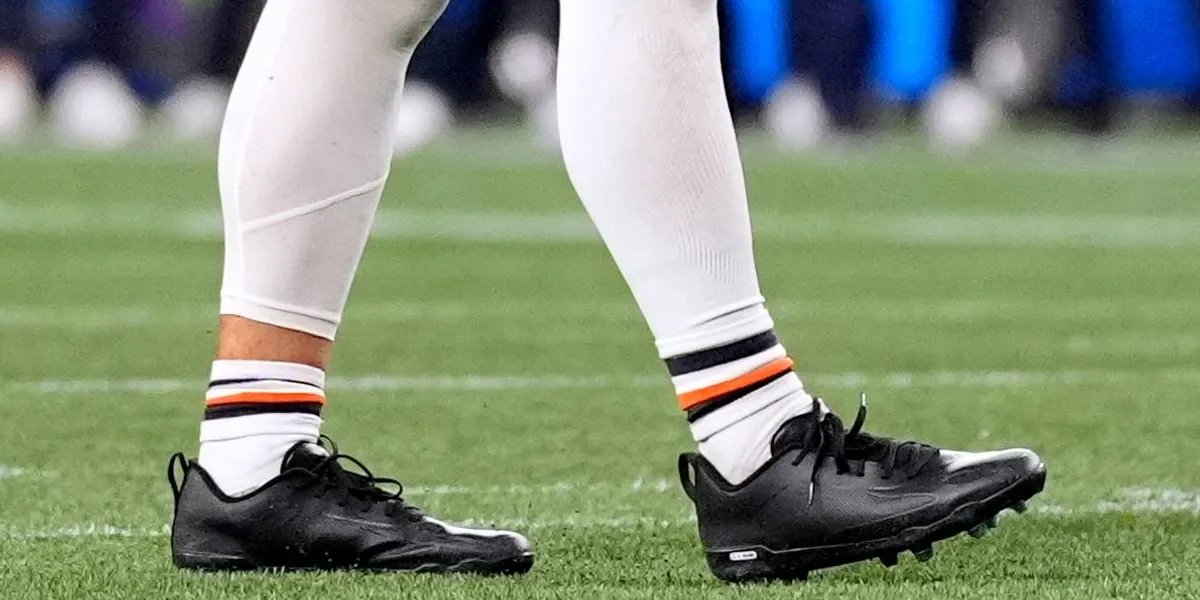
The NFL is currently the stage for an unlikely David-versus-Goliath story in the sports apparel world. A tiny, Baltimore-based startup named Caddix has found itself at the center of a massive marketing firestorm thanks to Chicago Bears quarterback Caleb Williams. While the league’s billion-dollar partnerships with athletic giants like Nike and Under Armour remain standard, the growing trend of star players prioritizing biomechanical performance over brand loyalty is forcing a conversation about innovation in high-stakes sports tech.
From a Garage Concept to the Gridiron
The story of Caddix began with a simple observation of a devastating injury. When former Kansas City Chiefs running back Jamaal Charles tore his ACL in 2015, Jack Rasmussen—then a 19-year-old housekeeper with an interest in biomechanics—believed the issue was fundamentally solvable through better footwear engineering. Alongside his father, Jeff, Rasmussen spent years researching physics and patenting a unique cleat design featuring flexible, “smart” studs intended to reduce joint strain and improve rotational movement.
Rasmussen’s path to the NFL was unconventional; he did not play high school football, instead entering the sport as a punter in college, where he used his teammates as constant, involuntary test subjects. Today, that humble research has evolved into a company with a staff of four and less than $2 million in annual revenue, yet it is currently being championed by the No. 1 overall pick of the 2024 NFL draft.
The Price of Innovation
The relationship between Williams and Caddix started with a clandestine phone call from a sports performance coach. The subsequent partnership led to Williams wearing the company’s cleats during NFL play. However, the NFL’s strict policy—which mandates that players wear gear from only three authorized suppliers—resulted in Williams incurring over $35,000 in fines during weeks six and seven of the season for displaying unauthorized branding.
While the league’s policy strictly prohibits unapproved logos, the technical performance of the footwear has turned players into vocal advocates. Athletes like San Francisco 49ers fullback Kyle Juszczyk and Buffalo Bills tight end Dalton Kincaid have adopted the cleats, often whiting out logos to adhere to league rules. For a small tech startup, the sheer volume of “earned media” from these high-profile players—who have collectively started to ignore traditional sponsorship boundaries in favor of personal health and performance—is being described by sports business experts as a “cash cow” worth tens of millions of dollars.
Tech Disruption in the Sports Industry
Caddix represents a broader shift in the sports tech industry where specialized, science-driven startups are challenging legacy athletic brands. By focusing on niche biomechanical problems rather than mass-market fashion, the company has attracted an investor base that includes retired NFL veterans like Joe Flacco and Dennis Pitta.
As the company looks toward its next phase—which includes a potential funding round and expansion into recovery or lifestyle footwear—Rasmussen remains grounded in the science. For elite athletes like Williams, the choice is clear: as long as the “smart studs” continue to mitigate injury risks and improve performance on the field, the startup will remain a major disruptor. Even the league’s regulatory pushback hasn’t stalled momentum, as the company has since pivoted to providing blank-label footwear that meets NFL aesthetic guidelines, allowing the technology to remain on the field without further penalty. Whether through official endorsement or quiet compliance, the influence of data-driven, small-scale footwear engineering is changing how the game is played at the highest level.
Disclaimer: This content is auto-generated for informational purposes only.
Source: Read Original News