





The North American digital infrastructure landscape is undergoing a profound transformation following the November 2026 US elections. As the surge in AI-driven computing intensifies demand for massive server farms, a rising tide of community opposition and regulatory scrutiny in the United States is forcing developers to reconsider their expansion strategies. For Mexico, this shift presents a complex landscape where the potential for significant capital investment competes with persistent domestic infrastructure hurdles.
The US Regulatory Chill and Local Opposition
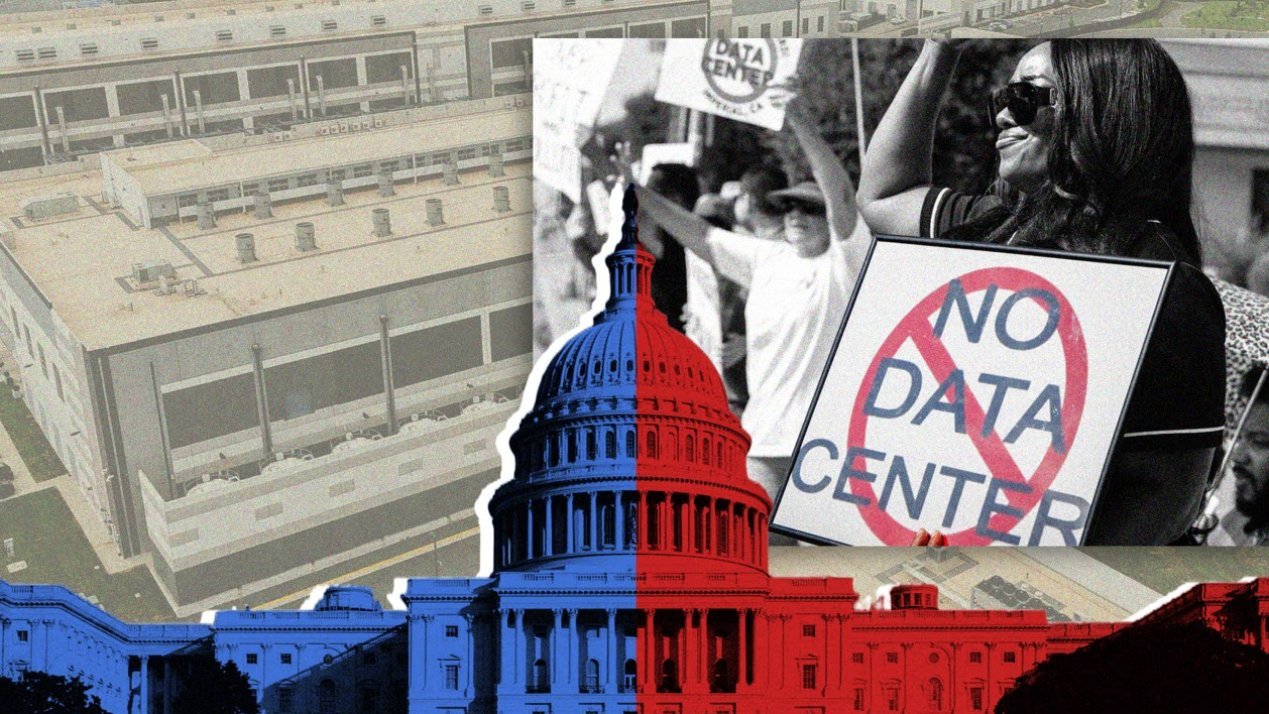
The political climate for data centers in the US has turned increasingly hostile. Data from November 2026 indicates that local communities are actively pushing back against the massive electricity and water demands associated with hyperscale computing. In a striking trend, voters approved restrictive measures in 40 out of 41 local ballot initiatives, ranging from temporary moratoriums to outright development bans.
This sentiment has reached the highest levels of state government. In Texas, the gubernatorial victory of Gina Hinojosa was built in part on a platform promising a continued freeze on new data center approvals until rigorous community impact and resource assessments are finalized. This follows earlier executive actions by former Governor Greg Abbott, who had already initiated state-level audits of grid interconnections and environmental permits. For big-tech players reliant on consistent, scalable infrastructure for their AI models, the US market has moved from a “growth-at-all-costs” environment to one defined by legal and political uncertainty.
Mexico’s Infrastructure Bottlenecks
While Mexico has been positioned as a prime destination for nearshoring digital assets, it is not immune to the resource constraints currently plaguing the industry. The Mexican Data Center Association (MEXDC) has estimated a massive US$82.5 billion investment potential through 2031, but converting these projections into operational reality remains a challenge.
The primary obstacle is not a lack of interest, but a lack of reliable power and water. Currently, about 72% of Mexico’s 279MW of operational data center capacity is concentrated in the state of Querétaro. This heavy reliance on a single hub has created localized stress on the energy grid and water supplies. Developers report that securing electricity infrastructure can now add as much as three years to project timelines. For companies like CloudHQ, navigating the complexities of high-voltage substation construction has become a standard, albeit time-consuming, requirement of doing business. Without broader geographic diversification into industrial markets like Nuevo León or Guanajuato, the sector risks hitting a growth ceiling caused by its own logistical requirements.
Strategic Imperatives for Future Competitiveness
Mexico’s ability to capture the overflow from the US market will ultimately depend on its “regulatory readiness.” As AI demand continues to force data centers to prioritize cooling efficiency and power density, host countries must provide more than just favorable trade geography.
Transparency in resource management has emerged as a critical differentiator. Industry experts are now urging tech firms to move toward more open disclosure regarding their water consumption and energy impact. Adopting advanced, closed-loop cooling technologies and air-based architectures could serve as a vital component in mitigating community backlash—a lesson learned directly from the current US experience.
For the Mexican market to solidify its standing as a continental digital powerhouse, the path forward requires a coordinated effort between the private sector and government entities to streamline project development. The proximity to US industrial markets is a clear competitive advantage, but it remains secondary to the fundamental requirements of consistent power delivery and transparent, sustainable land use. Unless Mexico can prove it has the grid capacity and regulatory stability to manage large-scale digital growth, it will continue to face the same friction points currently reshaping the US data center landscape.
Disclaimer: This content is auto-generated for informational purposes only.
Source: Read Original News