






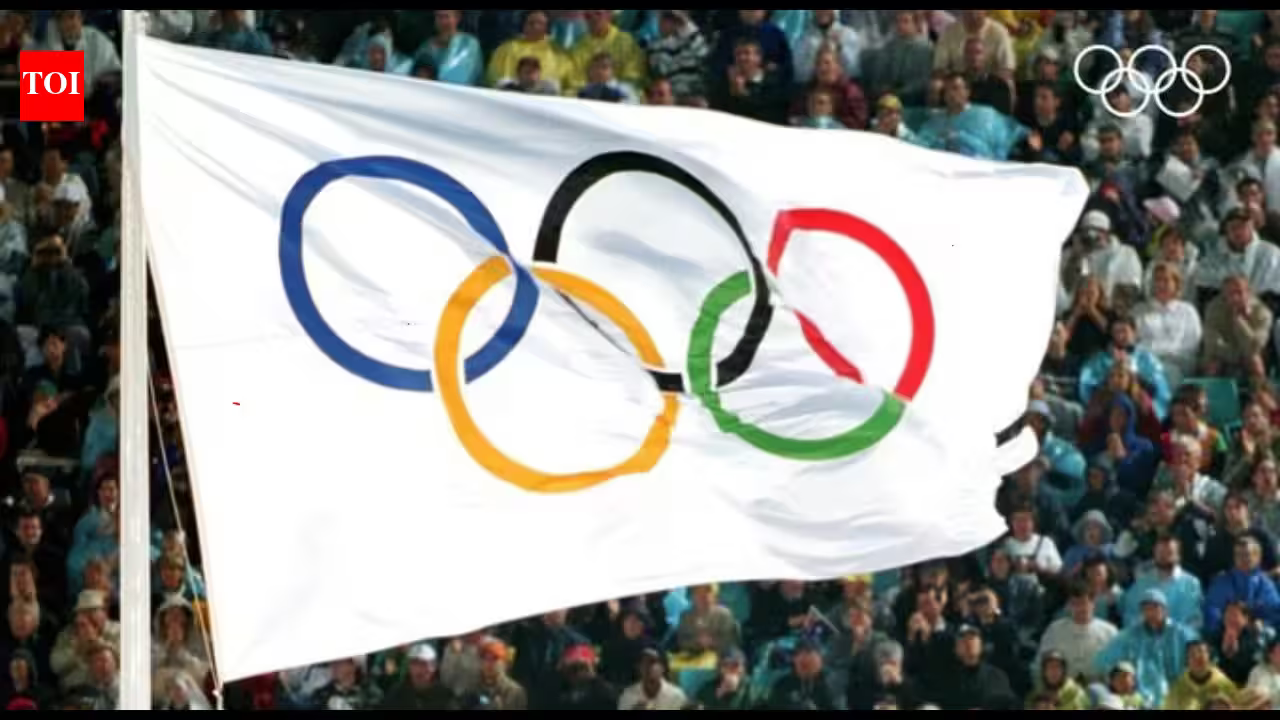
IMAGINE a podium where the gold medalist isn’t breathless from a sprint, nor nursing a bruised shoulder from a shot-put throw, but rather clutching a quill or carrying a canvas. For over three decades, this was not a flight of fancy but a formal reality of the modern Olympic Games. Between 1912 and 1948, the Olympics featured a “Pentathlon of the Muses,” where artists competed for the same glory as the world’s greatest track and field stars.
At the center of this curious chapter in sports history stands Pierre de Coubertin, the founder of the modern Olympic movement. Driven by a desire to restore the ancient Greek ideal of a harmonious education—one that balanced the “muscle and mind”—Coubertin envisioned a Games where the arts and athletics were equal partners.
The ancient ideal behind Coubertin’s Olympic vision
Coubertin’s obsession with marrying art and sport was deeply rooted in his classical education. He looked back to ancient Olympia, where poets like Pindar were as revered as the victorious athletes they immortalized. To the founder, the modern Games felt hollow without an intellectual component.
Inspired by the archaeological excavations at Olympia in the 1870s and the philosophical teachings of Plato, Coubertin believed that separating physical and artistic achievement had impoverished Western culture. He famously sought to reunite these two “estranged partners.” However, his vision met little early success. The 1896 Athens Games were strictly physical, as were the subsequent Games in Paris, St. Louis, and London. It wasn’t until 1912 in Stockholm that Coubertin’s “Pentathlon of the Muses”—encompassing architecture, sculpture, painting, music, and literature—finally took the stage.
A campaign to bring art back into the Games
The road to the 1912 debut was paved with persistent advocacy. Following his 1904 Le Figaro manifesto, “The Roman Olympiad,” Coubertin organized a consultative conference in Paris in 1906 to formalize the inclusion of the arts. The plan was nearly derailed by the 1906 eruption of Mount Vesuvius, which forced Italy to pass the hosting duties for the 1908 Games to London, causing the artistic debut to be pushed back four years.
By the time the Stockholm Games arrived, interest from the artistic community was underwhelming. Fearful that his dream would vanish due to a lack of entries, Coubertin took matters into his own hands—literally.
The founder enters under two assumed names
In one of the most eccentric footnotes in Olympic history, the literature competition at the 1912 Games was won by a man the judges believed to be two separate writers: “Georges Hohrod” and “Martin Eschbach.” In reality, both pseudonyms belonged to Pierre de Coubertin himself.
His submission, Ode to Sport, was a sweeping prose composition that glorified the physical and moral virtues of athletics. The Stockholm jury, unaware they were reading the work of the man who had founded the entire event, declared it the winner of the gold medal. Coubertin’s anonymous entry was not just an act of vanity; it was a desperate attempt to legitimize his own project. Though he eventually revealed his identity, the victory remains a singular, if slightly absurd, moment of Olympic history.
The competitions grow, but never quite find their audience
As the years passed, the artistic program expanded. By 1928, over 1,000 entries were pouring into Olympic committees. However, the prestige never quite matched the volume. Because participants were required to create works explicitly inspired by sport, many world-class authors avoided the contest. Those who did participate, such as poet Robert Graves, often looked back on the experience with disdain, with Graves famously dismissing the competition as a “bad joke.”
The quality of the work became a persistent issue. Historians like Tony Perrottet, who have tracked down forgotten winning entries in library archives, often describe the works as dated, stilted, or bizarre. The 1936 Berlin Games further sullied the reputation of the arts program, as it was heavily co-opted by the propaganda machine of the Nazi regime, which prioritized the medals to bolster nationalistic aesthetics.
London 1948 and the end of the Olympic arts programme
The demise of the art competitions was ultimately a casualty of the very thing that defined the early Games: amateurism. The International Olympic Committee struggled to reconcile the status of professional artists with the strict amateur code of the time. If a professional architect or painter submitted their work, were they violating the core tenet of the amateur athlete?
By 1948, the conflict was untenable. Incoming IOC president Avery Brundage—himself a failed competitor in the arts category—led the charge to abolish the program. By the 1950s, the artistic medals had been struck from the official Olympic record books.
Today, while the “Pentathlon of the Muses” is largely a memory, it serves as a fascinating reminder of the limits of a grand vision. Coubertin failed to convince the world that an epic poem about a discus thrower belonged on the same level as the thrower themselves. Yet, he left behind a testament to his own relentless, if occasionally misguided, belief that the Olympics could be the ultimate stage for the totality of human expression—a stage where, for one fleeting moment, the poet was just as much an Olympian as the champion on the track.
Disclaimer: This content is auto-generated for informational purposes only.
Source: Read Original News