








Defining the High-End Standard in 2026
In the current technological landscape of 2026, the term “high-end” has evolved beyond simple price tags. It is no longer defined by how much a user spends, but by a specific performance threshold: the ability to deliver a consistent, native 4K gaming experience at ultra settings without relying on aggressive AI-driven upscaling. While 1440p has become the baseline for modern, well-equipped systems, true high-end hardware must comfortably handle the pixel density and fidelity requirements of 4K resolutions.
Historically, mid-range cards like the Radeon RX 6700 XT were considered benchmarks for 1440p, but today’s market demands significantly more graphical headroom. A high-end build today targets a seamless balance between frame rates and visual fidelity. Building such a system typically requires an investment ranging between $3,500 and $4,500, though this figure fluctuates based on component supply chains, which remain susceptible to volatility in the memory and semiconductor sectors.
The Anatomy of a 2026 High-End Gaming PC
A balanced, high-end PC requires careful selection of components to avoid bottlenecks. The current gold standard for such a machine involves a synergistic combination of high-performance parts. At the center is the Nvidia GeForce RTX 5080 with 16GB of VRAM. While its original MSRP was positioned at $999, market demand and supply constraints have pushed retail prices significantly higher, often reaching $1,800.
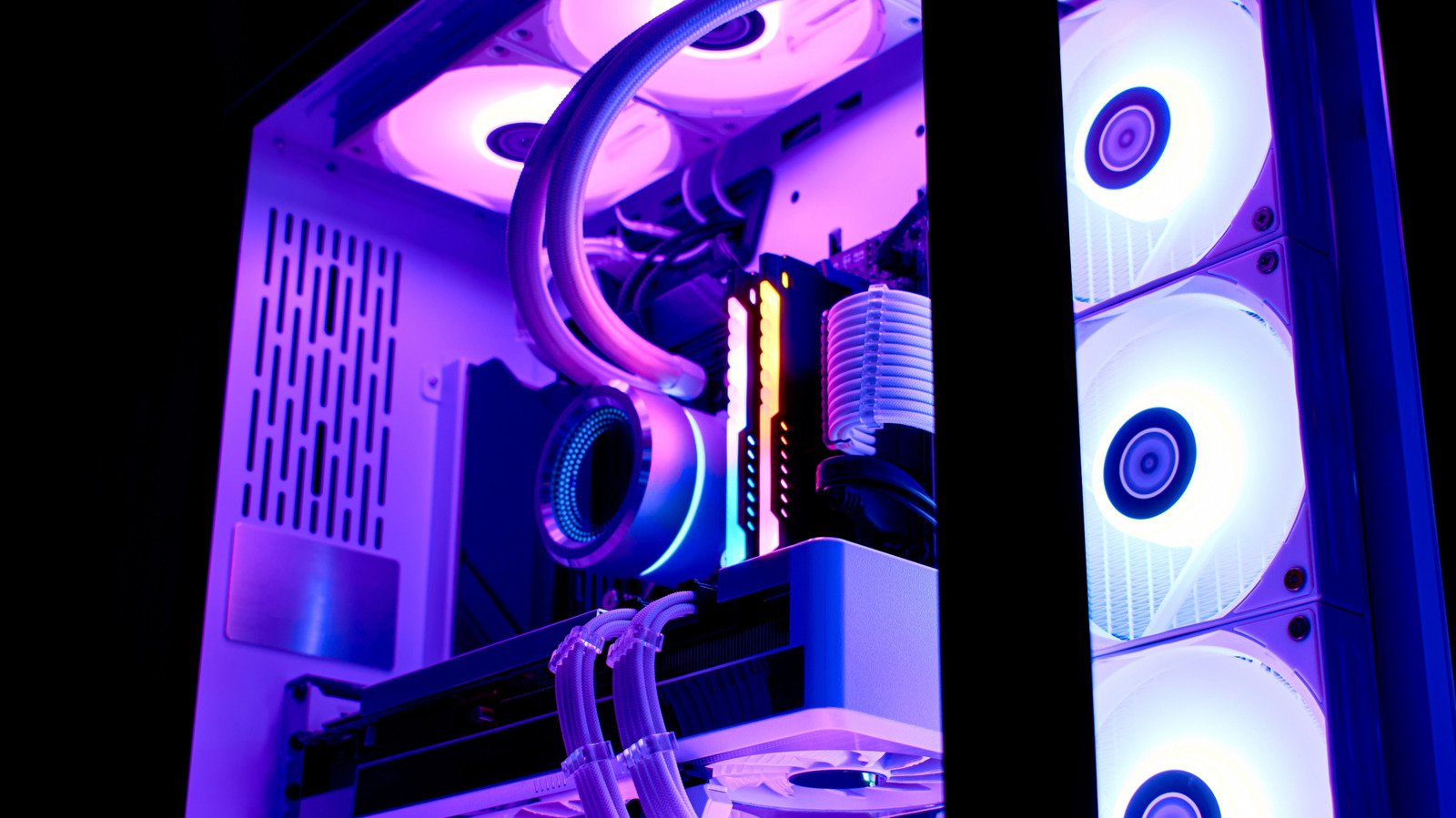
Paired with this GPU, a high-end system requires a CPU capable of keeping up with high-frame-rate 4K output, such as the AMD Ryzen 7 9800X3D. Complementing this, builders should opt for a robust X870 motherboard, 32GB of high-speed DDR5 memory, and a 2TB NVMe solid-state drive. To maintain system longevity, a 1000W 80+ Gold or Platinum-rated power supply is essential, alongside a case optimized for high-airflow to manage the thermal output of these powerful components. Whether one opts for air or liquid cooling depends on personal preference, but liquid cooling solutions provide a distinct advantage in maintaining peak boost clocks under sustained loads.
Distinguishing Enthusiast-Tier Performance
It is important to differentiate between a high-end gaming PC and an enthusiast-tier machine. While a high-end system targets excellent 4K performance, the enthusiast category pushes the boundaries of current technology. The Nvidia RTX 5090, featuring 32GB of VRAM, occupies this space.
The RTX 5090 is designed for those who demand 4K gaming at extremely high refresh rates while maintaining the absolute maximum graphical fidelity possible. For the majority of users, this level of performance is well beyond the requirement for a conventional high-end experience. Consequently, the price premium for the 5090 is substantial, making it a purchase reserved for those who view PC building as a dedicated hobby rather than a means to play current software titles.
Building a Respectable System for $1,000
For users with a tighter budget, a $1,000 target is entirely viable for a gaming-focused build that manages to outperform current-generation consoles like the Xbox Series X and the PlayStation 5. The centerpiece of a budget-conscious yet powerful build is the RX 9060 XT 16GB. This GPU represents a critical value point, providing performance that matches or occasionally exceeds the capabilities of the PlayStation 5 Pro.
To maintain this $1,000 price point, builders often look to AM4 motherboard platforms and reliable, cost-effective Ryzen 5 5600X processors. Utilizing 16GB of DDR4 memory is a common compromise, though opting for used components can often allow for a more modern CPU and RAM setup. Regardless of the cost-cutting measures applied to storage or aesthetics, one component must remain a priority: the power supply. Even if a 450W PSU is technically sufficient for the RX 9060 XT, investing in a high-quality 650W or 750W unit ensures stability and provides a buffer for future hardware upgrades.
Market Volatility and Component Selection
Component pricing in 2026 is characterized by significant shifts, particularly regarding graphics cards and memory modules. These fluctuations can turn a $3,500 build into a $4,500 project overnight. Buyers should monitor the market closely, as the rumored discontinuation of specific GPU models can cause unexpected price spikes.
When configuring a system, it is often more efficient to allocate funds toward the GPU and power supply first, while secondary items—such as the case, lighting, and cooling solutions—can be adjusted based on the remaining budget. While some gamers look to pre-built systems to mitigate these costs through bulk component discounts, building from scratch remains the most effective way to ensure that every dollar spent directly contributes to raw gaming performance rather than extraneous branding or unnecessary features. By prioritizing internal specs over visual flair, users can maintain a competitive edge in performance without overextending their finances.
Disclaimer: This content is auto-generated for informational purposes only.
Source: Read Original News