



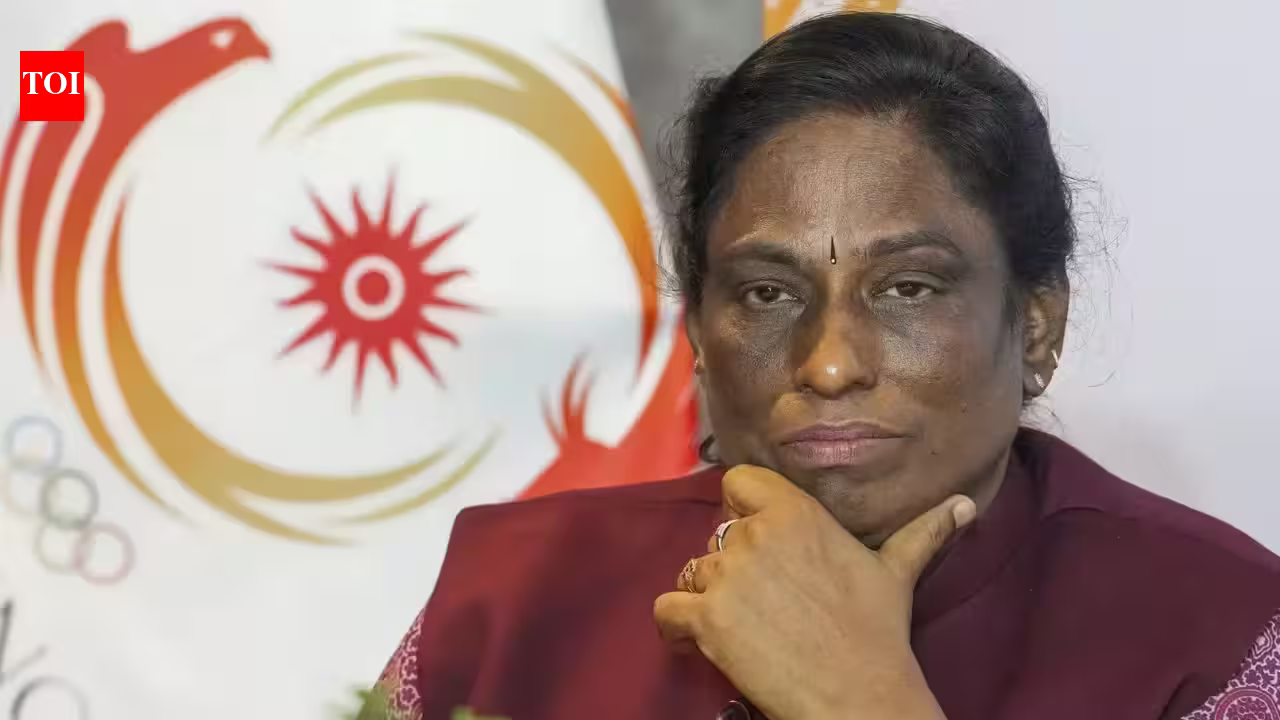
SHOCKWAVES have hit the corridors of Indian sports governance as the reigning president of the Indian Olympic Association (IOA), legendary sprinter PT Usha, has suffered a significant political defeat. In a high-stakes virtual election held on Monday, Usha failed to secure a spot as a Sportsperson of Outstanding Merit (SOM), effectively slamming the door shut on her path to a second term as the head of the country’s apex Olympic body.
The electoral loss marks a dramatic turn of events for the “Payyoli Express,” whose leadership has been defined by both historic milestones and intense internal friction. By failing to clear the SOM hurdle, Usha is now ineligible to contest the upcoming IOA presidential elections scheduled for December 5.
The Rise of a New Guard
The SOM elections, conducted via the ‘Right2Vote’ platform, saw a six-way contest among female ex-athletes. Former world championship medalist Anju Bobby George emerged as the clear frontrunner, garnering the highest number of votes (53). She was followed by former Indian hockey captain Rani Rampal (50), legendary archer Dola Banerjee (45), and badminton icon Saina Nehwal (43).
For PT Usha, the final tally of 40 votes was insufficient to make the cut, leaving her behind the four elected women. Anitha Paul Durai trailed significantly with six votes. The four successful candidates, along with their male counterparts—Gagan Narang, Vijender Singh, Yogeshwar Dutt, and Kamlesh Mehta, all of whom were elected unopposed—are now the only individuals eligible to stand for the top job in Indian sports come December.
While Usha technically retains a theoretical path to a second term if nominated to the General Assembly by a national sports federation, insiders view this as highly unlikely, effectively signaling the potential end of her tenure at the helm of the IOA.
Allegations of Misconduct
The lead-up to Monday’s vote was marred by high-tension disputes. On the eve of the election, PT Usha filed a formal complaint with the Electoral Officer, Sanjay K. Srivastava, accusing Dola Banerjee of violating the Model Code of Conduct.
At the heart of the complaint was a WhatsApp message allegedly circulated by Banerjee—or on her behalf—which promoted a “New Bharat Panel.” The message specifically solicited votes for four designated candidates, providing ballot serial numbers and roll numbers. Usha argued that this violated Clause 1.9 of the Model Code of Conduct, which strictly prohibits the use of new media or social networks for candidate promotion.
Usha’s complaint emphasized that the integrity of the election relied on a “level playing field,” accusing the opposing campaign of failing to conduct themselves with the “dignity and moderation” required by the regulations. While the Electoral Officer reiterated the Model Code of Conduct before voting commenced, the damage to the optics of the process had already been done.
The Shadow of Political Influence
The results and the preceding maneuvers underscore the deepening intersection of politics and sports in India. The composition of the new SOM list features several individuals with clear political affiliations, fueling ongoing discussions regarding the influence of government on independent sporting bodies.
Of the men elected unopposed, wrestler Yogeshwar Dutt and boxer Vijender Singh are prominent figures within the BJP. Saina Nehwal, who has now cleared a path to potential leadership, also joined the ruling party in 2020. Even among the broader IOA framework, the influence is palpable. The Athletes Commission—which was finalized without a vote—includes heavyweights like PV Sindhu and Harmanpreet Singh, the latter of whom has been elevated to the IOA Executive Council.
This environment of intense political maneuvering has led to a climate of instability. Before the final SOM slate was set, the election process was rocked by mass withdrawals, with 13 ex-athletes—eight male and five female—withdrawing their candidacies. This sudden exodus raised red flags across the sporting fraternity, suggesting a highly orchestrated process behind the scenes.
What Lies Ahead?
With the Athletes Commission now finalized and the SOM list confirmed, the stage is set for the December 5 IOA elections. PV Sindhu has been named chairperson of the Athletes Commission, with Harmanpreet Singh serving as vice-chairperson, ensuring their direct participation in the IOA Executive Council. Meanwhile, Mirabai Chanu and Sajan Prakash have been appointed as athlete representatives to the IOA General Body, securing their right to vote in the upcoming presidential race.
For PT Usha, the defeat is a humbling conclusion to a chapter that once promised a complete overhaul of India’s Olympic administration. As the IOA prepares to transition to a new leadership, the focus now shifts to whether the incoming regime can navigate the complex web of political interests while addressing the governance challenges that have plagued the organization for years.
As the dust settles, one thing is certain: the leadership of Indian sport is undergoing a tectonic shift, one where electoral mathematics and political alignment have proven far more potent than past athletic glory.
Disclaimer: This content is auto-generated for informational purposes only.
Source: Read Original News