





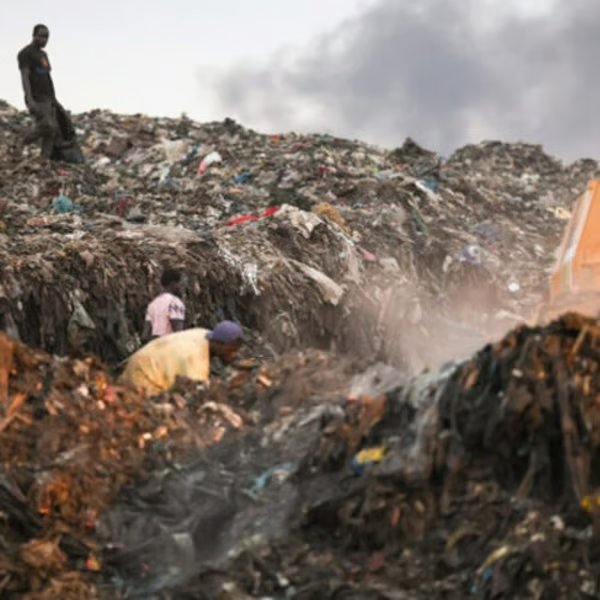
An acrid, gray haze perpetually blankets the sprawling landscape of Agbogbloshie, a district in Accra, Ghana, that has become a grim epicenter for the world’s discarded textiles. What was once a thriving wetland ecosystem is now a mountainous terrain of synthetic fibers, discarded denim, and discarded fast-fashion garments, forming a tangible graveyard for the global clothing industry.
Agbogbloshie serves as a stark destination for “deadstock”—the surplus and second-hand clothing shipped from Europe, North America, and China to West Africa under the guise of charitable donations or resale goods. According to data from international environmental organizations, approximately 15 million garments arrive in Accra’s Kantamanto Market every week. While a portion of this influx finds its way into the local economy, up to 40 percent is deemed unsellable upon arrival due to poor quality or damage. This discarded remainder is subsequently funneled into sites like Agbogbloshie, where it is subjected to the only “waste management” systems available: open-air dumping and incineration.
The environmental fallout of this phenomenon is profound. Modern fast fashion relies heavily on synthetic materials—polyesters, nylons, and acrylics—which are essentially plastics derived from petroleum. As these garments decompose or are burned in open pits to clear space for new arrivals, they release toxic chemicals, heavy metals, and microplastics into the soil and the nearby Odaw River. The resulting smoke carries particulate matter that poses an immediate respiratory threat to the thousands of residents and informal workers who navigate the dump daily.
Beyond the localized air pollution, the leaching of dyes and chemical finishes into the groundwater represents a long-term ecological disaster. The Odaw River, choked by mountains of fabric, acts as a conveyor belt, carrying synthetic debris directly into the Gulf of Guinea. This contributes significantly to the global crisis of marine microplastics, which enter the food chain through local fish populations, impacting both regional biodiversity and the health of communities reliant on coastal resources.
The situation in Agbogbloshie has intensified calls for a shift toward “Extended Producer Responsibility” (EPR). Critics of the current global textile trade argue that brands and retailers must be held accountable for the entire lifecycle of their products. Under the current model, the cost of disposing of clothing is effectively externalized, shifted from the multi-billion-dollar fashion companies onto the municipal authorities and impoverished communities of the Global South.
“We are essentially acting as the world’s closet floor,” says one local environmental advocate. “The burden of the ‘cheap clothes’ culture in the West is being paid for in the air quality, soil health, and water safety of Accra.”
Efforts are now mounting to address the crisis through both policy and circularity initiatives. International discussions regarding the regulation of textile waste exports are gaining traction, with some nations advocating for strict “quality control” standards to prevent the export of textile waste labeled as second-hand goods. Simultaneously, domestic efforts in Ghana are emerging to explore textile recycling and upcycling, aiming to transform the waste stream into a resource. However, such initiatives remain small-scale compared to the sheer volume of waste arriving daily.
As the global fashion industry continues to expand, the scene in Agbogbloshie serves as a visceral reminder of the “hidden” costs of consumption. Without systemic change that addresses the overproduction of garments at the source, the landscape in Accra will continue to swell, solidifying its place as a haunting monument to the era of disposable fashion. The haze over Agbogbloshie is not merely a local nuisance; it is a signal that the current linear model of garment production and consumption has reached its ecological limit.
Disclaimer: This content is auto-generated for informational purposes only.
Source: Read Original News