








The Silent Struggle Behind the Service Desk
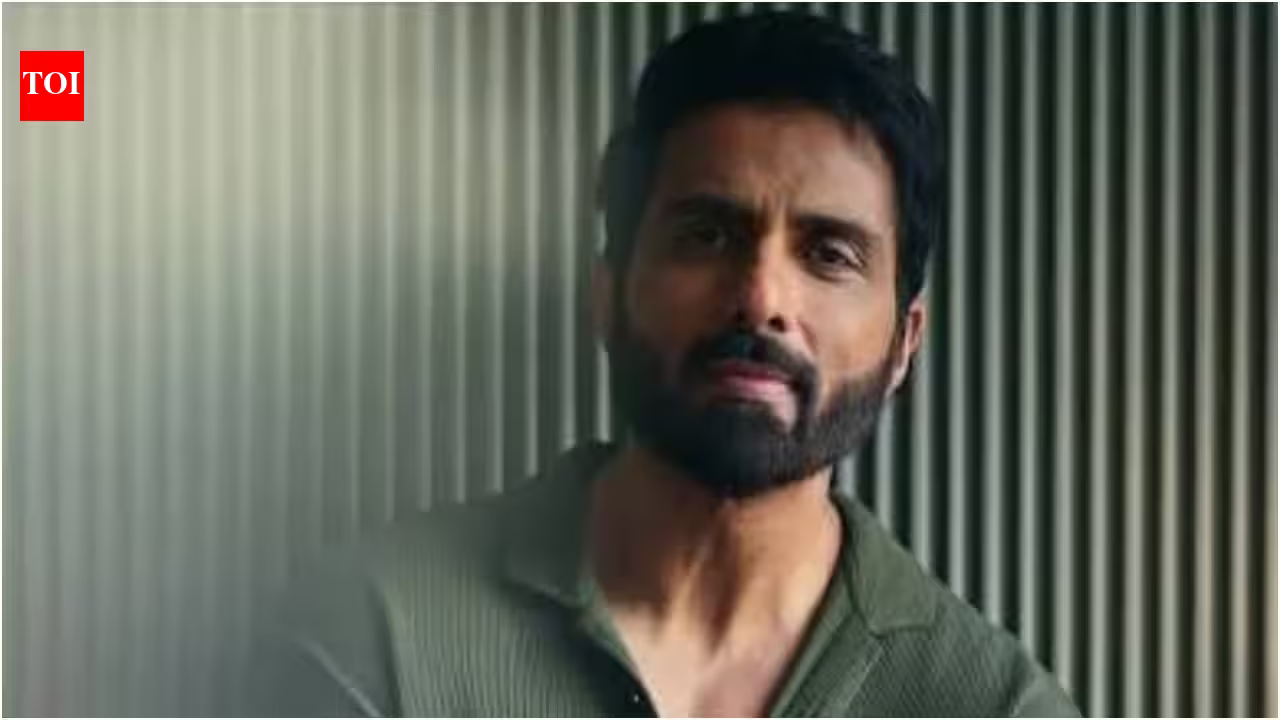
In the fast-paced, high-gloss world of international travel and luxury hospitality, we are often blinded by the veneer of perfection. We encounter the impeccably dressed airport staffer who prints our boarding pass, the receptionist who greets us at a five-star hotel with a practiced smile, and the lounge attendant who ensures our coffee is never empty. We perceive them as part of the architecture—fixtures of the service industry designed to make our lives seamless. But actor and activist Sonu Sood is pulling back the curtain on a reality that is far less glamorous: the grueling physical toll of standing for twelve hours a day.
Sood, who has spent the last several years carving out a reputation as a champion for the common man, recently took to social media to call for a radical, yet remarkably simple, shift in corporate policy. His plea? It is time for airports, hotels, and lounges to provide mandatory seating—specifically high stools—for the employees who serve us.
Redefining Hospitality: Comfort for All
The actor’s argument is rooted in a fundamental question of empathy: If the core mandate of the hospitality industry is to prioritize the comfort of the guest, why is that same consideration not extended to the worker?
“Hospitality is about making people feel comfortable,” Sood wrote in a poignant message on X (formerly Twitter). “Shouldn’t we extend the same consideration to the people who make us comfortable?”
For many of us, the sight of a service worker standing behind a desk is so normalized that we rarely stop to consider the physiological strain. Whether it is a hotel concierge or a ticketing agent, the expectation of “looking professional” has been inextricably linked to the act of standing. Sood is challenging this archaic notion, arguing that a weary employee, physically drained by a decade-plus of standing, cannot possibly deliver the level of warmth and engagement that the service industry demands. By forcing staff to stand, establishments aren’t just ignoring basic human needs; they are arguably undermining the quality of their own service.
Dignity Over Privilege
The most powerful aspect of Sood’s campaign is his framing of rest not as a “luxury” or a “perk,” but as a baseline for human dignity. In an era where corporate wellness initiatives are all the rage, it remains baffling that we still categorize the act of sitting as an optional indulgence for certain categories of workers.
Sood’s appeal cuts through the corporate jargon of HR manuals. When he states that “a little rest is not a privilege,” he is calling out the systemic dehumanization that turns workers into decorative props. For too long, the aesthetic of a “professional” environment has outweighed the physical health of the individuals inhabiting that space. He is pushing for a shift where compassion is viewed as a pillar of business excellence rather than a weakness. By demanding these standards, Sood isn’t asking for an overhaul of the business model; he is asking for a modest adjustment that acknowledges the person behind the uniform.
Challenging the Industry Standard
While the hospitality sector often prides itself on innovation, it remains remarkably rigid when it comes to workplace ergonomics. Sood’s call to action is a plea for an industry-wide standard. He envisions a world where an airport counter without a stool is viewed as an antiquated oversight—a relic of a less compassionate time.
The logistics, in theory, are simple: a high stool provides the necessary relief for a worker’s back and legs while allowing them to maintain eye level with a passenger or guest. It is a win-win scenario. The staff remains energized, morale improves, and the establishment signals to its workforce—and its customers—that it values human well-being. But changing long-standing industry norms requires more than just good intentions; it requires pressure. By leveraging his public platform to highlight this issue, Sood is forcing management teams across the sector to confront an uncomfortable truth they have conveniently ignored for decades.
A Legacy Beyond the Silver Screen
To those who follow Sonu Sood’s career, this activism comes as no surprise. Since his high-profile efforts to assist migrant workers during the pandemic, the actor has transformed into a public conscience of sorts. He has moved beyond the traditional boundaries of celebrity, using his fame to force a dialogue on issues that would otherwise stay buried under the weight of corporate apathy.
Whether he is directing his latest action-thriller, Fateh, or working on the upcoming project Nandi, Sood seems to understand that his reach on the screen is only half the battle. His real work, it seems, is the heavy lifting he does in the public square.
The reception to his recent comments has been overwhelmingly positive, sparking a necessary conversation among travelers and industry insiders alike. It remains to be seen whether airport authorities and hotel chains will take the hint. However, if history is any indication, when Sonu Sood shines a light on a dark corner of human interaction, it becomes much harder for those in power to look away.
As we travel through terminals and check into our next hotel stay, the question remains: will we see the change he is asking for? Or will we continue to accept the “aesthetic of the stand” as the standard? If nothing else, Sood has ensured that the next time we approach a service desk, we won’t just see a worker; we will see a human being in need of a seat. And perhaps, that awareness alone is the first step toward the change he envisions.
Disclaimer: This content is auto-generated for informational purposes only.
Source: Read Original News