








The Sudden Departure of a Silicon Valley Titan
The recent resignation of Jensen Huang as the CEO, president, and board member of Nvidia marks a definitive end to one of the most remarkable eras in corporate technology history. Under Huang’s stewardship, Nvidia transitioned from a specialized graphics processing unit (GPU) manufacturer into the primary engine of the global artificial intelligence revolution. His departure, effective immediately, follows a series of internal and external controversies that have cast a shadow over the company’s governance and future strategic direction.
Reports surrounding Huang’s exit suggest a confluence of personal and geopolitical factors. Allegations of an extramarital relationship with a direct report, coupled with concerns regarding an alleged association with a Chinese national suspected of espionage, prompted an emergency board meeting. For a firm that sits at the epicenter of the US-China semiconductor tug-of-war, these allegations represent a significant security and reputational risk. The board’s decision to move decisively highlights the growing intolerance among corporate directors for conduct that jeopardizes institutional integrity, particularly when national security is implicated.
Market Volatility and Institutional Stability
The immediate consequence of Huang’s resignation was a sharp correction in Nvidia’s market valuation. A drop of 13.09% in opening trade, pushing the company’s market capitalization below the $4 trillion threshold, underscores how closely the company’s valuation was tethered to the persona of its founder. Investors have long viewed Huang not merely as a manager but as the visionary architect of the generative AI boom. His sudden absence creates an immediate vacuum, forcing stakeholders to recalibrate their expectations regarding the company’s medium-term trajectory.
The appointment of Chief Financial Officer Colette Kress as interim CEO serves as a tactical move to maintain operational continuity. Kress, who has been instrumental in managing the company’s capital allocation during its meteoric rise, provides a steady hand during a period of extreme market turbulence. However, the search for a permanent successor is a complex undertaking. The complexity of Nvidia’s supply chain, its reliance on TSMC, and the geopolitical pressures it faces require a leader who possesses both deep technical acumen and a sophisticated grasp of international trade law.
The Political Dimension and the Case for Tim Cook
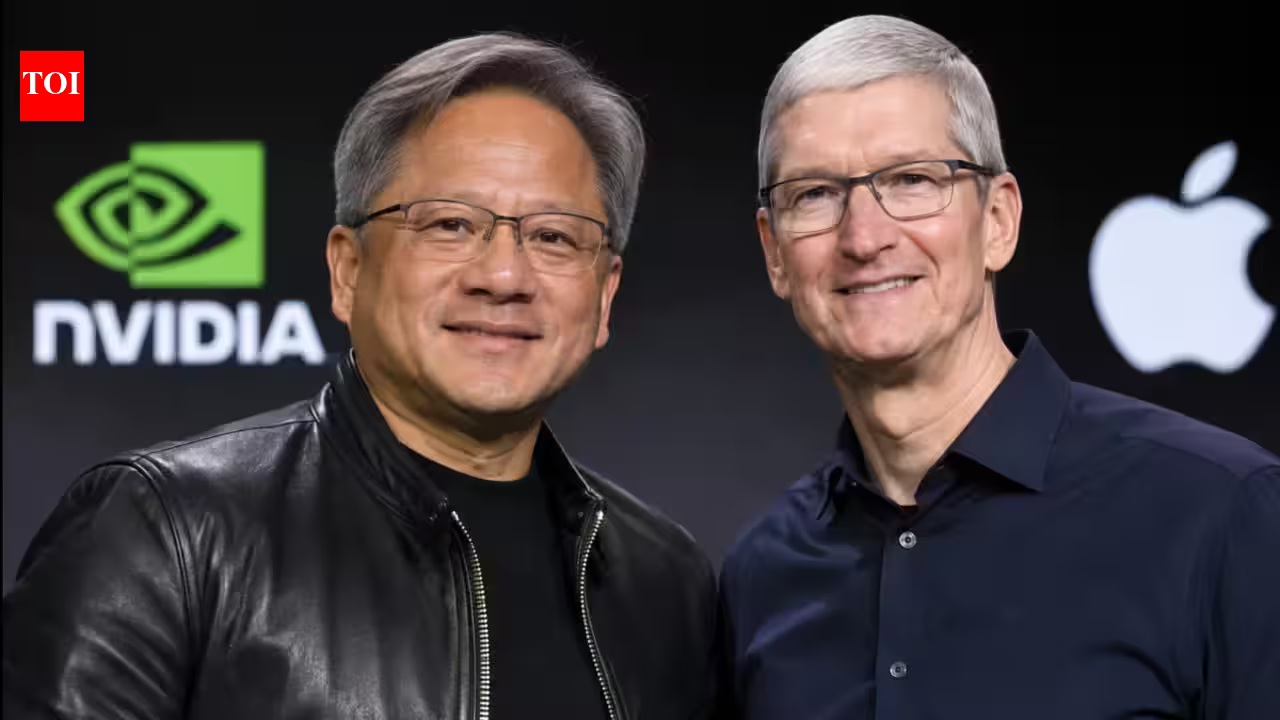
The suggestion from US President Donald Trump that Tim Cook should step into the role of Nvidia’s CEO has added a layer of political intrigue to a corporate governance crisis. While such interventions are rare, they highlight the national importance of Nvidia. In the context of American industrial policy, semiconductors are now treated as critical infrastructure. By endorsing the former Apple chief, the political establishment signals that the leadership of companies like Nvidia is a matter of state interest rather than purely private concern.
From a business perspective, the proposal to draft Tim Cook is intriguing but faces significant hurdles. Cook’s tenure at Apple was defined by operational excellence, supply chain optimization, and a focus on consumer-facing product ecosystems. Nvidia, conversely, is a deep-tech, enterprise-focused hardware entity that prioritizes high-performance computing and data center architecture. While Cook’s mastery of global manufacturing is undeniable, the cultural and operational shift required to lead a firm whose primary customers are hyperscalers and AI laboratories is substantial. Whether such a transition would be viewed favorably by Nvidia’s technical engineering core remains a question of internal corporate culture.
Implications for the Indian Technology Ecosystem
For the Indian business landscape, Nvidia’s leadership transition carries significant weight. India has aggressively positioned itself as a hub for AI innovation, with massive investments in data centers and high-performance computing infrastructure. A large portion of these deployments relies on Nvidia’s H100 and Blackwell architectures. Any instability at the executive level of their primary hardware supplier directly impacts the procurement timelines and cost structures of Indian tech giants and startups alike.
Furthermore, India’s burgeoning semiconductor mission, which seeks to incentivize domestic manufacturing and design, looks toward industry leaders like Nvidia for technology transfer and collaborative ecosystems. A change in leadership will dictate whether Nvidia continues its expansion into the Indian market with the same level of commitment or shifts its focus toward crisis management and internal restructuring. Indian enterprises that have integrated Nvidia’s CUDA platform into their proprietary software stacks will be closely monitoring how the new leadership addresses software-hardware integration. Uncertainty at the helm may lead Indian firms to hedge their bets by exploring alternative architectures or accelerating development of local, cost-effective silicon initiatives.
Evaluating the Future of AI Governance
The transition at Nvidia serves as a case study for the evolving standards of corporate governance in the age of “big tech” dominance. When a CEO is so synonymous with the company’s success, their departure—regardless of the reason—creates a systemic risk that transcends the board room. The allegations against Huang demonstrate that in the current regulatory environment, corporate leaders are under unprecedented scrutiny regarding their associations and personal conduct.
The board’s challenge now is to find a leader who can balance the firm’s aggressive growth trajectory with the increasingly complex regulatory environments in Washington, Beijing, and Brussels. The era where a visionary founder could operate with minimal oversight is likely coming to a close. Investors will now demand greater transparency, more robust ethics oversight, and a clear succession plan that mitigates “key-man risk.” The search for a new CEO is not just about finding a technical expert; it is about finding a steward capable of navigating the company through a period of heightened geopolitical friction while ensuring that the AI revolution does not stall due to administrative inertia.
As the industry watches, the Nvidia saga reinforces a fundamental truth of global business: even the most consequential technology companies are ultimately subject to the human failings of their leadership. The recovery of the stock price will depend on the board’s ability to move past the personality cult of the past and present a coherent, institutional vision for the next decade of artificial intelligence development. Whether that vision includes a seasoned veteran like Cook or an internal successor capable of maintaining the current technical momentum remains the critical question for the semiconductor sector in the coming year.
Disclaimer: This content is auto-generated for informational purposes only.
Source: Read Original News