









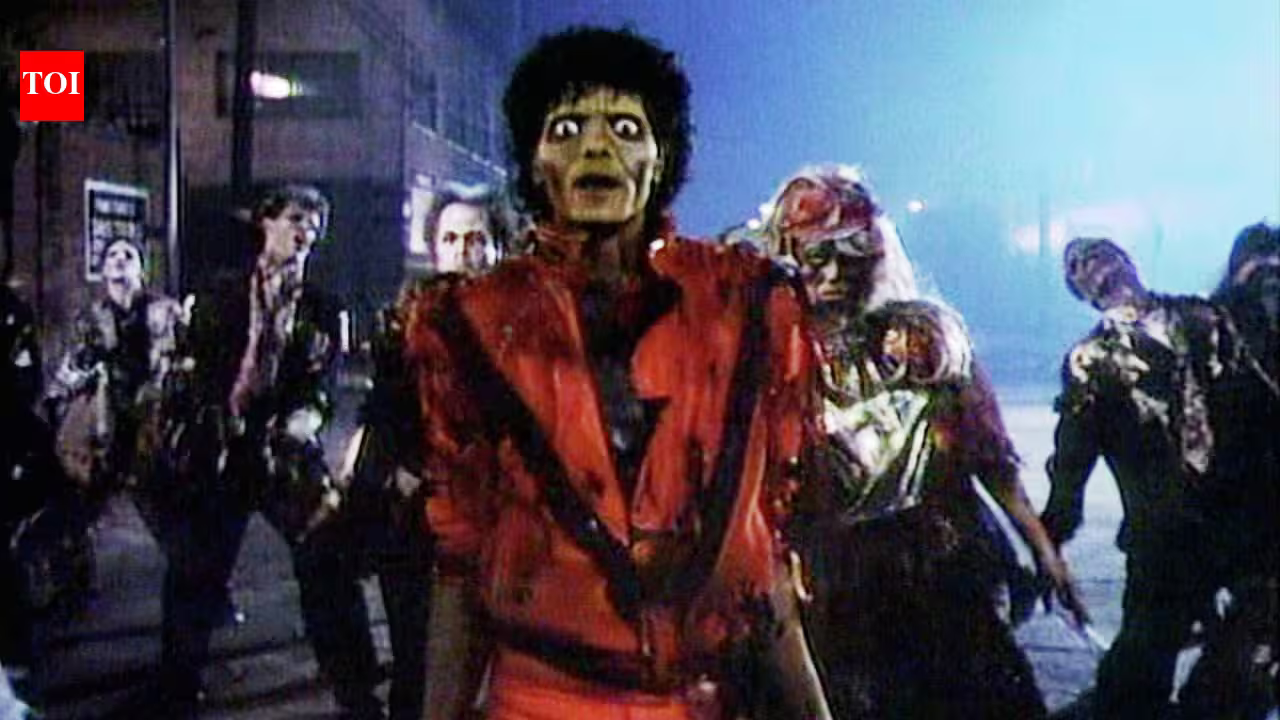
The legacy of Michael Jackson’s Thriller is etched into the cultural zeitgeist with the permanence of a tombstone. It is the gold standard of music videos, a cinematic event that transformed the pop landscape in 1983 and remains the undisputed anthem of every Halloween season. But beneath the iconic zombie shuffle and the leather-jacket swagger lies a brewing controversy that threatens to rewrite the history books. Vincent Paterson, a industry veteran and long-time Jackson collaborator, has stepped forward to challenge the narrative surrounding the video’s creation, asserting that the creative genius behind the dance moves has been systematically erased from the record.
Paterson, who spent two decades working in Jackson’s inner circle, is sounding the alarm over the upcoming Michael Jackson biopic. His grievance is specific and sharp: the film, he claims, paints the King of Pop as the sole architect of the Thriller choreography, effectively wiping the late Michael Peters—the true visionary behind the steps—from history.
The Man Behind the Monsters
To understand the gravity of Paterson’s claim, one must look at the collaborative reality of the early 80s. While Jackson certainly provided the conceptual framework—a fascination with classic horror and a desire to be “terrifying”—the physical execution of that vision fell to Michael Peters. Paterson, who collaborated with both men during the production, argues that Peters’ contribution wasn’t just a minor assist; it was the structural heartbeat of the performance.
“Michael Peters, not Michael Jackson, created the choreography for Thriller based on his ideas,” Paterson stated in a candid interview with The Sun. According to Paterson, the erasure in the biopic isn’t just an artistic oversight; it is a fundamental misrepresentation that risks robbing future generations of the truth. For a man who viewed Peters as a great mentor, the omission is deeply personal. Paterson fears that by streamlining the story to fit a “lone genius” archetype, the industry is doing a disservice to the collaborative spirit that defined the era.
The Craft of the King of Pop
Does acknowledging Peters’ contribution diminish Jackson’s brilliance? Paterson is adamant that it does not. In fact, he argues that the truth makes for a much more compelling narrative. He describes Jackson as a “sponge” during the development phase—a performer who, while quiet and observant in the early rehearsals, was incredibly intentional about his goals.
“The story is much more interesting than the fantasy that they wanted to create in parts of the movie,” Paterson explains. He vividly recalls Jackson’s specific direction: he didn’t just want a dance sequence; he wanted the dancers to look like genuine, rotting zombies. Once the choreography was set, Jackson’s transformation was a testament to his work ethic. He would spend hours in front of the mirror, refining and internalizing the movements until they looked as if they had been born from his own intuition. It is exactly this level of commitment that allowed the world to believe, quite convincingly, that every flick of a wrist and stomp of a foot was Jackson’s own invention.
Unintended Halloween Iconography
Perhaps the most surprising detail in Paterson’s account is the revelation that Thriller was never actually intended to be the permanent fixture of October 31st that it has become. Despite being the inescapable soundtrack to every Halloween party for the last forty years, the project began simply as a creative union between two men who loved genre cinema: Jackson and director John Landis.
Jackson, having been raised as a Jehovah’s Witness, did not celebrate the holiday. The video was born from his profound admiration for Landis’s An American Werewolf in London and a desire to merge the scale of a Broadway musical with the grit of a horror film. There was no marketing mandate to conquer the calendar; there was only a desire to make something that would haunt and thrill the audience. That the world adopted the song as the definitive Halloween anthem is, in many ways, a happy accident of pop culture.
A Legacy of Collaboration
Vincent Paterson is not a man who needs to stir up trouble for the sake of headlines. His resume speaks for itself: he directed Smooth Criminal, co-directed and choreographed the Bad World Tour, and worked on iconic moments like the 1993 Super Bowl halftime show. He has worked alongside the titans of the industry, from Madonna to Paul McCartney, and has a filmography that includes Evita and The Birdcage.
Ahead of receiving the Legacy Award at the 2026 World Choreography Awards, Paterson finds himself at a career crossroads where he is reflecting on the nature of credit in Hollywood. “I’m not someone who’s received many awards in my life,” he admits, expressing genuine gratitude for the recognition. Yet, even as he accepts his own flowers, he is unwilling to let his friend’s legacy wither.
The Responsibility of Biopics
The rise of the music biopic—often produced or heavily influenced by the estates of the icons they profile—has led to a recurring tension between historical accuracy and narrative myth-making. When a project is designed to canonize a subject, the rough edges of collaboration are often sanded down. However, Paterson’s protest highlights a vital question: at what point does “myth-making” cross the line into revisionism?
By choosing to highlight the lack of credit given to Michael Peters, Paterson is championing the unsung heroes of the entertainment industry. He believes that the biopic could have been a masterclass in how superstars like Jackson utilized a support system of elite artists to achieve their vision. Instead, he worries it has opted for a singular, reductive narrative.
Whether the film’s producers will address these concerns remains to be seen. But one thing is clear: as long as Vincent Paterson is around to tell the story, the man who taught the King of Pop how to move like a zombie will not be entirely forgotten. In the end, the history of Thriller isn’t just about one man in a red leather jacket—it is about the synergy of a team that managed to change the world, one shuffle at a time.
Disclaimer: This content is auto-generated for informational purposes only.
Source: Read Original News