








The rising prevalence of dashboard cameras has transformed how drivers document road incidents, shifting the landscape from hearsay to verifiable video evidence. A recent viral video shared on the r/dashcams community on Reddit underscores the utility of these devices, as a driver managed to record a tense confrontation on a rain-slicked suburban road. The footage highlights not only the unpredictability of human behavior behind the wheel but also the growing reliance on consumer-grade surveillance technology to provide an objective account of traffic disputes.
The Role of Dashcams in Modern Driving
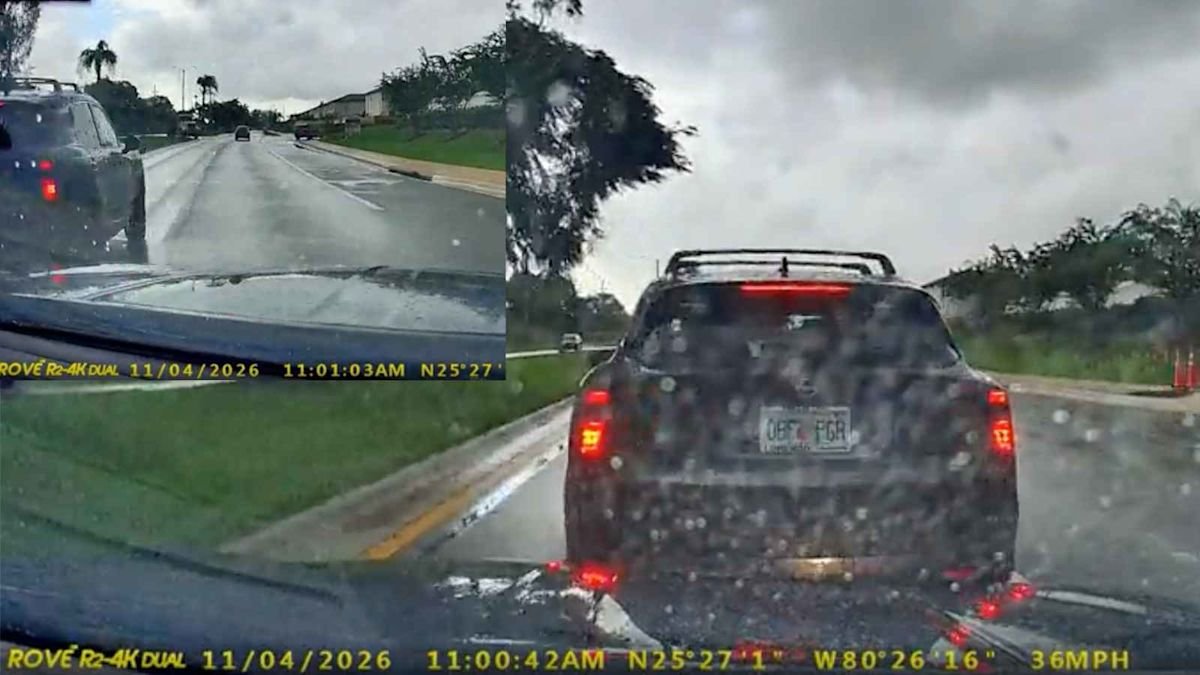
Dashboard cameras serve as a digital witness, capturing continuous high-definition footage that can be vital in the aftermath of a collision or a contentious interaction. In the case documented on November 8, the dashcam proved essential for establishing the timeline of events. The recording shows the host vehicle traveling under wet conditions when another motorist unexpectedly maneuvers into their lane and abruptly applies the brakes, forcing a sudden, high-stakes stop.
Beyond simply capturing the act, the technology provides metadata, such as timestamps and, in many advanced units, integrated GPS tracking and speed overlays. These technical specs help investigators or insurance adjusters determine the relative distance between vehicles and the force of braking maneuvers. In this specific incident, the dashcam footage provided the primary evidence needed to analyze the intent behind the other driver’s aggressive behavior, allowing the public to scrutinize a sequence of events that might otherwise remain a “he-said, she-said” scenario.
Analyzing Dangerous Maneuvers
The incident involving the sudden, complete stop in a live traffic lane is a practice frequently labeled as “brake checking.” From a technical perspective, this maneuver is extremely hazardous, especially in adverse weather conditions like rain where the coefficient of friction between tires and pavement is significantly reduced. Modern vehicle systems, such as Anti-lock Braking Systems (ABS) and Electronic Stability Control (ESC), are designed to handle emergency stops, but they cannot compensate for the human delay in reaction time or the lack of sufficient follow distance.
The dashcam recording shows the driver safely avoiding a rear-end collision, a feat that would be significantly more difficult if the host vehicle lacked proper situational awareness or if the follow distance was insufficient for the speed of travel. By forcing another driver into an emergency maneuver, the offending motorist introduced a high degree of risk that could have led to a multi-vehicle pileup. Analyzing such footage serves as a cautionary lesson in the importance of maintaining appropriate speed and following distances, regardless of the maneuvers initiated by surrounding vehicles.
Technological Implications of Forensic Evidence
The debate surrounding this incident—whether the act was a product of road rage or a calculated attempt at an insurance scam—demonstrates how video evidence forces the public and insurance companies to move beyond conjecture. Insurance fraud, often referred to as “crash-for-cash,” frequently relies on the victim being unable to prove that the stop was intentional. Because traditional evidence is often limited to debris patterns or statements, dashcam video is now the gold standard for defending against fraudulent claims.
The clarity of modern dashcams—typically offering 1440p or 4K resolution—allows for the identification of license plates and driver behavior that low-resolution footage might miss. When a device records a driver stopping for no apparent reason on a clear stretch of road, it provides a compelling argument for intent. This shift in documentation is forcing insurance firms to adopt more sophisticated AI-driven analysis tools to review footage, effectively raising the bar for proving liability in traffic disputes.
Addressing Road Safety and Behavioral Risks
While the dashcam successfully captured the act, the secondary behavior—the driver following the host vehicle, flashing lights, and making gestures—is a reminder of the psychological aspects of traffic safety. Technology, while effective at documenting events, cannot prevent escalation in real-time. The incident serves as an urgent reminder for drivers to prioritize defensive driving techniques, such as avoiding retaliation, remaining calm, and utilizing technology to record incidents without engaging with the aggressor.
The discussion generated by this video also points to a growing community awareness of driving standards. Commenters on the thread debated the speed of the host vehicle, highlighting how dashcam data allows for a rigorous critique of driving habits. By analyzing speed-to-distance ratios and reaction times, digital communities are fostering a more informed approach to road safety, where drivers are increasingly held accountable by the evidence they inadvertently produce.
Future Outlook on Driver Surveillance
As dashcam integration becomes more common—either through aftermarket devices or factory-installed systems like those found in modern electric vehicles—the amount of forensic data available to law enforcement and insurance providers will continue to grow. This trend toward total documentation is likely to reduce the success rate of staged insurance scams, as the threshold for proof becomes increasingly accessible to the average motorist.
However, the proliferation of these devices also presents a broader cultural change. When every commute has the potential to be recorded, the environment on public roads shifts toward a state of constant monitoring. While this serves as a deterrent for bad actors, it also shifts the burden of proof to the driver. In the future, the reliance on high-definition video evidence will likely become a mandatory component of standard vehicle ownership, ensuring that when disputes occur, the objective truth is preserved in high-resolution digital files. The incident in the video is a clear demonstration that in the modern era, the most effective defense against road-based volatility is the presence of an impartial, high-definition digital witness.
Disclaimer: This content is auto-generated for informational purposes only.
Source: Read Original News