





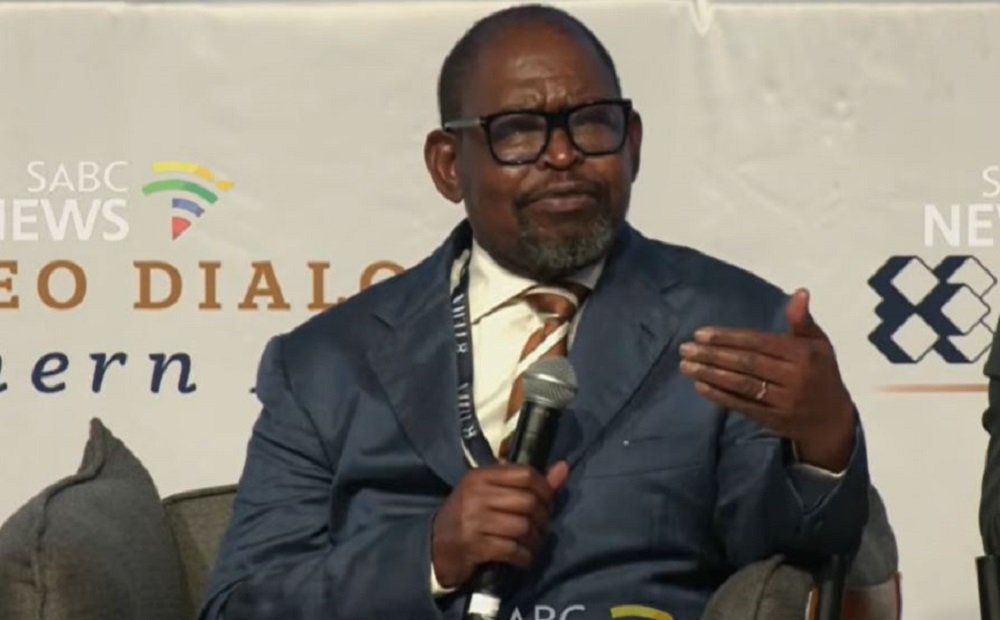
Finance Minister Enoch Godongwana has moved to soothe investor nerves regarding South Africa’s political landscape following last week’s municipal elections. Addressing delegates at the 13th edition of The European House Ambrosetti (TEHA) CEO Dialogue in Johannesburg, Godongwana emphasized that despite the emergence of 123 hung municipalities, the National Treasury is committed to maintaining fiscal stability and service delivery at the local government level.
The surge in hung municipalities—where no single party secured an outright majority—has sparked concerns among investors regarding the potential for administrative gridlock. However, Godongwana assured the gathering of business leaders and economists that the Treasury remains a vigilant steward of public funds. He reiterated that the government would continue to leverage Section 216 of the Municipal Finance Management Act, which grants the state the authority to withhold funds from non-performing municipalities.
“We have committed over a trillion rand for infrastructure over the Medium-Term Expenditure Framework, with R205 billion specifically earmarked for municipal deployment,” Godongwana noted. “If those municipalities are dysfunctional, that money cannot be used effectively. It is in our direct interest to ensure those municipalities function properly.” To bolster this, the Minister confirmed that state institutions, including the Development Bank of Southern Africa and Infrastructure South Africa, are being mobilized to provide the necessary capacity to ensure basic services and infrastructure projects proceed as planned.
The dialogue, which serves as a platform to catalyze private sector-led growth, also highlighted the stark gap between current economic reality and national aspirations. Presidential Investment Envoy Jacko Maree pointed to the National Development Plan’s goal of achieving an investment-to-GDP ratio of 30 percent. Currently, South Africa is languishing just below 14 percent.
“What drives long-term growth is confidence in the future,” Maree stated. “It’s about entrepreneurs who are prepared to take risks—not ‘tenderpreneurs’ who create no value and merely add cost to the structure. If you want jobs, you have to have growth; if you want growth, you have to have investment.”
Minister Godongwana echoed the need for a conducive investment climate, highlighting the government’s progress on critical structural reforms. He pointed to the opening of competition within rail and port logistics as a primary example of efforts to improve the efficiency of state-owned enterprises like Transnet and Eskom. By introducing competitive forces into these network industries, the government aims to lower the cost of doing business and ensure more reliable utility services.
In a promising sign of increased collaboration, the Minister also signaled openness to formalizing the involvement of the financial asset management community in G20-level discussions. Following a query from an attendee regarding the potential for asset managers to contribute to financing African development, Godongwana suggested that incorporating such voices could prove vital for the comprehensive resource mobilization needed to drive the continent’s future growth.
Disclaimer: This content is auto-generated for informational purposes only.
Source: Read Original News