






The Vulnerability of Relationship-Driven Corporate Governance
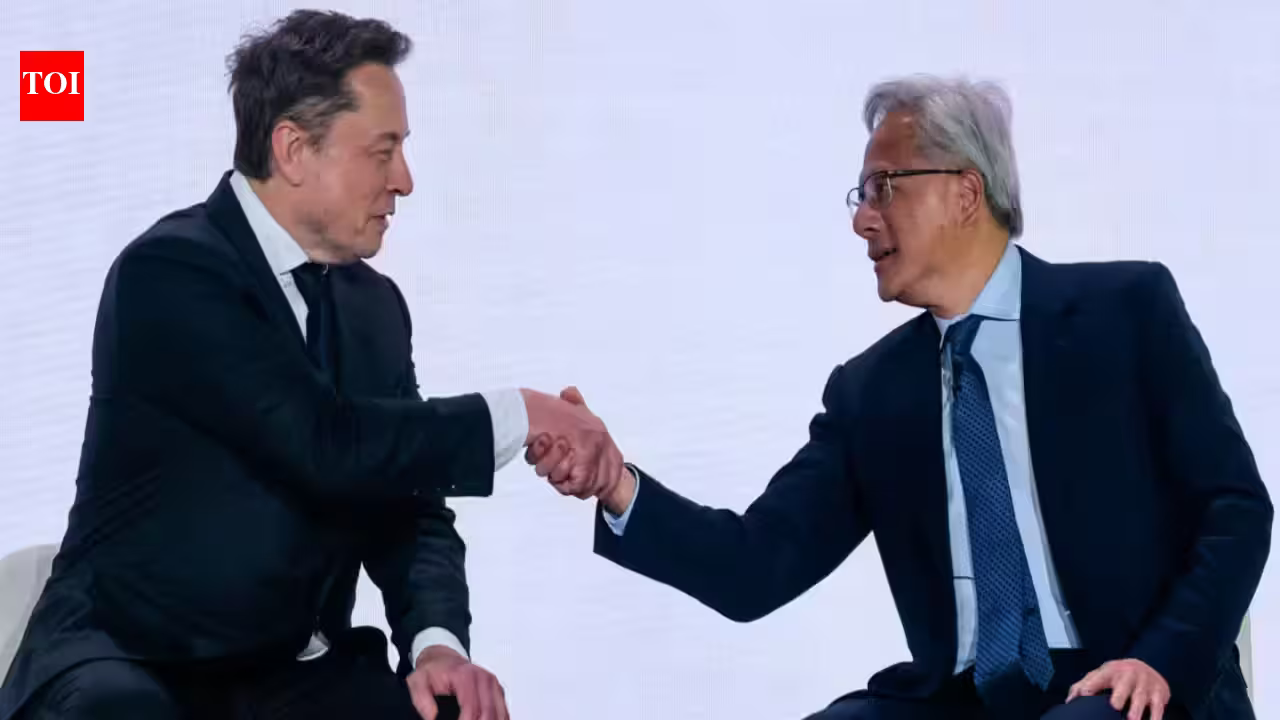
The departure of a long-standing chief executive officer often triggers significant market turbulence, but the situation surrounding Jensen Huang’s exit from Nvidia presents a unique case of structural dependency. Elon Musk’s recent commentary regarding Nvidia’s supply chain vulnerabilities highlights a critical, often overlooked aspect of high-stakes corporate strategy: the reliance on informal, interpersonal trust to secure industrial ecosystems. When a company reaches a valuation and market position as dominant as Nvidia’s, shareholders and analysts frequently assume that the firm’s success is anchored by ironclad contracts, proprietary technology, and diversified procurement networks. However, Musk’s warning suggests that at the highest levels of global technology, the architecture of supply chains is frequently cemented by personal rapport rather than rigid legal documentation.
This phenomenon of “handshake management” is not uncommon in the semiconductor industry, where supply chain orchestration requires extreme synchronization between chip design, foundry capacity, and packaging providers. When a leader spends over three decades cultivating these specific, high-level connections, they effectively become the primary custodian of the company’s operating stability. The departure of such a figure does not merely represent a change in executive leadership; it represents a potential severance of the trust-based protocols that enable the firm to secure capacity in an industry defined by acute shortages and intense competition.
Nvidia’s Strategic Position and Supply Chain Risks
Nvidia occupies the central position in the current artificial intelligence revolution, serving as the primary supplier for the world’s most advanced GPUs. Its ability to command foundry output—most notably from partners like TSMC—has been a cornerstone of its market dominance. If, as Musk posits, significant portions of these arrangements are predicated on personal assurances made by Huang, the company faces a period of acute transition risk. In a global supply chain where capacity is the most valuable currency, losing a primary advocate who understood the nuanced, individual priorities of Tier-1 suppliers can weaken the company’s bargaining power.
For investors and analysts, this shift necessitates a re-evaluation of Nvidia’s risk profile. While the company maintains strong balance sheets and immense R&D pipelines, the “soft” infrastructure of its business—its relationship management—is currently undergoing a stress test. The appointment of CFO Colette Kress as interim CEO provides a degree of administrative continuity, but the task of replicating the deeply embedded, decades-old social and professional networks established by a founder-CEO is a daunting challenge for any successor. Markets typically price in tangible assets, but in the case of Nvidia, the intangible asset of “Huang’s influence” may have been a significant contributor to the company’s ability to navigate previous supply crises.
The Indian Context: High-Stakes Procurement and Founder-Led Growth
The discourse surrounding Nvidia’s leadership transition carries significant weight for the Indian technology sector, which is increasingly focused on deep-tech manufacturing and the expansion of domestic data centers. As India positions itself as a global semiconductor hub, the lessons from Nvidia’s situation are particularly relevant for Indian enterprises and policymakers. Many Indian business groups operate on similar relationship-centric models, where the founder or the chairperson acts as the primary bridge between the company and its global technology partners.
In India, the transition from founder-led management to professional institutional leadership is a frequent point of inflection. For Indian firms integrating into global value chains, building durable, contract-based partnerships is essential to mitigate the risks that Musk highlighted. As Indian companies seek to partner with global tech giants for AI infrastructure, they must understand that while personal relationships facilitate initial entry, scaling operations requires the professionalization of these agreements. The Nvidia incident serves as a cautionary tale: over-reliance on a single individual’s ability to sway supply chain dynamics can expose a company to existential risks when that individual is no longer in the picture.
Navigating the Succession Gap in Tech Giants
The institutional search for a permanent successor to Huang is now a focal point of global market interest. Beyond the immediate operational challenges, there is a broader question about how public companies can transition away from “key-person dependency” without sacrificing efficiency. Companies that reach the scale of Nvidia often find that their internal processes have been tailored to the working style of their founders. Replacing this requires a systemic shift toward formalization and legal rigor, which can occasionally lead to bureaucratic friction that a founder-CEO might have easily bypassed.
Furthermore, the public outcry and petitioning for Huang’s reinstatement, supported by high-profile figures such as Musk, underscore a growing trend of shareholder activism aimed at maintaining historical continuity. However, boards of directors must balance this desire for stability with the urgent need to address the ethical and governance concerns that precipitated the leadership change. The challenge for the interim leadership team at Nvidia will be to demonstrate that the company’s competitive advantage is built into its organizational DNA and not merely reliant on the influence of its former chief executive.
Market Outlook and Long-Term Stability
In the near term, Nvidia’s stock and market standing will likely remain sensitive to any signals regarding its supply chain integrity. If the firm can successfully transition to a more formalized, contract-based procurement strategy under new leadership, it may actually emerge with a more robust and scalable governance model. Conversely, if supply constraints emerge or if strategic partners feel the absence of their historical counterpart, the company may face a period of volatility.
For analysts and market participants, the focus should remain on the company’s ability to maintain its output metrics. If production capacities remain steady despite the leadership change, it will serve as a strong indicator that the “handshake deals” were effectively codified or that the systemic strength of the firm is greater than the influence of any single person. However, the saga remains a reminder of the fragility of hyper-growth companies. Even at the zenith of technological advancement, modern enterprises are still profoundly affected by the human elements of business—trust, reputation, and the personal relationships that serve as the invisible glue holding the global technology value chain together. As the AI sector continues to expand, the professionalization of these critical supply chain relationships will be the next major hurdle for Nvidia and its peers.
Disclaimer: This content is auto-generated for informational purposes only.
Source: Read Original News