





With Wit Slingers in Leipzig, Germany, closing, bikepackers in Europe lost a beloved custom bag maker. While crafting a final frame bag with designer Tijmen Kervers, Josh Meissner learns all about his path to success and why he quit while on top. Settle in for a candid reflection on what small-scale manufacturing needs to truly thrive, along with photos of the now-shuttered shop…
When Tijmen Kervers of Wit Slingers announced last December that he was shutting down his bag-making operation in Leipzig, Germany, it came as a shock to many of us, especially here in Europe. Over the last five years, Tijmen quietly yet quickly established himself as one of the leading custom bag makers on the continent, offering frame bags, randonneuring-inspired luggage, and, recently, ultralight hiking packs. His understated industrial designs, with a touch of whimsy, featured on many Reader’s Rigs submissions on this site and on show bikes alike, garnering widespread appreciation and accolades.


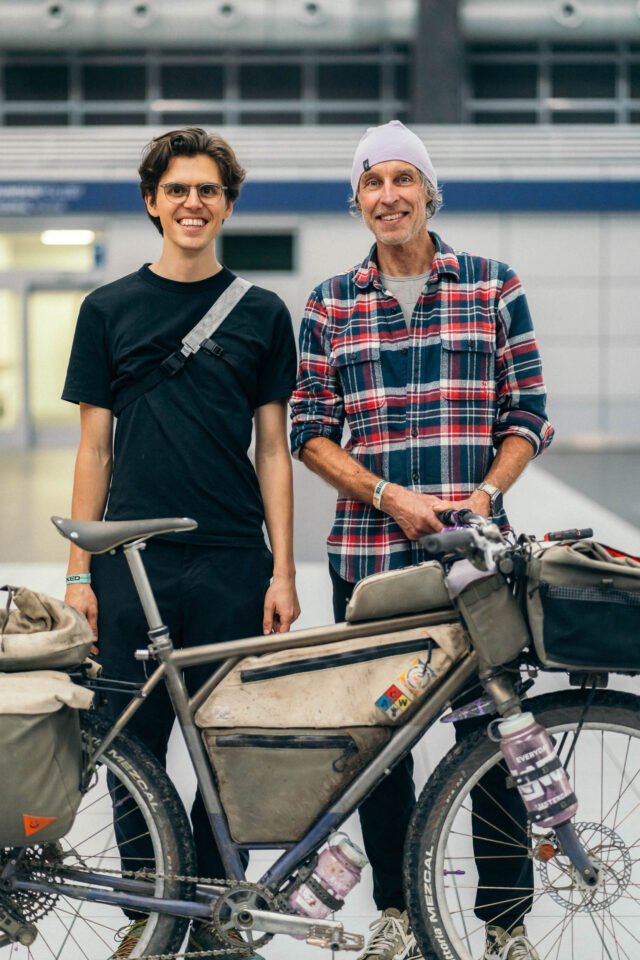
Tijmen at Bespoked Dresden in 2025 (left, pictured with a client) and 2024 (right, pictured with regular collaborator Mads Hulsrøj Jæger)
There are many hobbyist bag makers out there, but Tijmen stood out as one of the few professionals on the continent who made it work full-time for a sustained period—his absence felt keenly. He invited me to his shop to craft a frame bag together before he closed “at least for a while, maybe forever.” In the process, we discussed the difficult path to mastery, the conditions of his success, and why he quit while seemingly doing well enough.
This visit was different than usual. Typically, when visiting a manufacturer, whether a large company or a one-person shop, business interests are with us in the room. They inevitably shape the encounter and the resulting piece to some degree. With Wit Slingers’ order books closed, that pressure was reduced, allowing for a more candid conversation.
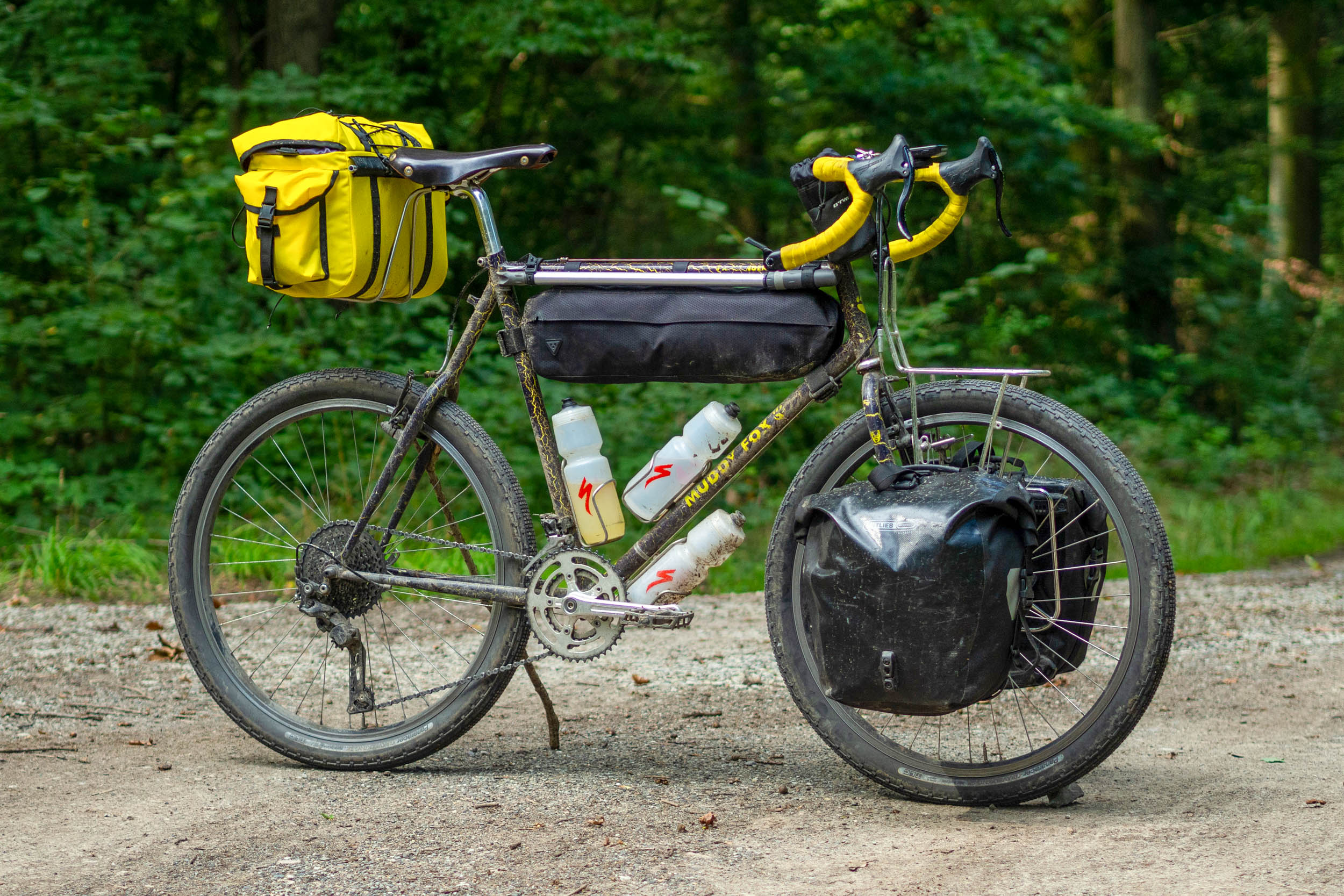


A handful of the many Wit Slingers bags that have appeared on the site over the years.
I came to see Wit Slingers in the context of the recent wave of closures of small manufacturers and builders in the bike industry. In looking at the factors that enabled Wit Slingers, we get an idea of what could help small-scale manufacturing in our community truly thrive.
10,000 Hours
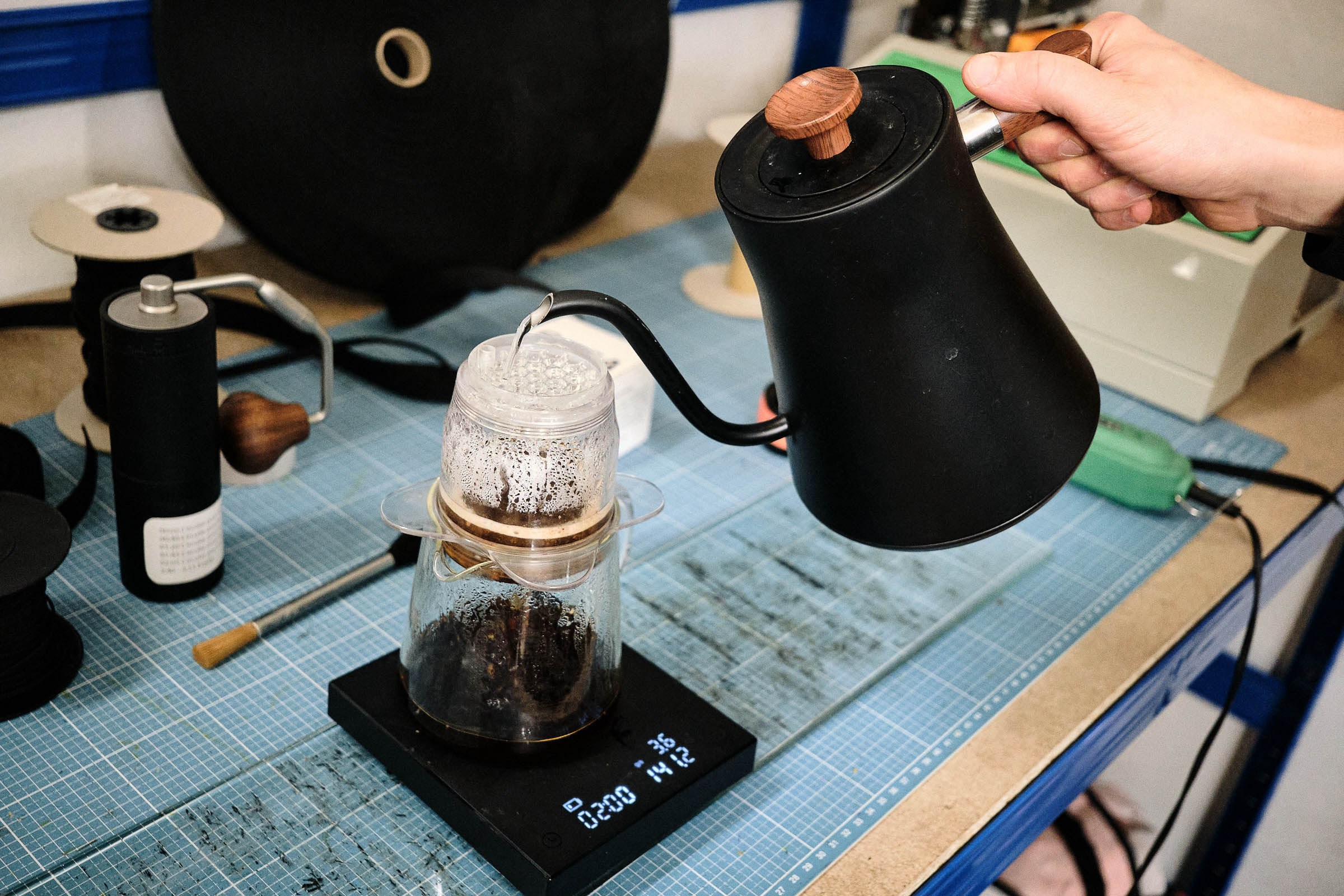
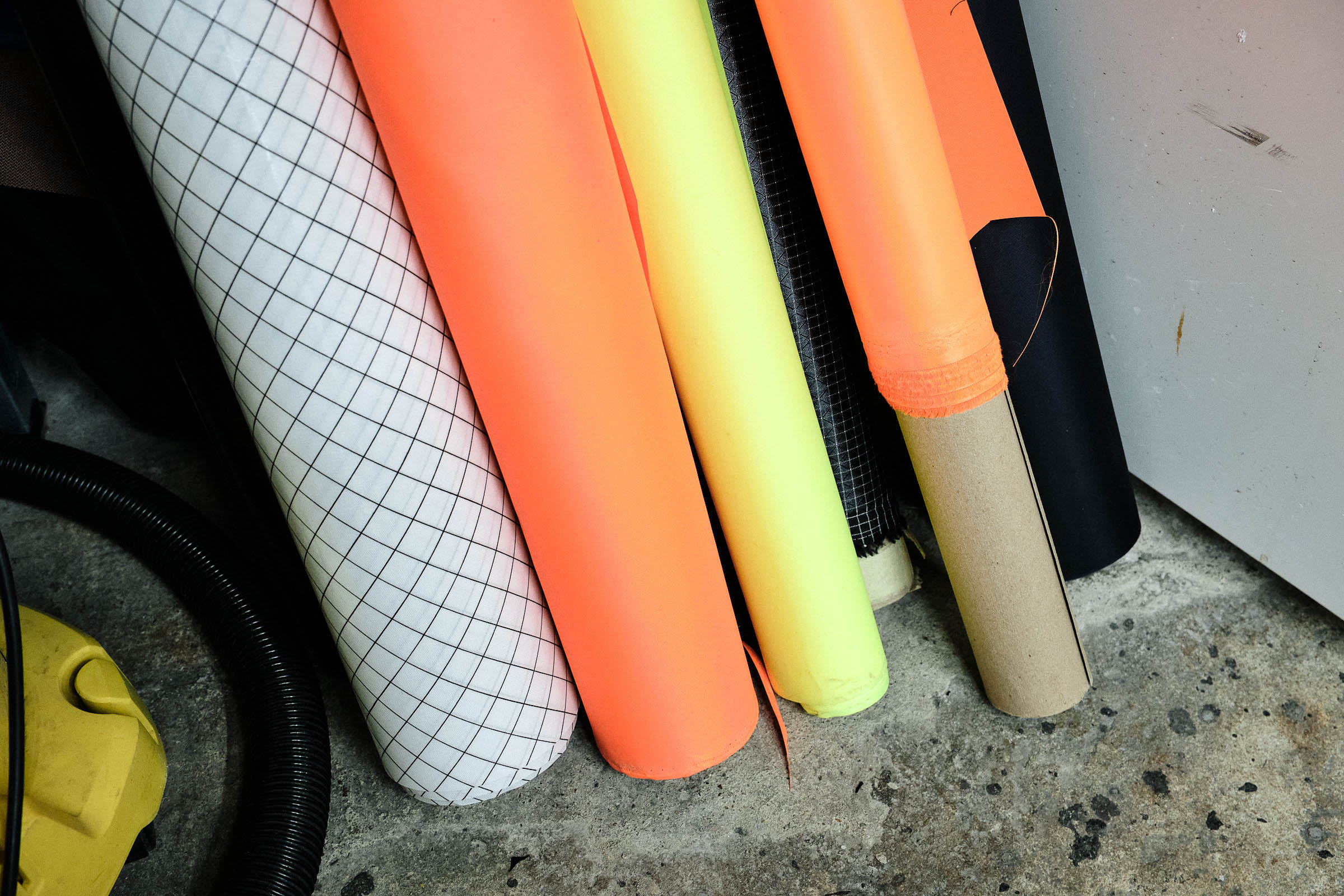
Following a short train ride from Berlin, I find Tijmen in the back of an industrial lot wearing his signature wide smile. We walk down some stairs into his basement shop, a windowless concrete cube. He brews us a pour-over coffee to get started, monitoring pour time and flow rate. The delicious honey-cofermented Colombian coffee from his freezer is sweet on the nose, fruity in the mouth. When our first cups are empty, he pulls out several rolls of waxed canvas that he deems suitable for my bike. He plays an old MGMT album while I deliberate. The shiny canvas glints underneath the fluorescent lighting that he suspended with webbing. He’s got remarkable taste.


By process of elimination, I decide on dark grey with beige lace-up and Multicam Black zip garage as an accent. Then we go outside to take a photo of my bike as the basis of the frame bag pattern. Tijmen’s perfected a digital workflow that transforms the photo into a complete pattern with seam allowances, alignment marks, hardware locations, and all other info within a couple of minutes. It’s not a unique process, but it took a long time to make it reliable. While some makers prefer an all-analog workflow, Tijmen’s customers loved the digital mock-up he could send them before starting production. The service mindset instilled by his training as a designer shows.


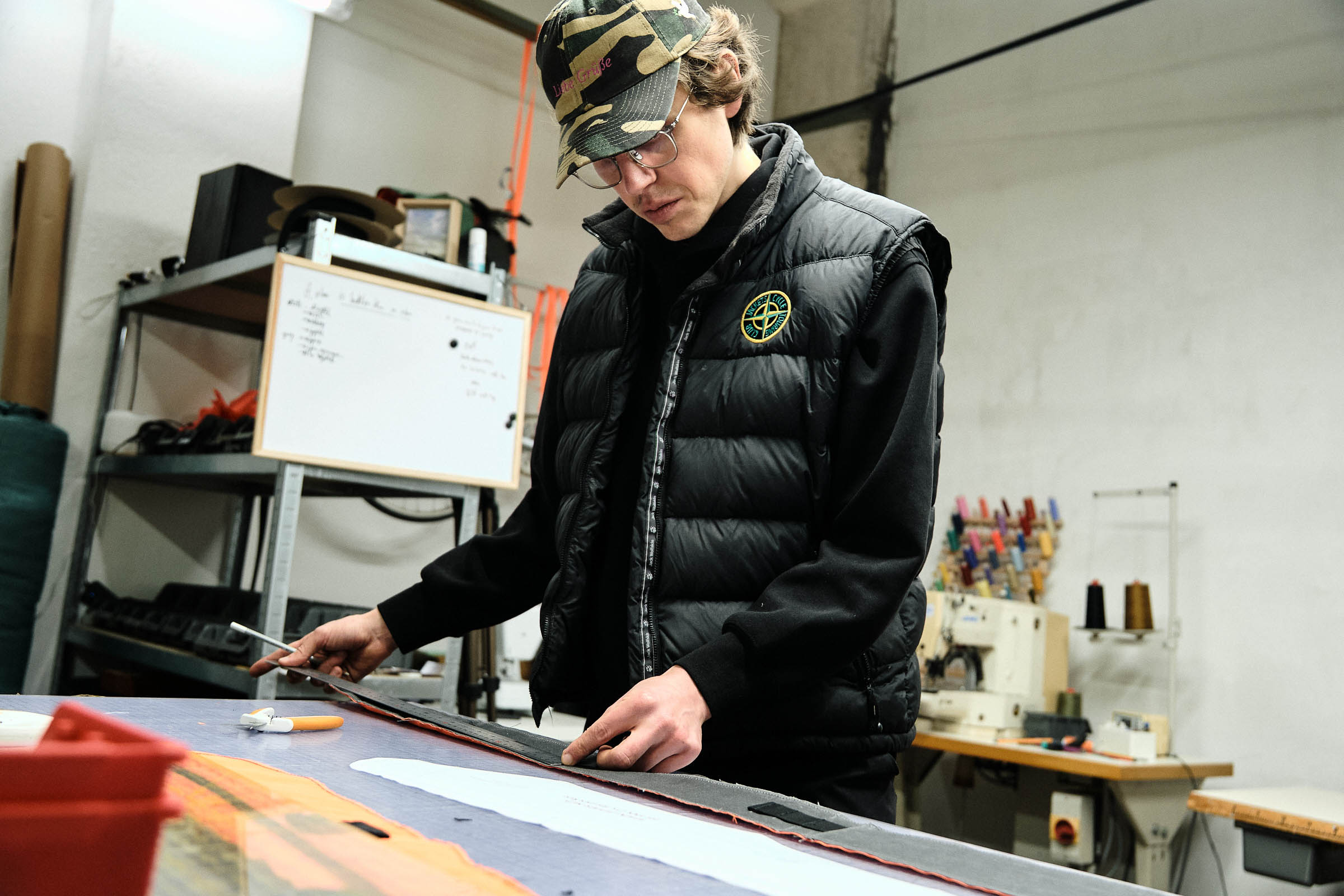
With the pattern printed, the physical work on the bag begins. Even tracing and cutting fabric aren’t as simple as they sound. I mark and re-mark, cut and re-cut the canvas contours, while he makes straight, single lines without quadruple-checking like me. He looks over my amateur work: “Perfect,” he says without a hint of sarcasm. I give him the side-eye.
Tijmen had moved to Leipzig with his partner during COVID, where there were no design jobs to be had. His background made him a generalist, and sewing was his lockdown project. “I started Wit Slingers to get good at one thing, to learn a craft,” he says. “I learned that to get good at one thing, you need to be good at many things.”
Many hundreds of custom bags later, Tijmen’s looking forward to “upgrading to hobby,” as he puts it. “I can spend a week thinking about how to pleat the corner of a side-pocket. I can’t do that when I’m trying to make money.” But, he adds, “I don’t think I would have gotten to this level doing this as a hobby. The tight iteration loop and lots of repetition are key to getting good.”
He shows me how to thread the string through the zipper pull so it dampens noise, then lets me struggle with threading the zipper pull into the zip tape for a few minutes. He does it in a second using a trick he learned from another bag maker. “I literally cannot explain how to do it. It’s muscle memory,” he says.
Passing on some of this embodied knowledge to other bag makers was harder than Tijmen anticipated. “I thought knowing certain tricks would have saved me time. Turns out you sometimes need to do something 50 or 500 times to understand.” Learning any craft means struggling and producing middling work for a long time on the way to mastery.
While he’s easily put in 10,000 hours by now, he’s quick to point out that he’s not actually very good at any of the steps. “If you take the idea of mastery seriously, you’d be doing 10,000 hours of tracing, 10,000 hours of cutting, 10,000 hours of sewing, and so on,” he says. He’s a first-degree black belt, a qualified beginner.

Conditions for Success
The lone genius, the hard worker—in tracing a project’s success, there’s a tendency to focus on individual merit, but external conditions are at least as important. From Waldorf school to the prestigious Technical University of Eindhoven and a role as system architect on a world-record solar car team, Tijmen acquired skills and experience, and he no doubt puts in the work. However, he makes it clear: “Wit Slingers only worked because of the cheap rent and costs of living in Leipzig.”
His workshop cost €160 per month, and a decent room in Leipzig can still be had for under €500. Here, he could afford to make one-offs day in and day out and get his first 10,000 hours on the way to closing the taste gap. He could take weeks off for bikepacking and hiking to stay in touch with real needs from first-hand experience—not a given for folks working in the cycling industry. Crucially, he could do so without worrying too much about the bottom line, unlike in, say, Amsterdam or Berlin. But the marks of gentrification are everywhere. Cycling back to the shop, we passed a massive area near Leipzig main station that’s been bulldozed for new development.

The economic margins for this kind of work are shrinking on all fronts. Endlessly rising rents make it harder to find affordable housing and workshop spaces. Especially in secondary cities such as Leipzig, rent levels have increased by up to 70 percent over the last decade. Additionally, raw material cost increases and general price inflation are eating into already slim margins, driving prices up for customers while individual producers see little to no benefit. And they also need to eat. Tariffs and increased logistics costs throw more wrenches in the mix.
Under these mounting pressures, many of the full-time craftspeople and designers that I know are just a minor shock away from ruin, or they simply can’t continue unless they have other income sources. Working with other people is not even remotely in the cards; even the low-overhead, one-person shop is hardly viable anymore. Tijmen’s main collaborator and framebuilder, Mads Hulsrøj Jæger, with whom he exhibited at Bespoked, had to face these harsh economic realities. He went back to hobby framebuilding and bottle cage production as a side gig while taking on a better-paying corporate job.


Mads retiring from full-time building was a blow not only for Tijmen. When key suppliers shutter, our services get bought up, and some of the most talented designers and fabricators close up shop, we as a community lose specialized products and services. More critically, we lose the communities that form around creating and maintaining them, potentially forever.

If bag-making and framebuilding—not lucrative endeavors—are cornerstones of the bikepacking scene, the high cost of living is destructive to our community. Our collective creativity is further constrained by barriers to acquiring the skills, tools, and machinery needed. Enriching bosses and landlords during the nine-to-five sucks up nearly all of our time and energy, taking away from productive occupations. Even some of the most talented, experienced, and well-connected people struggle for economic survival outside of corporate wage slavery. Ultimately, these are political issues.
Kill Your Darlings
Tijmen had planned to work on another bag in parallel, but I needed extra supervision. I would have felt bad for occupying him, but for once, time wasn’t money. I make a hash out of the webbing on the spine. “Adds character,” he says with a reassuring smile.


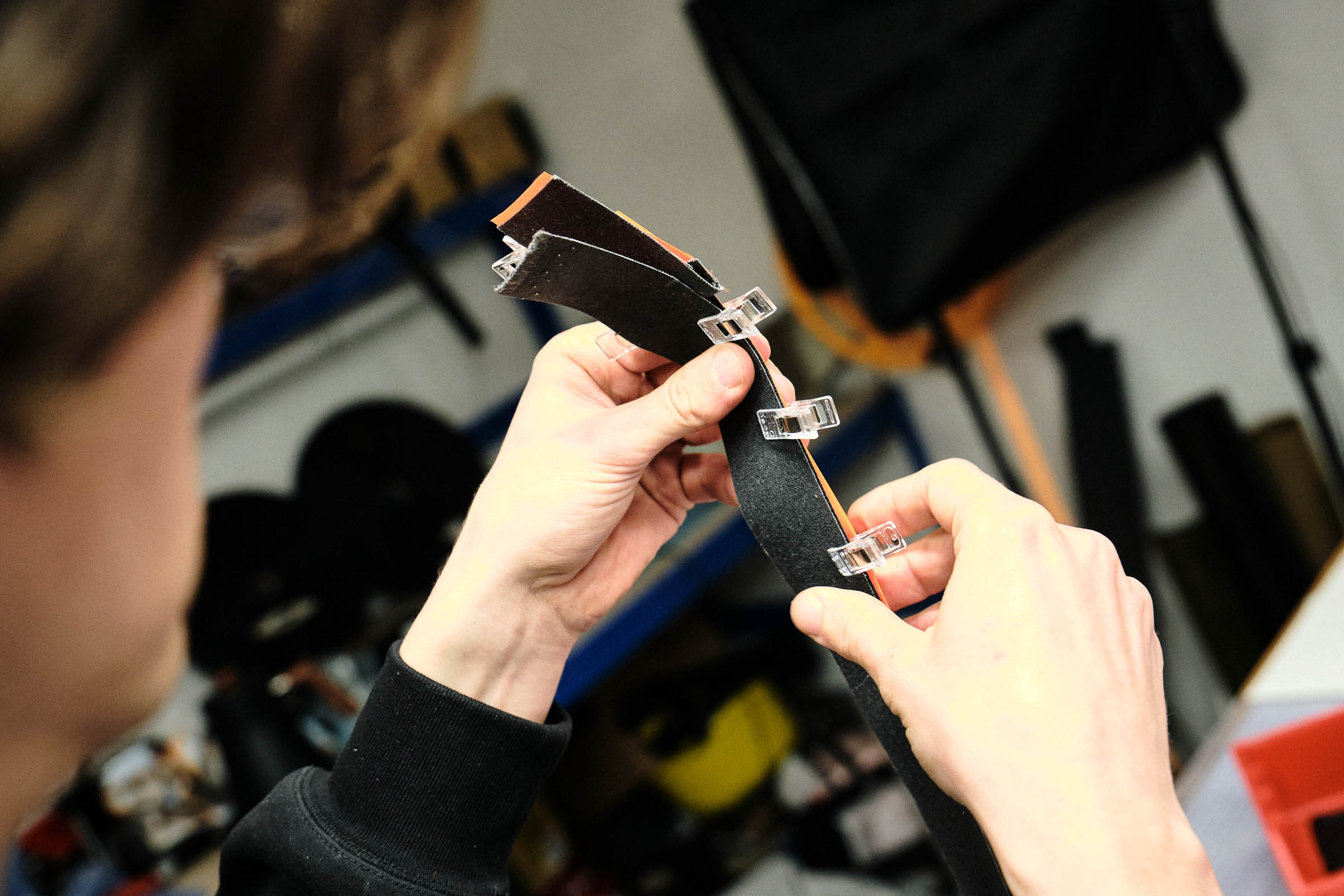
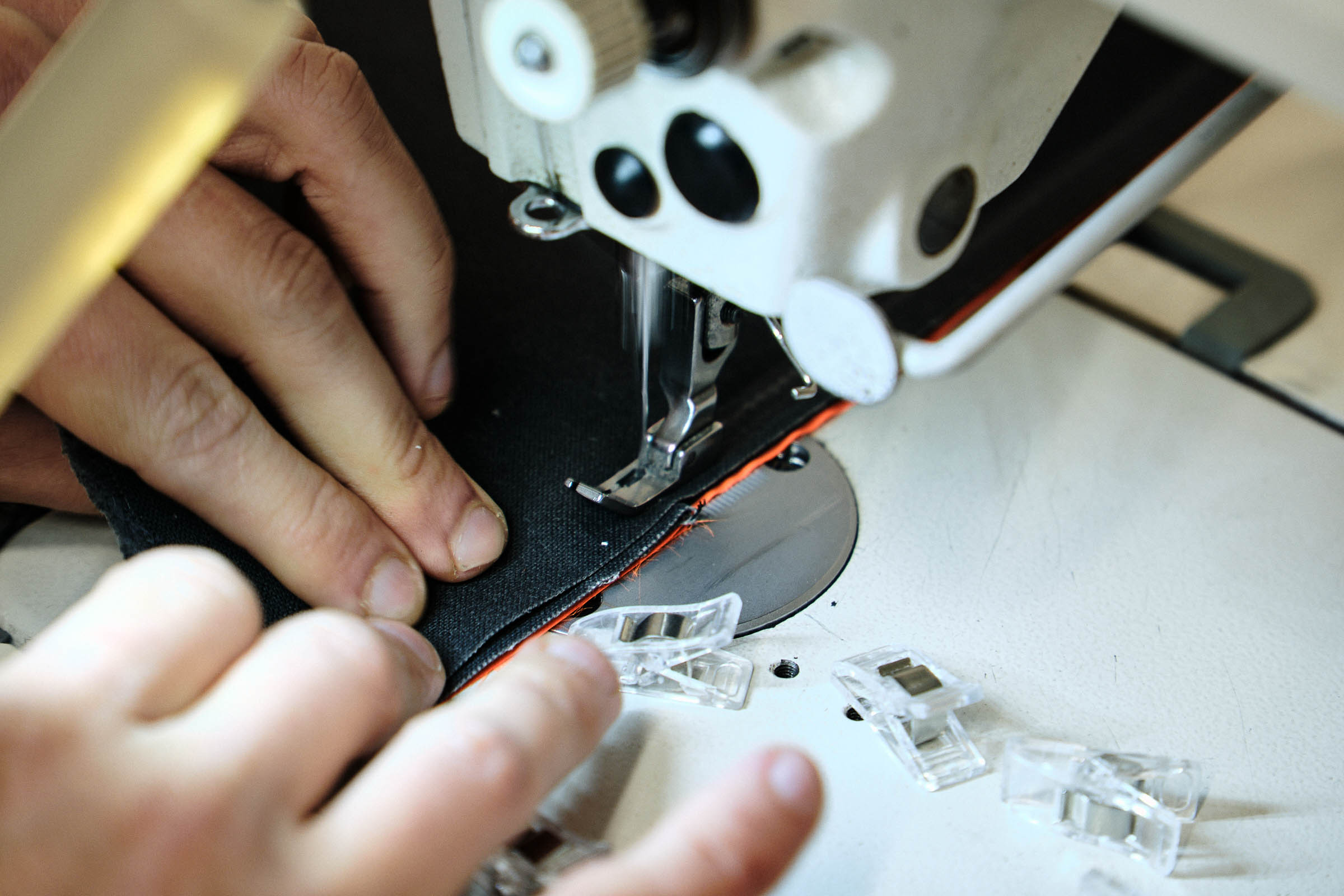
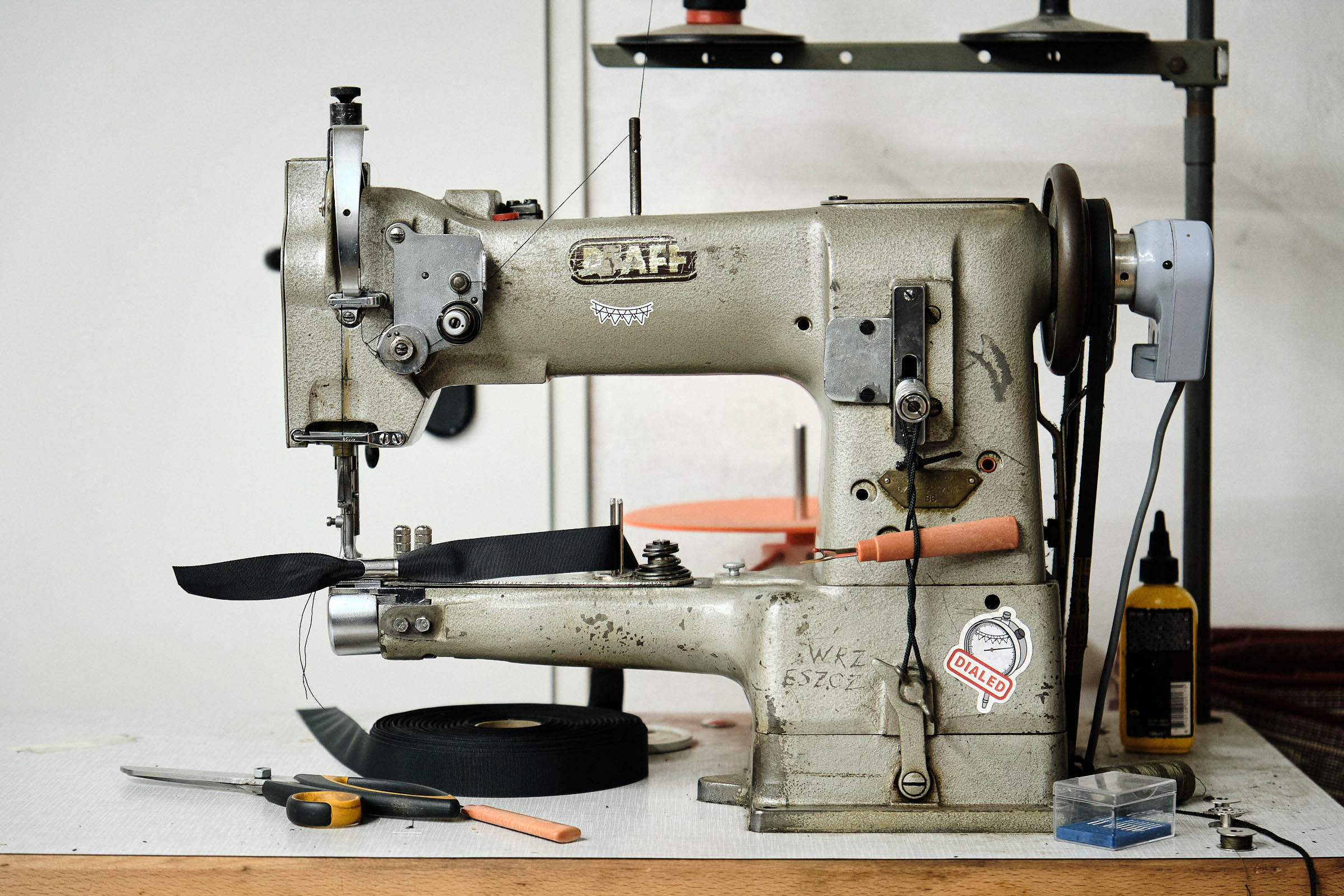
After a tea break, we clip the fabric panels together in preparation for sewing. Tijmen turns down the speed governor on the industrial Juki to the slowest setting. The stitch wanders as I try to fight the walking foot instead of letting it pull the fabric evenly. I’m happy to let him take over for the trickier triple-layer zipper strip, and he easily feeds the piece with one hand at full speed like it’s nothing. I’m under no illusions that I’m making a bag on my own here, even if I were to sew everything myself.
I couldn’t make this bag without his process, tools, and guidance, which is entirely based on the knowledge he’s absorbed from others. “I trained myself to look at what others are doing and not think they’re doing this wrong, but wonder why they’re doing things the way they do. There’s a lot of reflection going on.” Mads was also an important sounding board. “He doesn’t sew, but the good thing about architects is that they think they know everything,” Tijmen jokes.
It goes both ways—learning is mutual. Last summer, Tijmen had an intern for a week, and guiding her through making her own set of bags after his designs was a learning experience for both of them. “I realized that what I’m doing is quite hard and learned some things about my own process.”
Beyond his intern, I’m one of the very few people to have joined him in making a frame bag. He couldn’t justify letting the machines run at less than full speed for extended periods, and few folks, apart from lucky part-time bike journalists, can take days off on a whim. I imagine this isolation contributed to feelings of stagnation: “I was coasting for the last year, and I don’t do well coasting.”
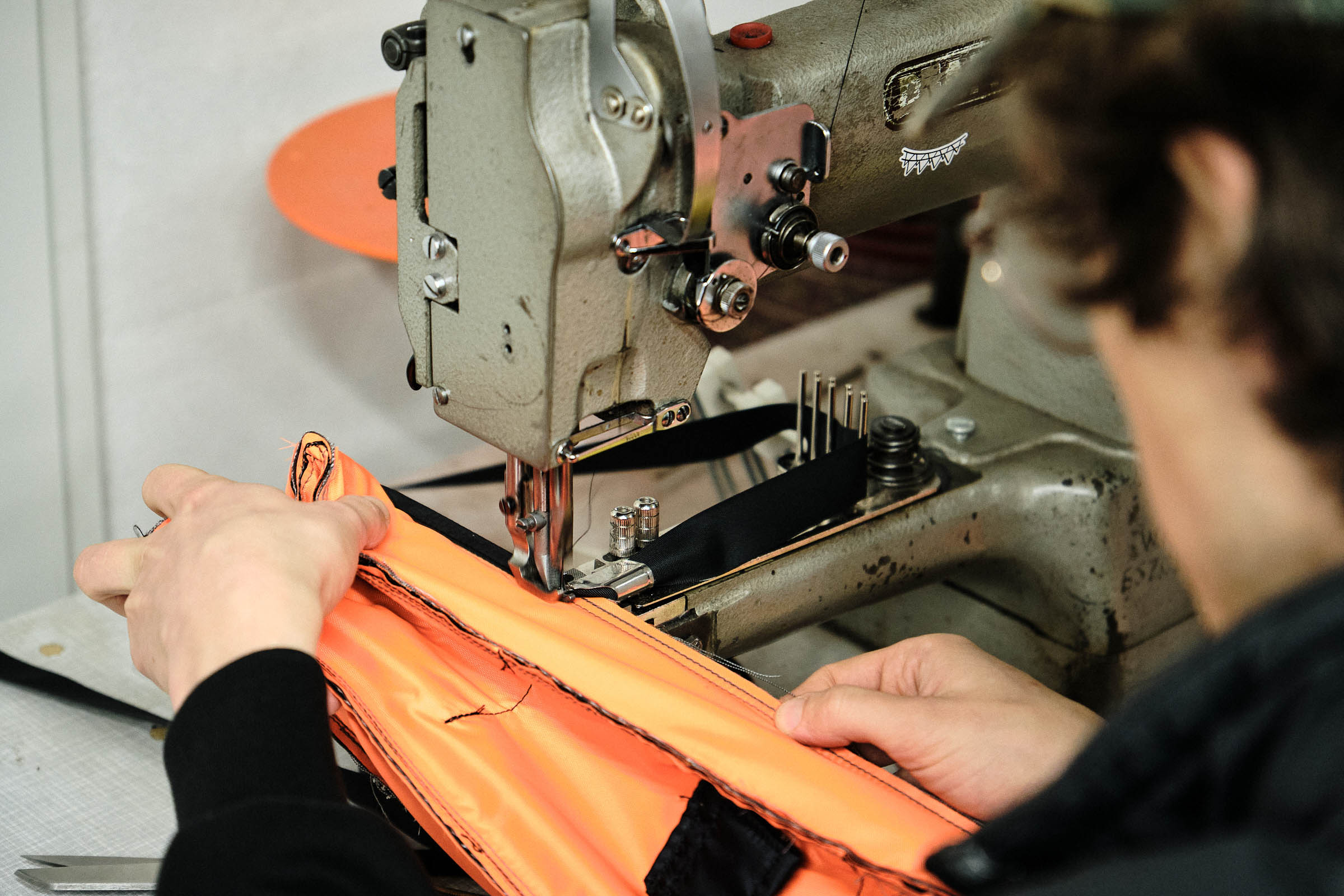
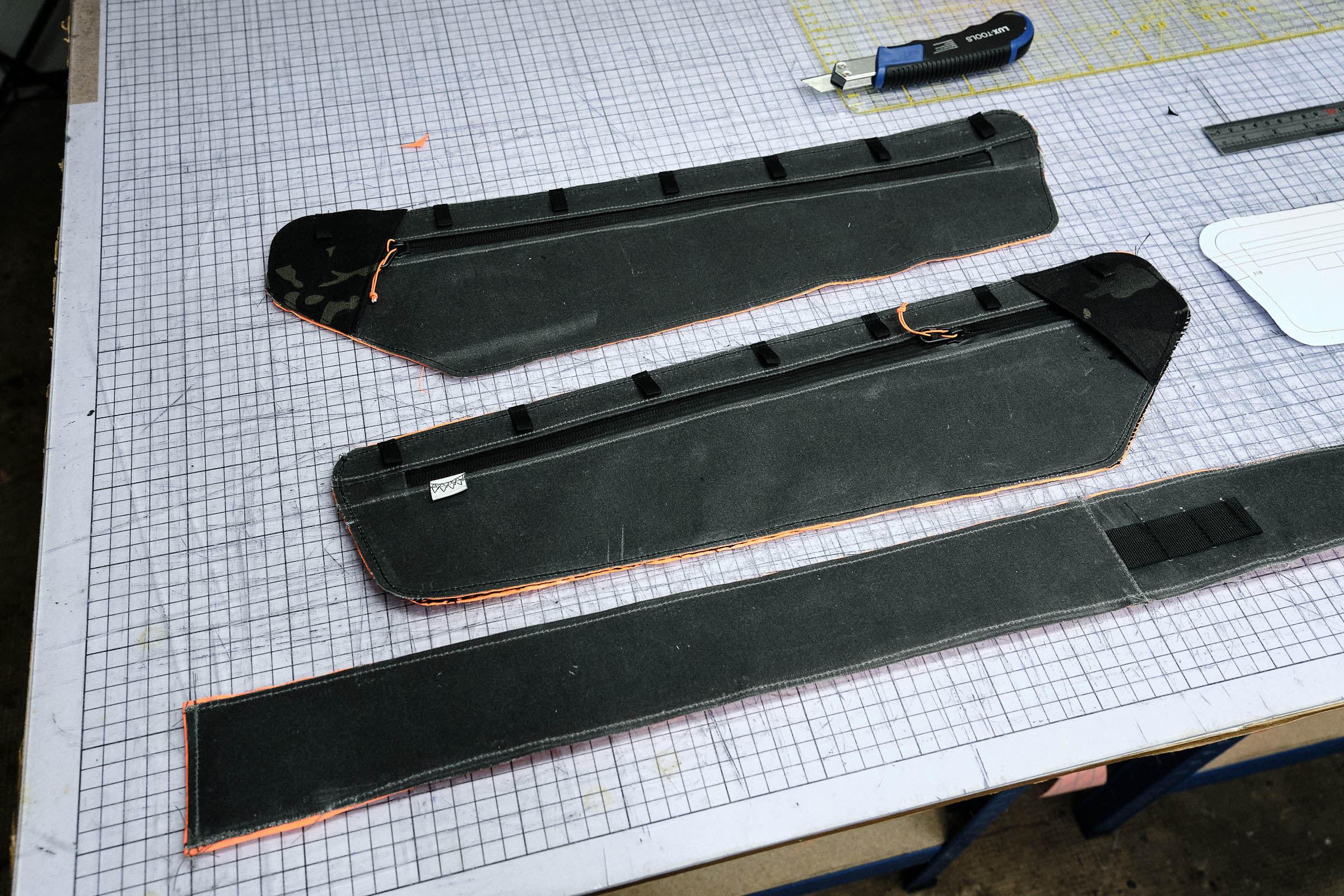
The table cutting starts to clear as the fabric and hardware come together. We’ve got the spine, two side panels with zippers, and map pocket done, waiting to be married. I can start to picture the final product. The side alignment marks that match the side panels to the spine are slightly off, which would make for a warped bag if not corrected. Even with the markings, the dialed process, and Tijmen hovering over me, there’s still plenty of room for interpretation and error. I sew one side, poorly, eating up almost the entire seam allowance. “Within tolerance,” he says, and wrangles the other panel to make a square bag out of it. In the last work step, Tijmen binds the internal seams on the all-manual Pfaff.
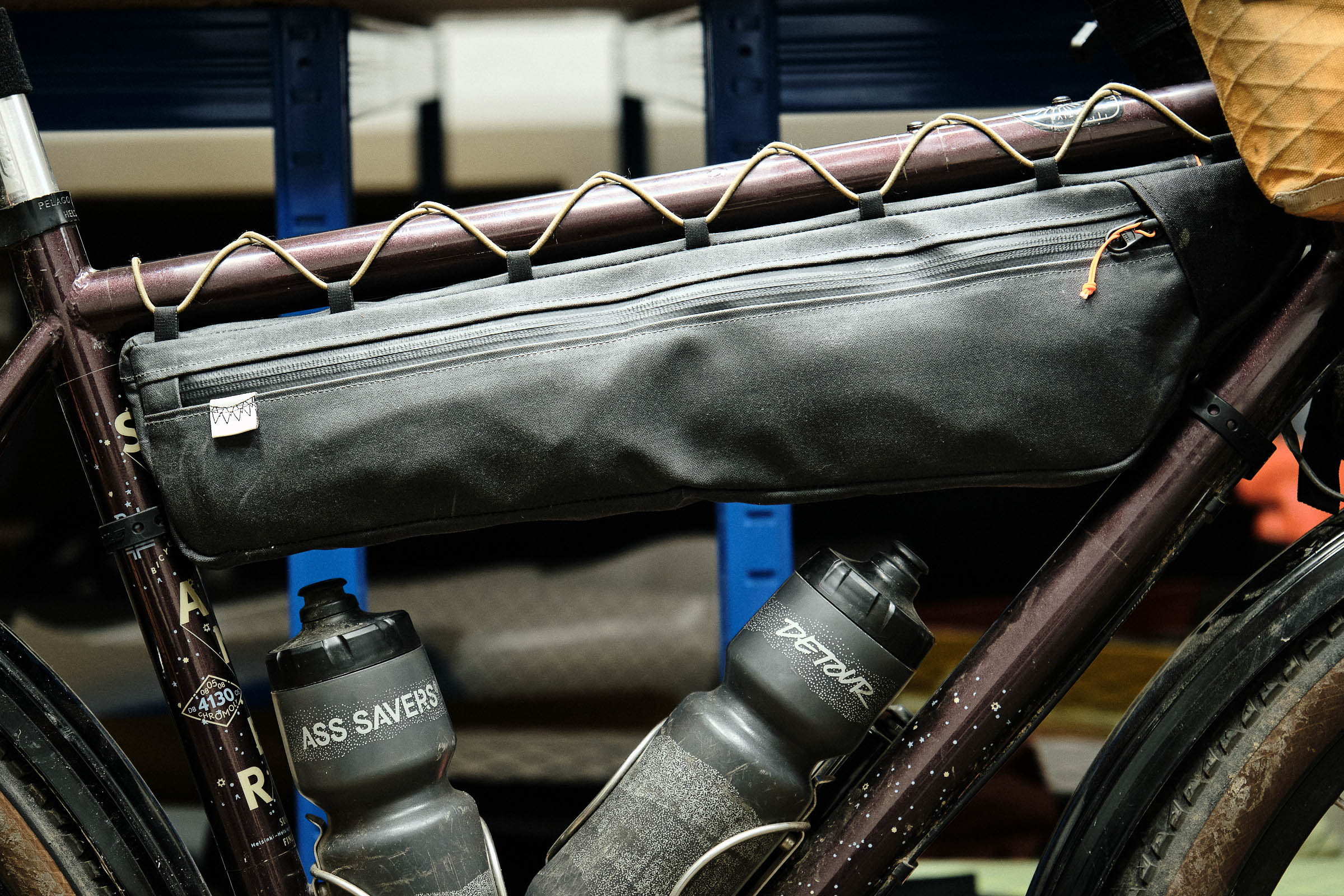
At the end of the day, the big moment comes: turning the right side out births the finished frame bag. We both have big grins on our faces. “It really never gets old,” Tijmen remarks. I hold the bag up to my frame—a perfect fit. “Like it was made for it,” he quips. I wonder where he’ll find this daily satisfaction and sense of achievement in his next job.


And yet the finished frame bag is not the most important thing to come out of this day. Making the bag brought us together, spurring this conversation and a meaningful connection. It makes me think we need more time in our lives and communal workshops to regularly make physical things together. However, as Tijmen sees it, the system basically offers two paths for small bag manufacturers: secure investment and outsource production to push standardized products like Tailfin or Swift, or go bespoke and premium at increasingly exorbitant prices. This corroborates what I hear from other custom makers. Neither path seemed appealing to him.

Continuing with Wit Slingers as a custom manufacturer was conceivable, but that, Tijmen explained, would have required some sharp commercial decisions—probably less customization, a laser focus on profitability, batch work, brand collaborations—not what Wit Slingers was about. In this economic system, staying constant is not an option. Expansion or bust. And whichever path he’d choose, it would still mean existing in economic precarity.
In the end, burnout and a lack of long-term perspective were the main factors in winding down his business, but there were others, too. “I started Wit Slingers to get good at one thing, and I achieved that. So it was time for a change of scenery,” he explains. A change in life circumstances, followed by an unexpected job offer as a product manager at a bike accessory company in the Netherlands, clinched the matter.

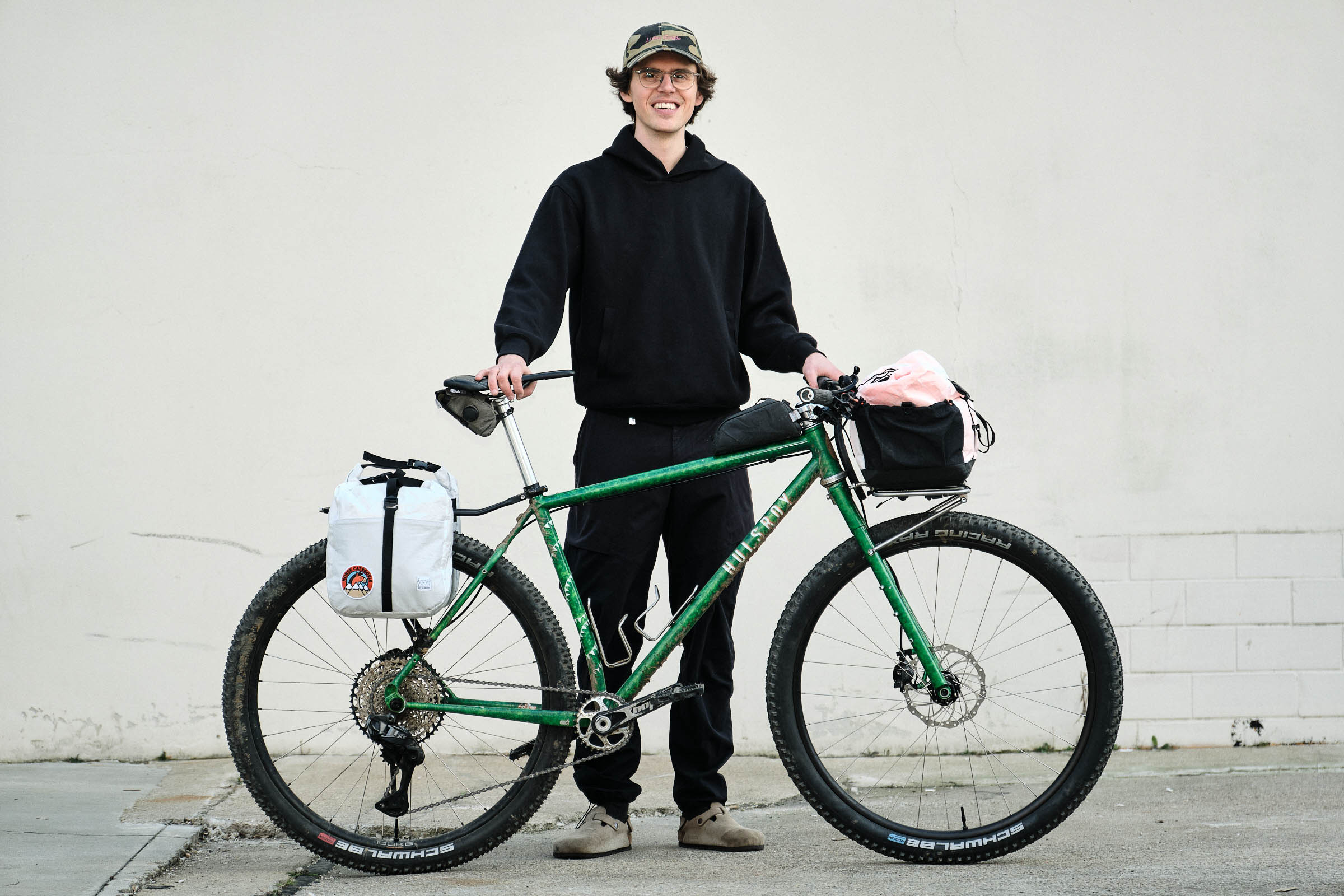
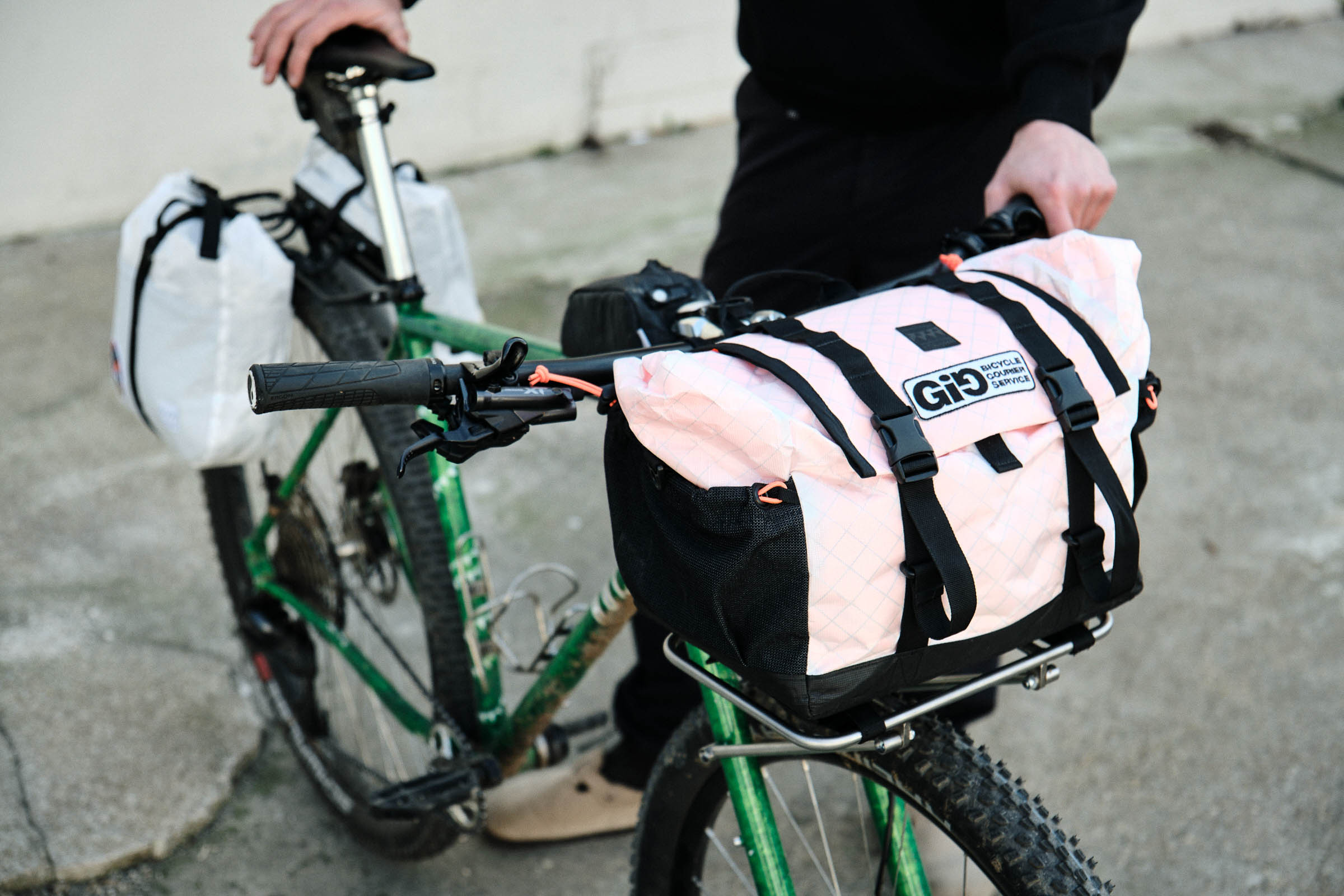
He doesn’t seem sad about it. “There are things I’ll miss. But as designers, we’re trained to kill our darlings,” he says. “January was one of my best months of sewing. Pure flow state. A great way to end. Of course, always making small improvements.” As a final project, he built himself a set of white prototype bags for a four-week trip through Morocco on his Hulsroy ATB, surmising: “It seems like the perfect way to close out this chapter and see what five years of design and craftsmanship culminated into.”
Real Freedom
While Tijmen will carry his experience into his next chapter, Wit Slingers’ departure leaves a distinctive hole in the European bikepacking scene that can’t be easily filled. Such closures aren’t churn but probably net losses. Due to inflation, gentrification, and geopolitics, making hardware and dedicating the large amounts of time and money necessary for mastery seems much harder in 2026 than it used to be.
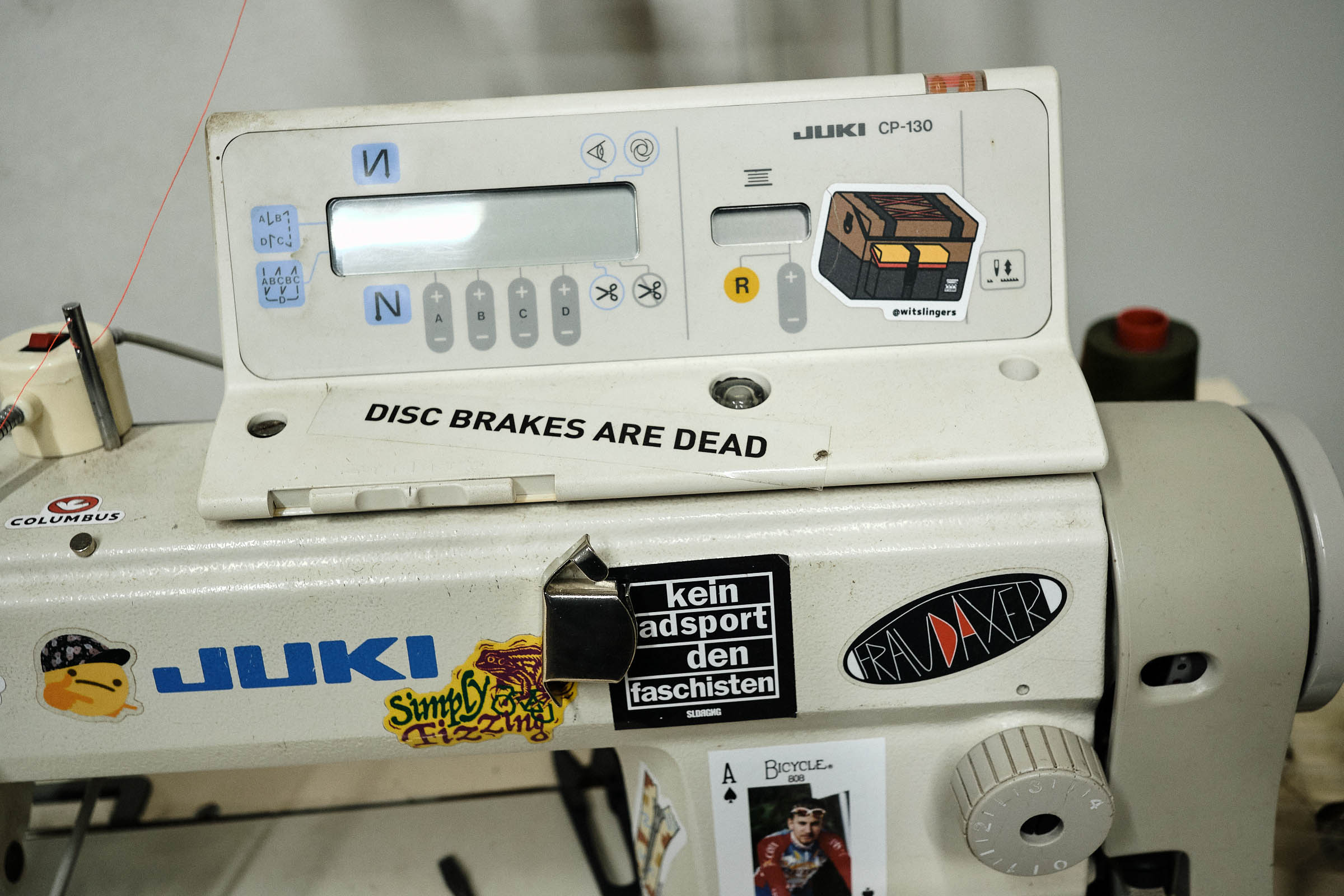
To state the obvious, custom bike bags aren’t essential like affordable housing, durable clothing, or nutritious food. Yet as our options narrow, they are another example of how in this capitalist system we’re not free to produce the goods our communities need if they aren’t massively profitable. It’s bad for makers and restricts our options as users and communities.
It was the renaissance of soft bags by individual makers and niche experiments such as 29+ tires back in the 2010s that led to bikepacking as we know it today, yet what we see is just the tip of the iceberg of our collective creativity. What if all those ideas for useful products and services in the backs of our heads could be made a reality? Which untold ideas are missing in bikepacking? Which never came into being for lack of access to resources or profitability?

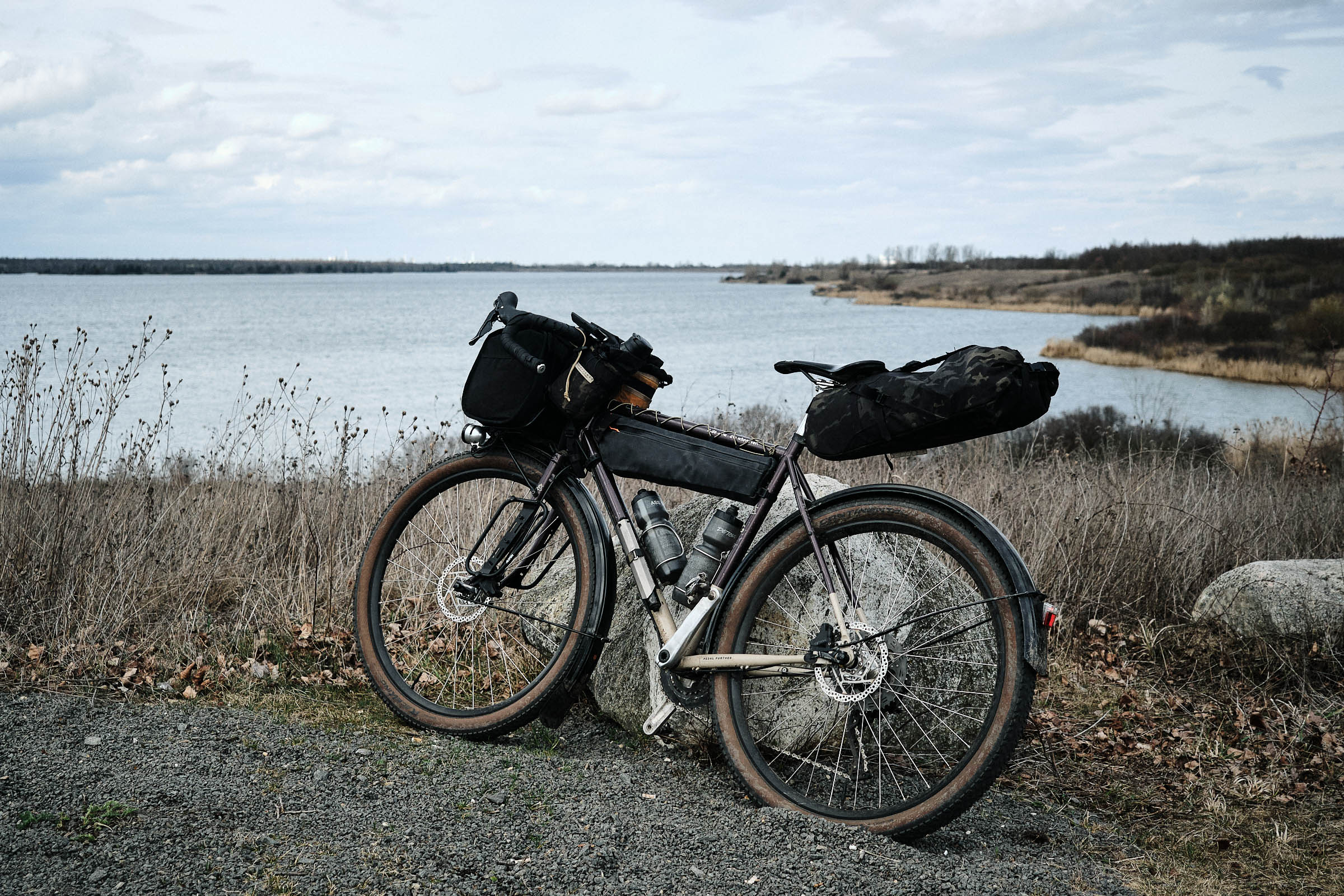
In this light, creating the material conditions for average folks to attain mastery and create freely with others seems as important to bikepacking as protecting beautiful landscapes and freedom of movement. Real economic freedom—unconditional public services, including housing and access to means of production—would mean the possibility for everyone to dedicate themselves to a meaningful craft, manifest their product ideas, and see where it takes us.
Further Reading
Make sure to dig into these related articles for more info…
Please keep the conversation civil, constructive, and inclusive, or your comment will be removed.