







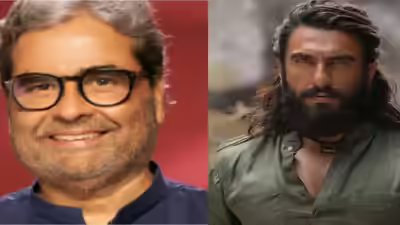
I’m writing this not as a critic looking for a takedown, but as someone who has spent years admiring your work, someone who was awestruck walking out of the hall after watching Maqbool. We’ve had brilliant adaptations of Shakespeare in Hollywood and beyond, but Maqbool (Macbeth), Omkara (Othello), and Haider (Hamlet) taught me again, as an adult and as an audience member, how to sit with discomfort. Just as Shakespeare did. Back in his time.The purpose of all art is to question. To make people go through a gamut of emotions: repressed emotions, the kind we all hide deep down (possibly not so well in the age of social media, but you know what I mean). You did that magnificently.
What you convincingly did over the years, with your films and music, is trust your audience to understand complexity. That trust is why they are still there. Which is why what I’m about to say feels difficult. Because when I saw you liking a post that compared Dhurandhar audiences to people doing a Sieg Heil salute, it didn’t feel like provocation. It felt like a betrayal of that trust.
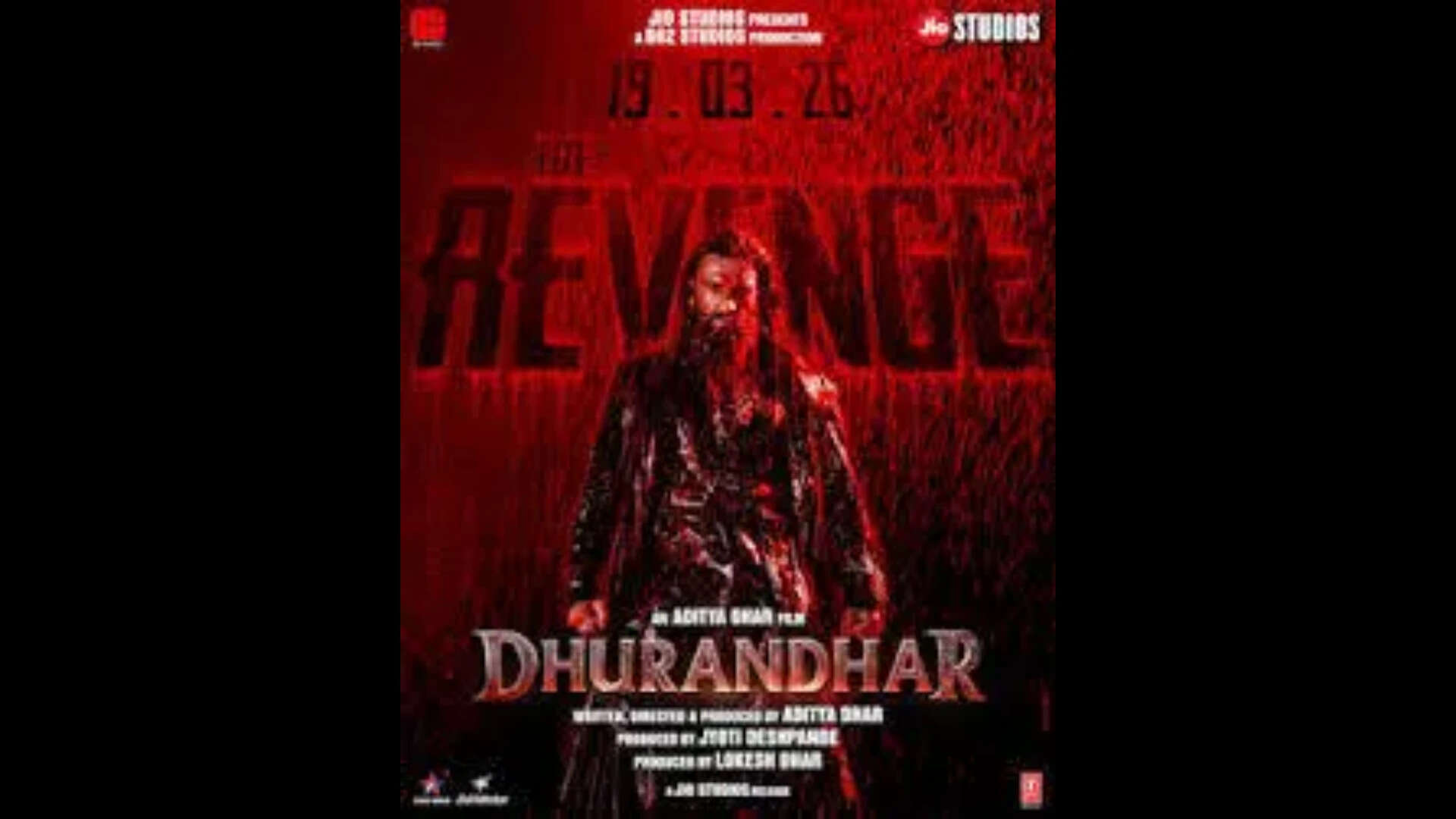
Dhurandhar 2: The Revenge has grossed over ₹1,661 crore worldwide, becoming the first pure Hindi film to cross the ₹1,000 crore net mark in India.
But this is not a letter of outrage. More, dissonance. The same dissonance I felt when I couldn’t stop laughing alone in a cinema hall watching Matru Ki Bijlee Ka Mandola. You were ahead of your time. Satire and dark humour take exposure to land. Not because audiences wouldn’t understand it, but because most Indians, by and large, still watch films made in their own states. Language is a barrier. India, after all, is a country of not just extraordinary diversity, but profound contradictions.This also takes me back to Kaminey, a film audiences were divided about, while I couldn’t stop gushing at the sheer audacity of a director bold enough to write a climax so deranged it would give Tarantino a run for his money. It gave me goosebumps. And that’s just describing the ending.But here’s why I don’t think people who watched Dhurandhar are Nazis. I don’t say this defensively because I loved the film, both parts. I say it because words like “Nazi” carry a weight that cannot be casually repurposed.They belong to a history of unspeakable violence. The ideology of Nazism: antisemitism, the Holocaust, the systematic erasure of six million lives, gas chambers, ghettos, a machinery of death that was terrifyingly efficient. The Nazis literally industrialised murder and profited from it. To liken movie audiences—people who chose to watch a film, for reasons ranging from admiration to curiosity to critique—to “Nazis” is not wise. It is a complete collapse of any meaning attached to the word. And when meaning collapses, so does conversation.Thus, what is unsettling is what the word implies. As an artist, you have always resisted flattening people. Even in your most chaotic work, your characters were never just one thing. They were messy, contradictory. Human. In Matru Ki Bijlee Ka Mandola, your dark humour saw through power long before it became fashionable to do so. In the quiet tenderness of Makdee and The Blue Umbrella, you reminded us that simplicity, too, requires courage.You built a body of work that refused easy labels. So when you appear to reduce an entire audience into one—into the harshest label imaginable— it feels like you are doing the very thing your cinema taught us to resist.Audiences are not monoliths. Some people watch a film because they love it. Some because they disagree with it. Some out of curiosity. Some because they’re bored on a Friday evening. Some because they want to argue about it later. To collapse all of them into a single moral category is not just inaccurate. It is unfair.But more than that, it takes us somewhere dangerous. Somewhere actual Nazis were very familiar with: the othering of people. The act of reducing a group into a single, dehumanised label—whether based on religion, caste, class, or ideology—is the foundation of bigotry. It is what allows people to stop listening, to stop engaging, to stop seeing the other as fully human.When you call a group of people “Nazis”, you are not just criticising them. You are placing them outside the circle of empathy – doing a smaller version of what that very ideology did. Drawing a line between “us” and “them,” and assigning moral inferiority to the latter.I know that is not your intent. But intent does not erase impact.There is also something more personal at stake here: the relationship between a filmmaker and their audience. You have never been a filmmaker who spoon-feeds. Your films demand patience, attention, interpretation. And audiences have met you there. They have argued with your films, defended them, revisited them. That relationship is built on mutual respect. When that respect is replaced by contempt—even momentarily—it fractures something fundamental. It tells the audience that disagreement is not welcome. That watching, in itself, can become a moral failing.
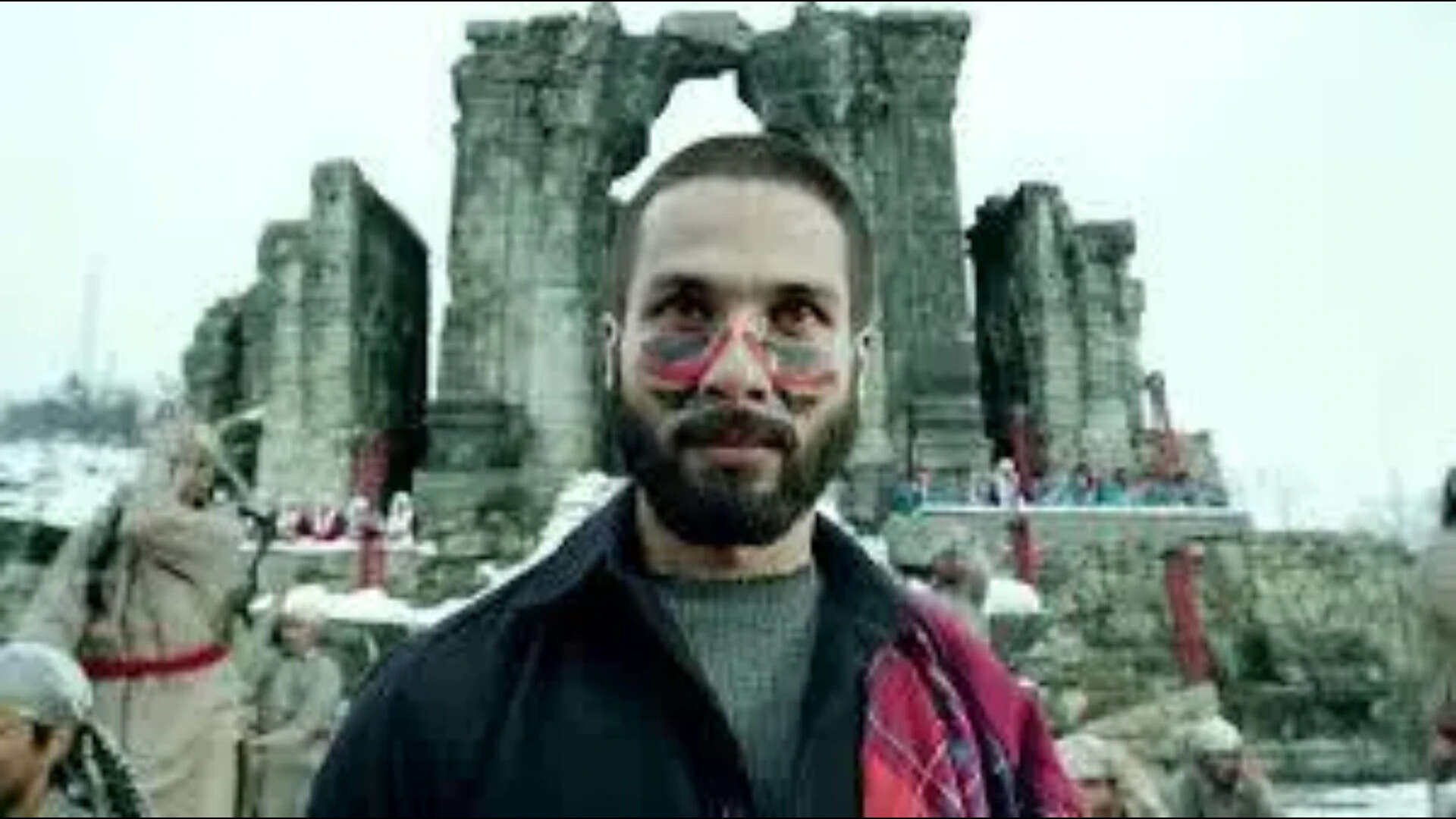
A still from Haider, Bharadwaj’s adaptation of Shakespeare’s Hamlet
This is not to say audiences should be beyond criticism. Critique is essential. Pushback is necessary. Debate is healthy. But there is a difference between critique and dismissal. Critique engages. It asks questions. It opens doors. Dismissal labels. It shuts them. That particular word, and its implications, are thrown around like confetti by faceless trolls on social media. You are not faceless.What makes this moment particularly disappointing is that your own cinema offers a better way. In Haider, you did not simplify Kashmir into good and evil. You let contradictions breathe. In Omkara, you didn’t explain jealousy, you trusted your audience to recognise it as a human failing that lives in all of us. In Maqbool, you allowed ambition to be both compelling and destructive. Your films trusted us to think.That’s what this piece is about. It’s about what your ‘like’ signals. It’s a shift from engagement to exasperation. From dialogue to dismissal. From the filmmaker who once invited us into complexity, to one who—at least in this instance—seems to have stepped away from it.The world we live in is too loud, too reductive, too quick to reach for the sharpest stone. You have spent a career building something finer than that. I’d like to believe this moment is the exception.Yours sincerely, A fan